Step 1 – Season and sear the chicken
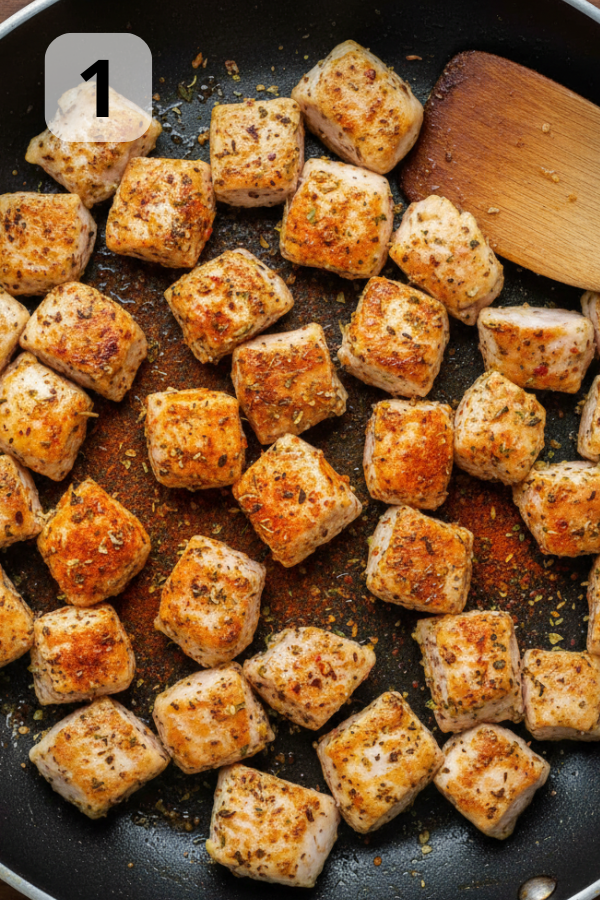
Season your chicken pieces generously with salt, Italian seasoning, smoked paprika, and a pinch of garlic powder.
Heat a large skillet over medium-high heat. Add a spoonful of the oil from the sun-dried tomatoes—this is where a lot of the flavor lives.
Add the chicken in a single layer. Don’t crowd the pan; cook in two batches if you need to. Let the chicken sit for a few minutes before flipping so it can get that golden, slightly crisp edge. Cook until just done in the center, then transfer to a plate.
Here’s a little sanity check: if the chicken looks cooked but not deeply browned, that’s okay. You’re building flavor from the sauce too, not only from searing.
Step 2 – Boil the pasta (or cook it right in the pan)
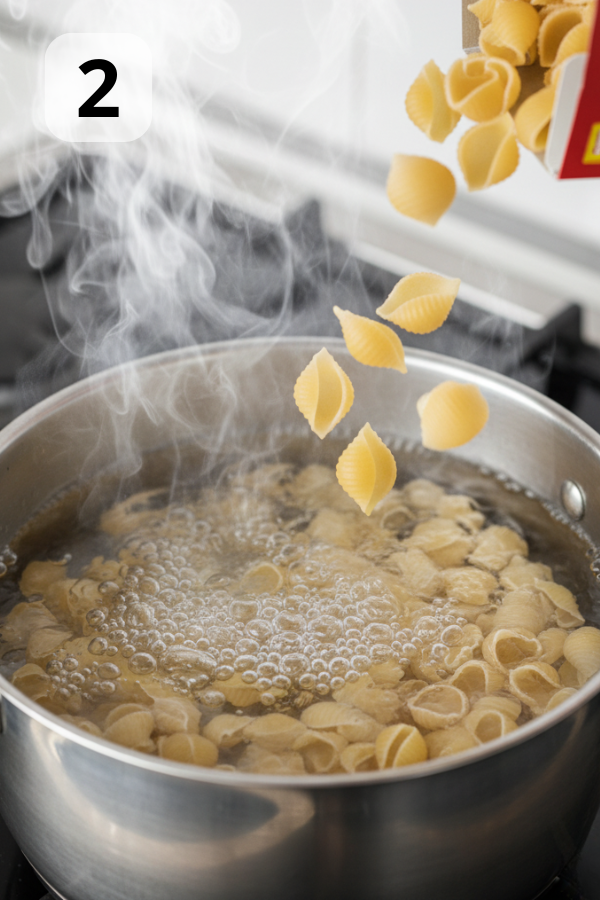
While the chicken cooks, bring a big pot of salted water to a boil. Add pasta and cook it one minute shy of al dente, especially if you’re using chickpea shells (they can go soft fast).
Scoop out a cup of pasta water and set it aside, then drain the pasta.
If you’re more into one-pan dinners, you can skip the separate pot and simmer dry pasta directly in broth and sauce in the skillet. You’ll just need to watch the liquid so it doesn’t dry out.
Step 3 – Blend the high-protein sauce
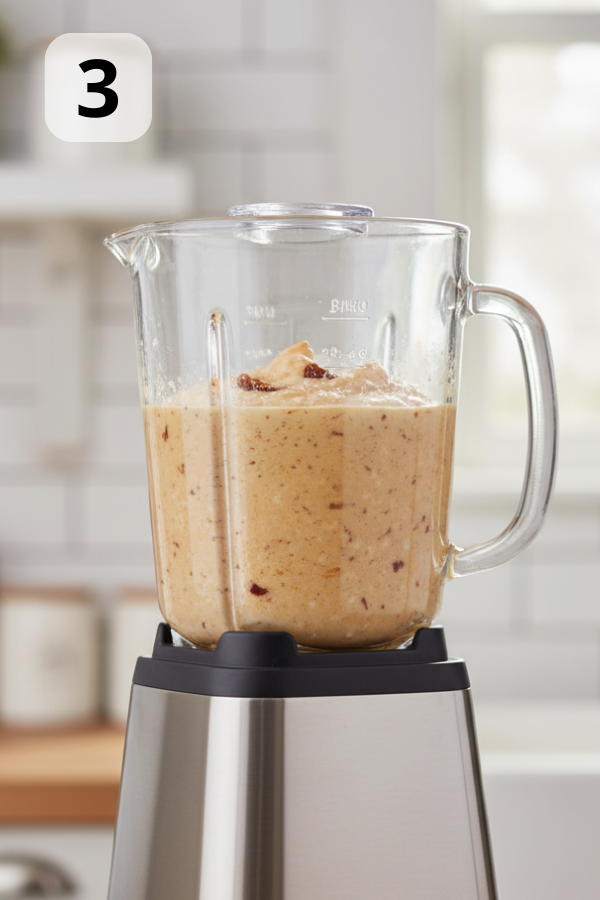
Add the cottage cheese, broth, garlic, a tablespoon or two of sun-dried tomato oil, and a small handful of chopped sun-dried tomatoes to a blender. Blend until completely smooth—no visible curds, just a creamy, pale orange sauce.
Many cottage-cheese-based recipes turn out much better when the sauce is blended a bit longer than feels necessary—that’s what turns “slightly grainy” into “restaurant-smooth.”
Taste the sauce here. If you want it thinner, add a splash more broth. If you want more punch, toss in a bit of Italian seasoning or red pepper flakes and give it one more quick blend.
Step 4 – Build the sauce in the pan
Back to your skillet. If it looks dry, add a little more sun-dried tomato oil or broth.
Add a spoonful of tomato paste if you like a deeper color and flavor. Stir it for a minute, then pour in your blended cottage cheese sauce.
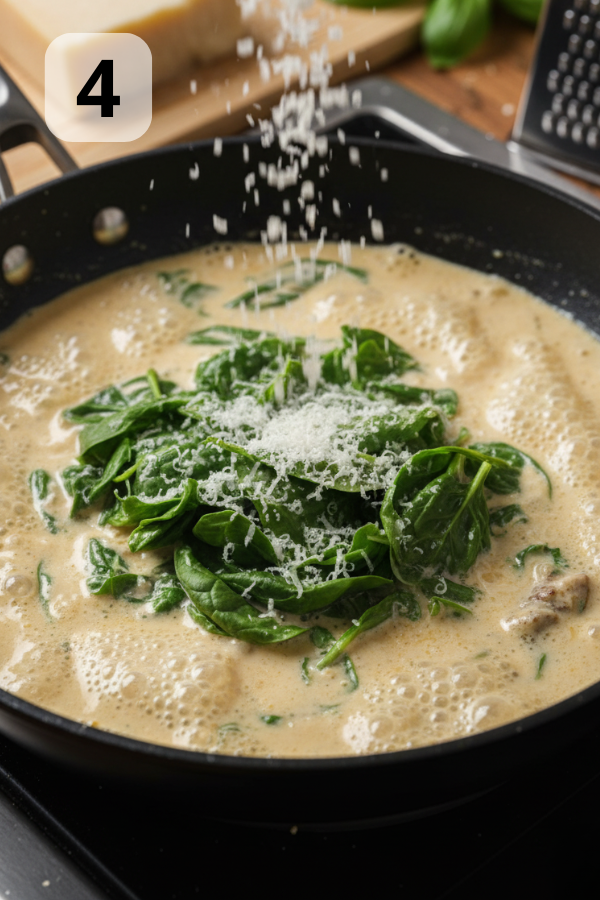
Turn the heat down to medium-low. Sprinkle in the chopped sun-dried tomatoes and the spinach. Stir until the spinach just wilts and the sauce starts to steam gently.
Now, add the grated Parmesan in small handfuls, stirring as it melts. Keep the heat gentle here—letting the sauce boil hard is the quickest way to make dairy sauces split. A soft simmer is your friend.
Step 5 – Bring the chicken and pasta back to the party
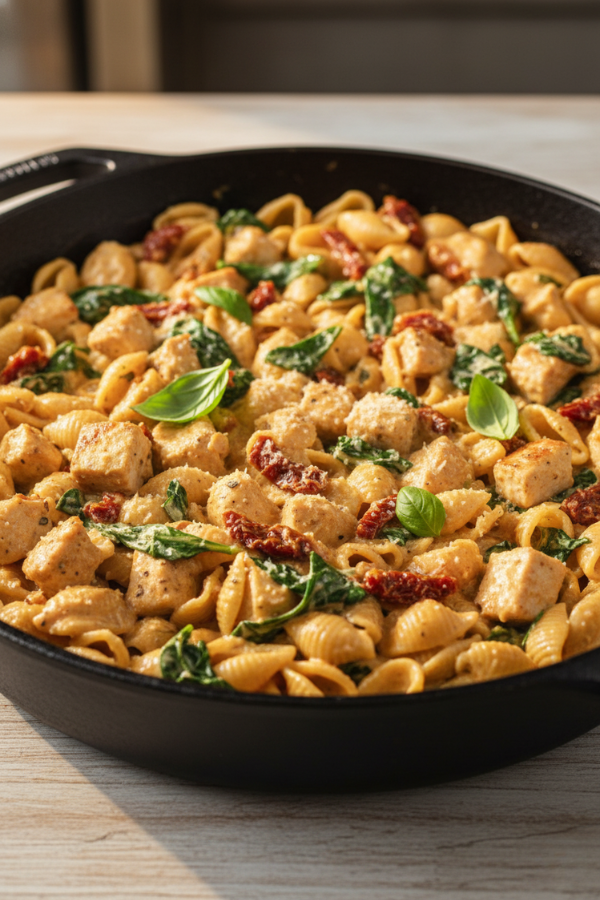
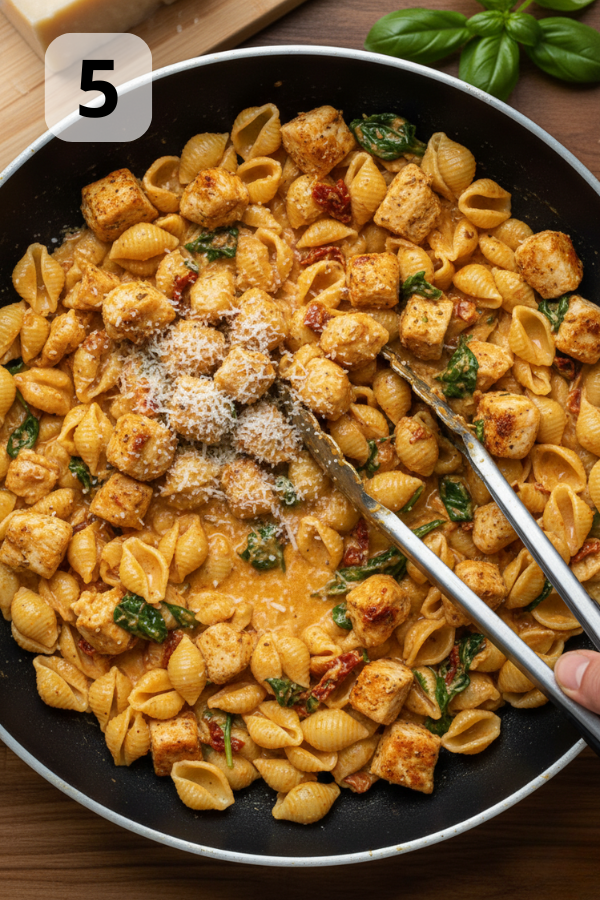
Add the cooked chicken (and any juices on the plate) to the skillet. Stir to coat it in the sauce.
Then add your pasta. Toss everything together so the sauce clings to every shell or twist. If the sauce feels too thick, use splashes of the reserved pasta water or extra broth until it reaches that “luxuriously creamy but still clings to the spoon” stage.
Taste and adjust:
Needs salt? Add a bit more.
Too rich? A tiny squeeze of lemon wakes it up.
Want more heat? Sprinkle on extra red pepper flakes.
Step 6 – Plate it like you mean it
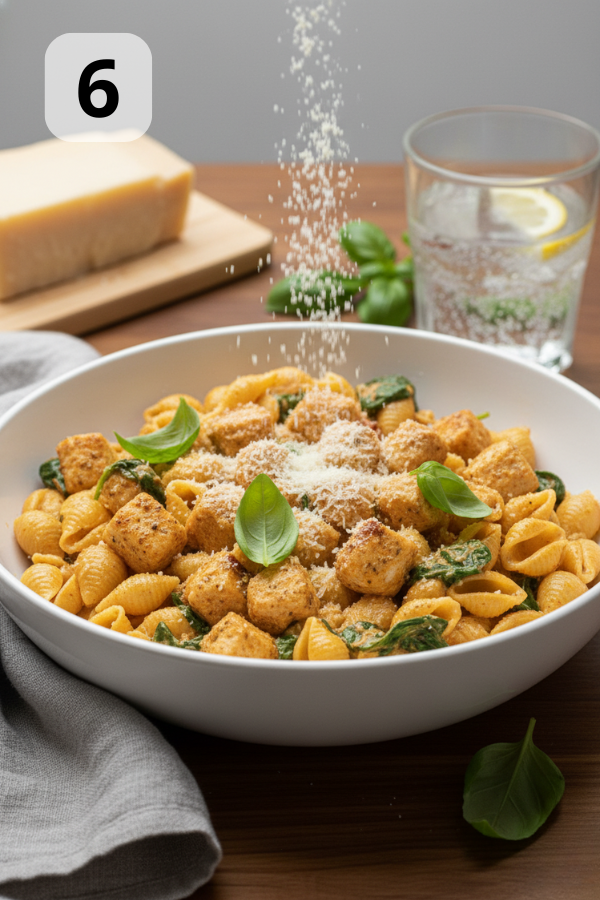
Spoon the pasta into warm bowls. Shower with extra Parmesan and a few ribbons of fresh basil if you have them.
Now you have that funny tension: is this a date-night pasta or a meal prep box? Honestly, it works as both. The flavor feels special enough for Friday night, but the macros and reheating ability make it great for weekday lunches.