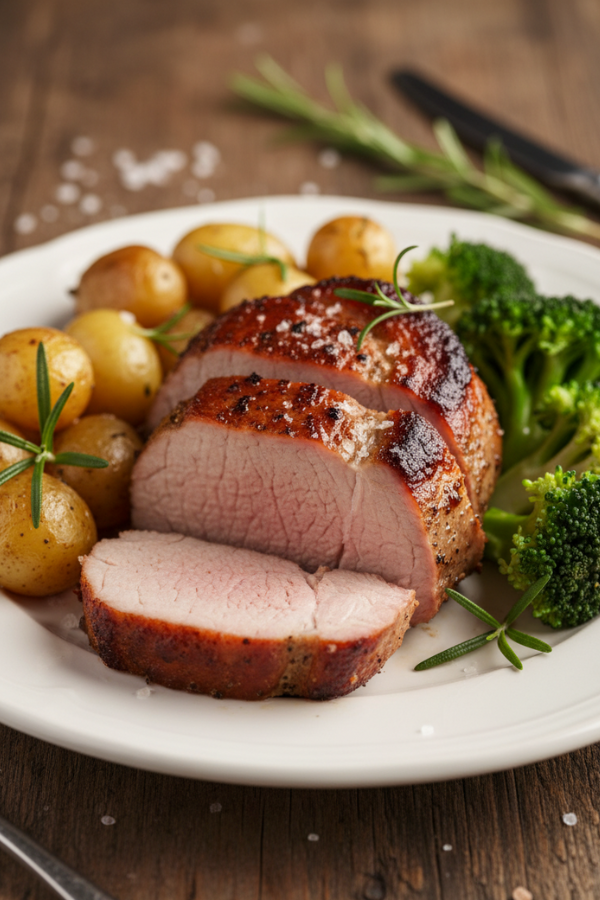
Trim and Pat Dry
Place the pork tenderloin on a cutting board.
With a small, sharp knife, gently slide under the silver skin and remove it in thin strips.
Pat the pork very dry with paper towels.
Dry meat browns better and gets you that nice crust. If the surface is wet, it tends to steam.
Season Generously
In a small bowl, mix:
Garlic powder
Paprika
Chili powder
Cumin
Salt and pepper
Brown sugar and cayenne, if you’re using them
Rub the pork with the oil, coating it all over.
Sprinkle the spice mix on every side, then massage it in so it sticks and covers evenly.
You want a full coat, but not a muddy paste. If it looks like a thick layer of wet sand, that’s perfect.
Optional make-ahead:
If you’ve got a bit of time earlier in the day:
Wrap the seasoned tenderloin
Chill in the fridge for 30 minutes to 24 hours
This deepens the flavor and actually makes busy evenings smoother.
Preheat the Air Fryer
Set your air fryer to 400°F (200°C).
Preheat for about 5 minutes.
That short preheat helps the crust form faster, just like a hot grill or pan would.
Lightly spray or brush the air fryer basket with oil so the rub doesn’t stick and tear off.
Air Fry to the Perfect Temp
Place the tenderloin in the basket.
If it’s too long, you can cut it in half or lay it diagonally so it sits flat.
Cook at 400°F (200°C) for 16–20 minutes, depending on size and your air fryer:
Smaller, around 1 lb: start checking at 14–15 minutes
Average 1.25–1.5 lb: often in the 16–20 minute range
If your air fryer browns more on one side, turn the tenderloin once halfway through.
Now the real secret is not the timer—it’s the thermometer.
Aim for about 137–140°F in the thickest part when you pull it out.
As it rests, the temperature usually climbs to around 145°F.
At that point, the meat is:
Safe
Slightly pink in the center
Very juicy
If you don’t have an instant-read thermometer yet, this recipe is a good excuse to get one. It pays for itself in saved dinners.
Rest, Slice, Serve
Move the pork to a cutting board.
Let it rest 5–10 minutes.
This rest is not optional. It’s where the juices settle back into the meat instead of spilling out onto the board.
After resting, slice across the grain into ½–¾ inch medallions.
You should see:
A deep golden or red-brown crust
A moist, slightly pink interior
Juices that glisten, not run everywhere
Plate it with whatever sides you like, and you’re done.