Step 1: Heat The Oven + Set Up The Pan
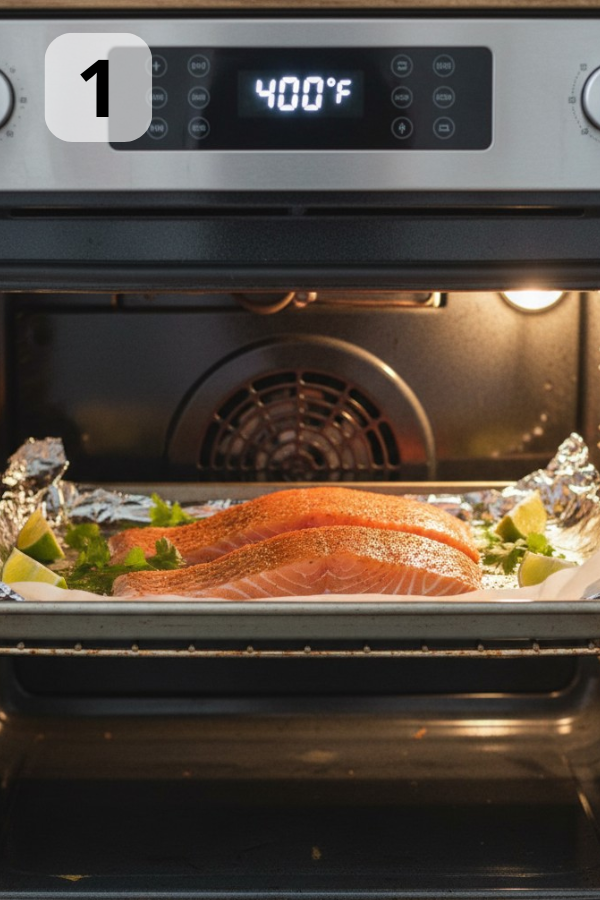
Preheat your oven to 400°F.
Line a sheet pan with parchment paper or foil. This is not a fancy step. This is a “I don’t want to scrub a pan tonight” step. Totally valid.
Step 2: Season The Salmon
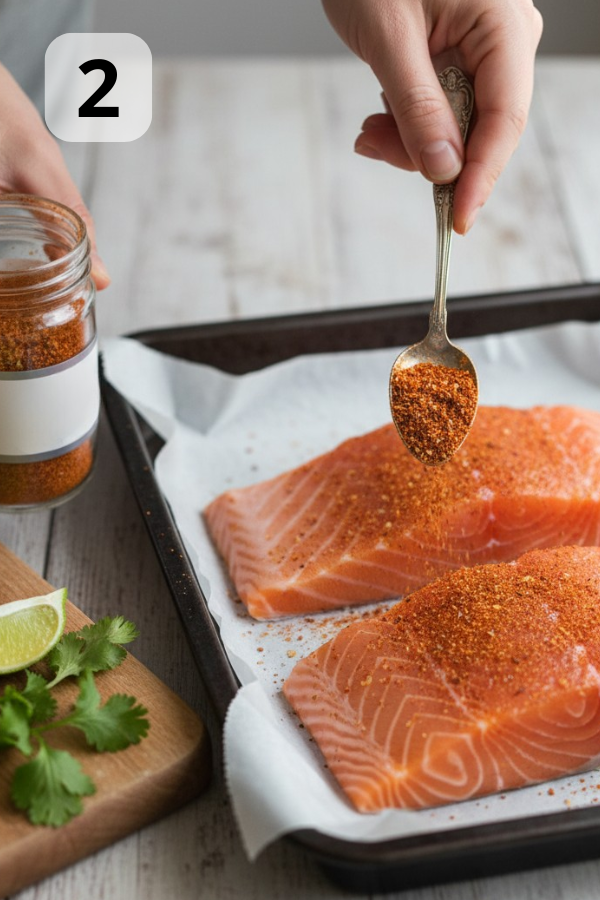
Pat the salmon dry with paper towels. It helps the seasoning stick, and it helps the surface roast instead of steam.
Place salmon on the pan. Drizzle with olive oil. Sprinkle Cajun seasoning evenly over the top. Add black pepper.
Now pause for one second: does your Cajun blend already taste salty? If yes, skip extra salt. If it’s mild, add a small pinch.
Step 3: Bake Until Flaky (Without Drying It Out)
Bake at 400°F. Timing depends on thickness, but here’s a helpful guide:
Thinner fillets: start checking at 12 minutes
Average fillets: usually 12–15 minutes
Thicker fillets (~1 inch+): 16–18 minutes
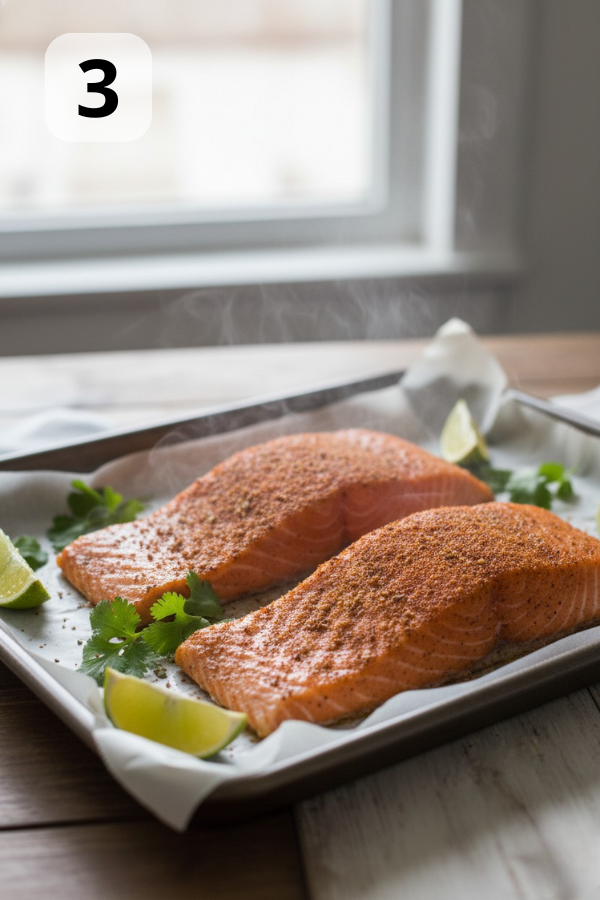
Salmon is done when it flakes easily and looks opaque. If you use a thermometer, the official safe temperature is 145°F at the thickest part. (Some people prefer pulling it slightly earlier for a softer center, but 145°F is the safety benchmark.)
Honestly, salmon can be dramatic. Two extra minutes can change everything. Check early. You can always add time.
Step 4: Make The Avocado Lime Sauce While It Bakes
While the salmon is in the oven, make your sauce.
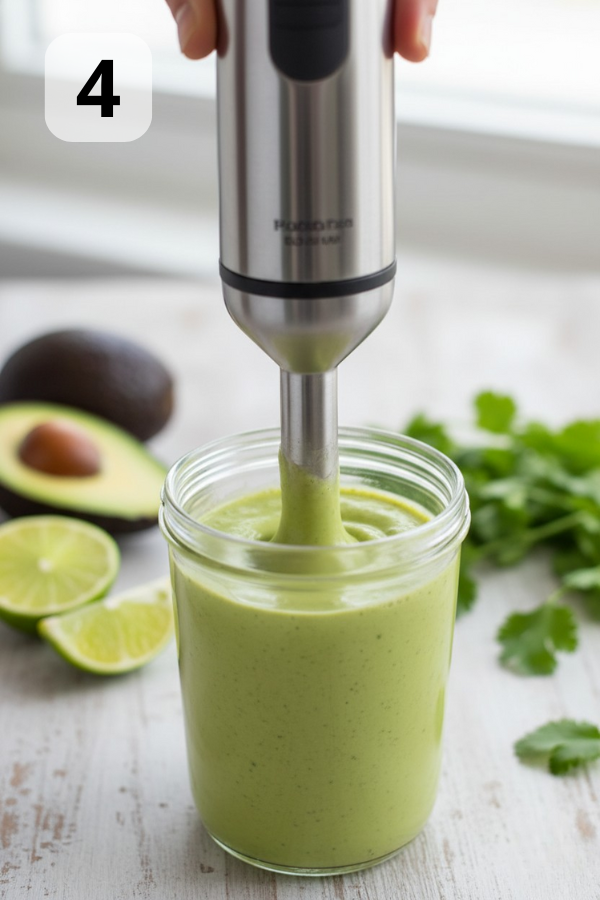
Add sauce ingredients to a blender or food processor and blend until smooth. If it’s too thick, add water a tablespoon at a time.
Taste and adjust:
Too flat? Add lime and salt.
Too sharp? Add a tiny drizzle of honey/maple (optional).
Too thick? Add water.
Too garlicky? Add more yogurt/avocado to soften it.
Small batch tip: If your blender struggles with small quantities, an immersion blender in a tall cup can make the sauce smoother with less fuss.
Step 5: Serve
When the salmon comes out, let it rest for 2 minutes. This helps the juices settle.
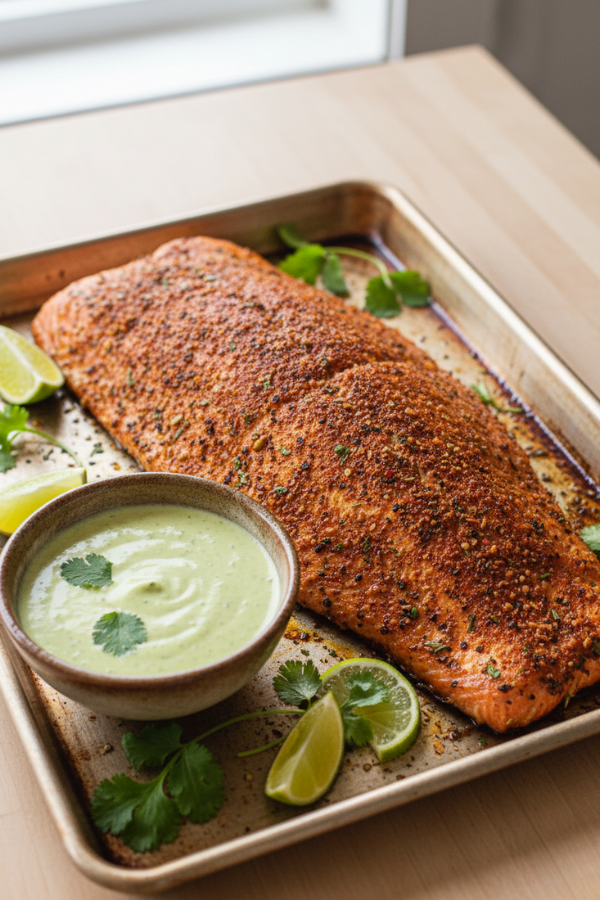
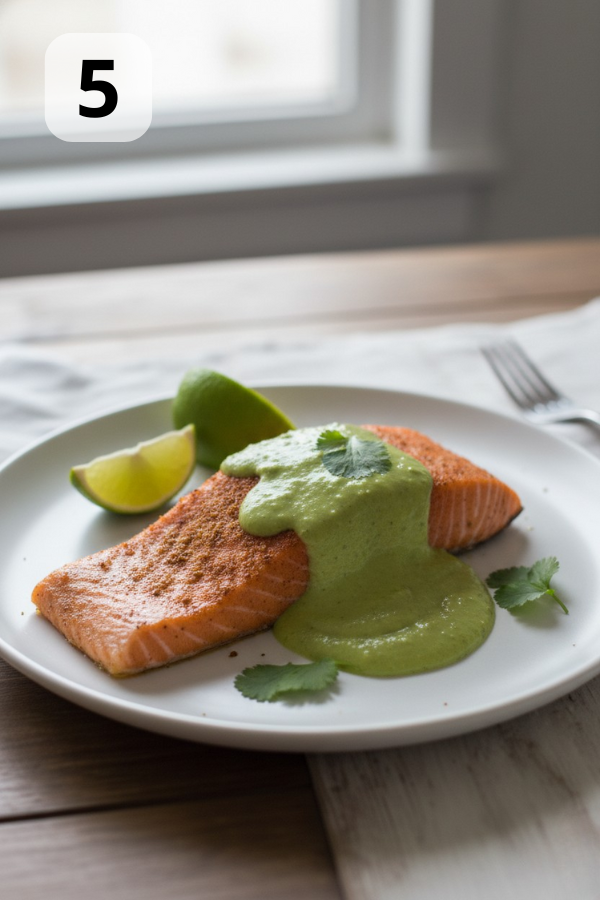
Spoon sauce over salmon. Add extra lime if you want that bright finishing pop.
That’s dinner.