
Spaghetti Aglio e Olio is the kind of recipe that saves you on evenings when cooking feels like a chore you didn’t sign up for. You open the pantry, stare at a few basics, and hope something magical happens.
That’s exactly where this classic Italian pasta quietly saves the day. Made with just garlic, olive oil, chili flakes, and spaghetti, it somehow feels more complete than the effort suggests.
Light, fragrant, a little spicy, and ready in under 20 minutes, Spaghetti Aglio e Olio fits beautifully into real life. Busy weekdays, late dinners, or those “I don’t want takeout again” moments.
A Simple Italian Pasta That Never Tries Too Hard
Spaghetti Aglio e Olio comes from Naples, where simplicity is almost a cooking philosophy. No cream, no heavy sauce, no complicated steps—just a few ingredients treated with care.
At its core, it’s spaghetti tossed in olive oil infused with garlic and a gentle kick of chili flakes. But here’s the funny thing: when done right, it doesn’t taste simple at all. It tastes balanced. Warm. Comforting in a quiet way.
You might see variations across food blogs like AllRecipes, Budget Bytes, or Mediterranean cooking sites. Some add cheese, some don’t. Some keep it strict, others make it richer. But the heart stays the same—fast, honest pasta that doesn’t ask much from you.
And honestly, isn’t that what most of us need on a weeknight?
Why This Recipe Stays In Your Rotation
This is not a “try once and forget” dish. It sneaks into your weekly rhythm without asking permission.
- Ready in about 15–20 minutes, even if you cook slowly
- Uses pantry staples you probably already have
- Light but still satisfying enough for dinner
- Minimal dishes, minimal stress
It also has this subtle comfort factor. The smell of garlic warming in olive oil can change the mood of a kitchen almost instantly. A bit dramatic? Maybe. But you’ll notice it.
Ingredients
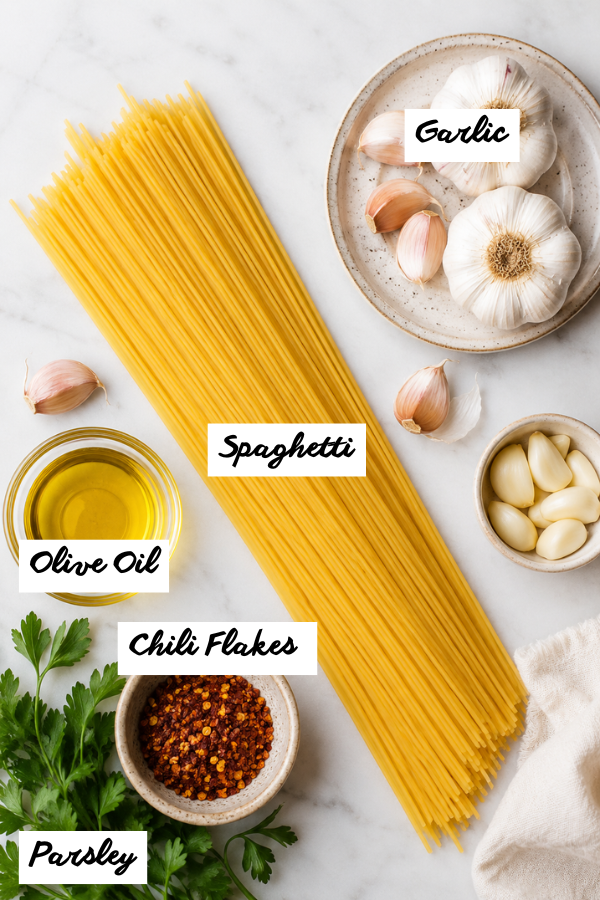
Spaghetti
8 oz (225g) dry spaghetti
- Holds the sauce beautifully when cooked al dente
- Linguine also works if you prefer a slightly wider bite
- Always reserve pasta water—it’s not optional here
Garlic
4–6 cloves, thinly sliced
- This is the flavor backbone of the dish
- Should turn golden, not brown
- Burnt garlic will overpower everything with bitterness
Olive oil
1/3 to 1/2 cup extra virgin olive oil
- Choose a decent quality oil if possible
- Fruity, slightly peppery oils give better depth
- This becomes your “sauce,” so it matters more than you think
Red pepper flakes
1/4 to 1 tsp
- Adds heat without overwhelming the dish
- Can be adjusted based on tolerance
- Fresh chili can be used for a sharper kick
Parsley
2–3 tbsp, finely chopped
- Freshens up the richness of the oil
- Gives a slight brightness at the end
- Optional, but highly recommended
Salt and black pepper
- Salt goes into the pasta water for internal seasoning
- Black pepper adds a gentle finishing layer
Step-by-Step Instructions
Step 1 – Cook The Pasta
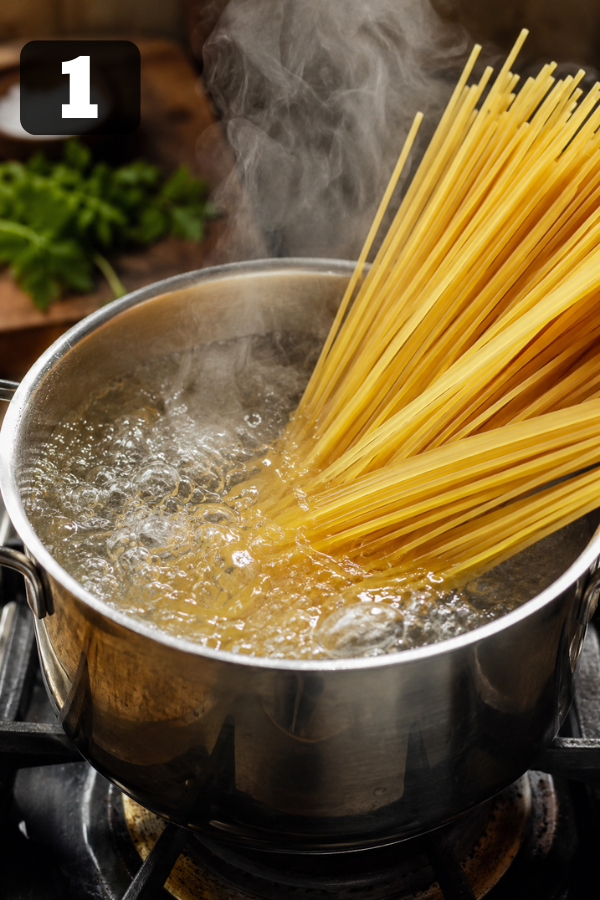
Boil a large pot of salted water and cook spaghetti until al dente, usually 8–10 minutes depending on the brand.
Before draining, save about 1 cup of pasta water. This is the secret to the sauce later.
Don’t rinse the pasta. That starch on the surface is what helps everything cling together.
Step 2 – Build The Garlic Oil Base
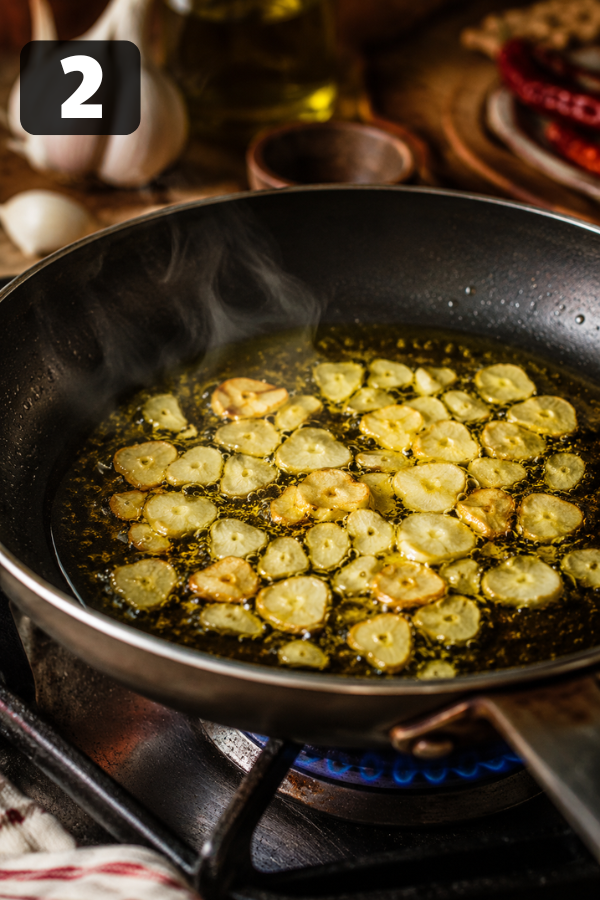
In a large pan, heat olive oil on low to medium-low heat.
Add sliced garlic and let it slowly turn golden. Not brown. Not dark. Just lightly golden with a soft aroma.
Add red pepper flakes early so they bloom in the oil.
This step is slow and important. If you rush it, the flavor turns harsh instead of smooth.
Step 3 – Create The Light Sauce
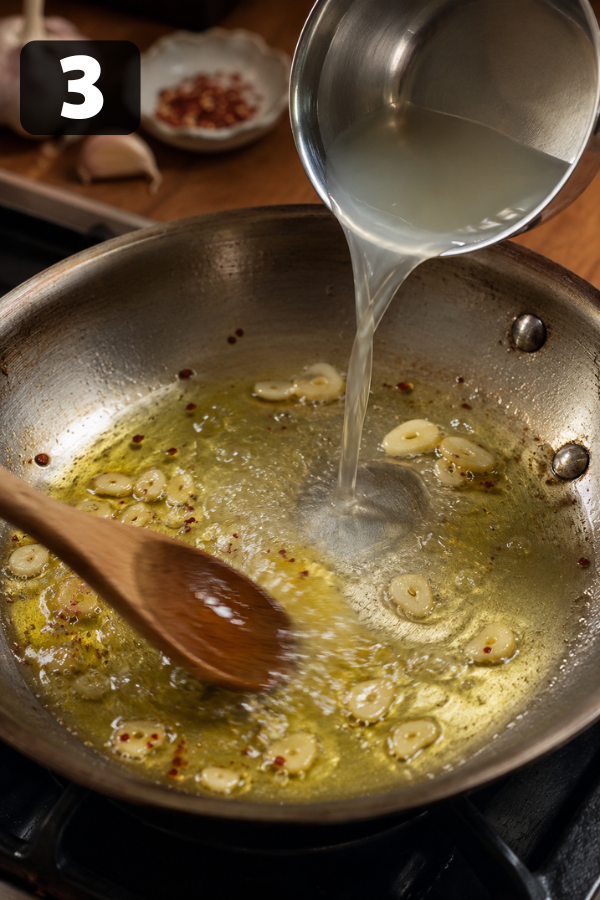
Add a splash of reserved pasta water into the pan.
The mixture will look thin at first, then slightly creamy as you stir. That’s the starch doing its job.
If it feels too thick, add a bit more water. Too loose? Let it simmer for a few seconds.
This is the moment where everything starts coming together.
Step 4 – Toss The Pasta
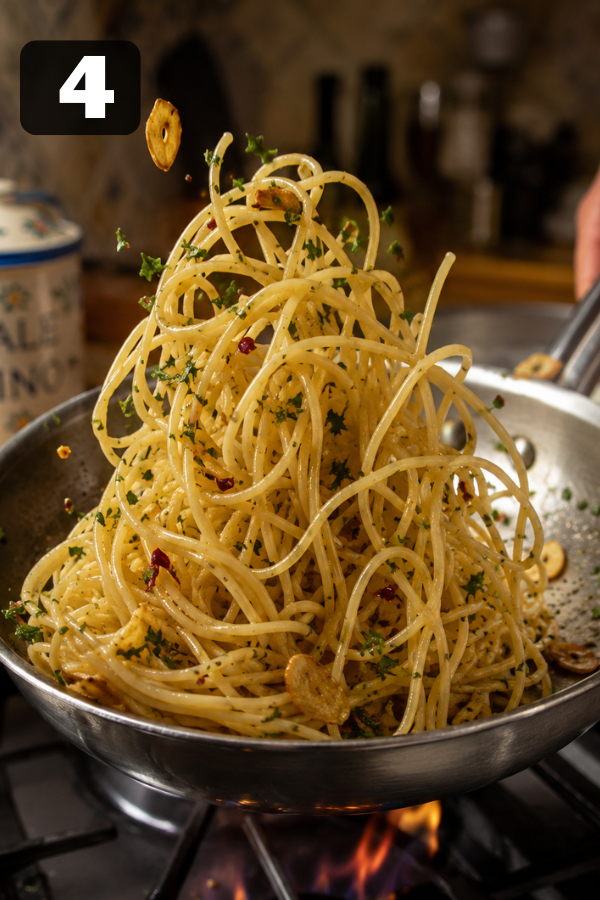
Add the drained spaghetti directly into the pan.
Toss continuously so every strand gets coated in the garlic oil mixture.
This is where the dish transforms from “ingredients” into “something you actually want to eat.”
If it looks dry, don’t panic—just add a little more pasta water.
Step 5 – Finish And Serve
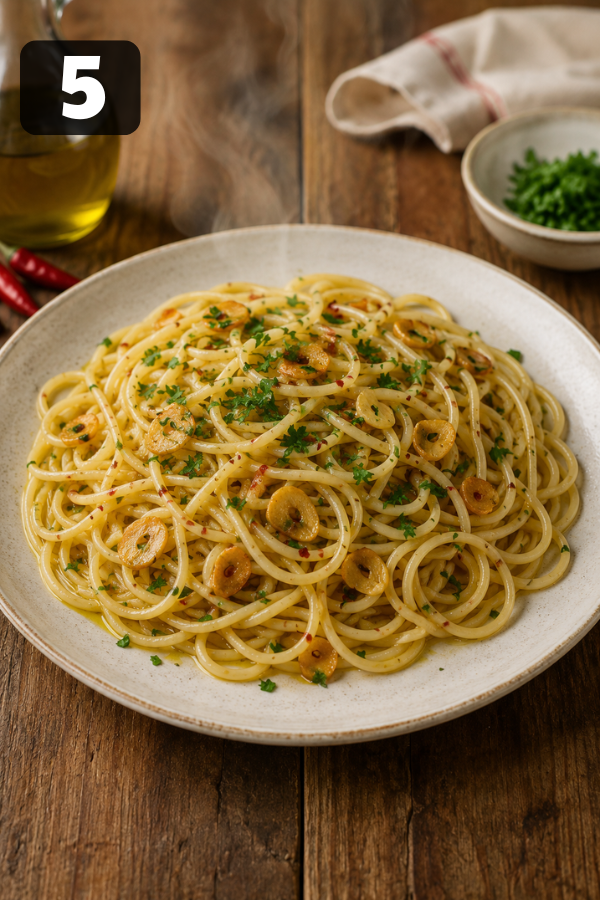
Turn off the heat. Add chopped parsley and toss once more.
Optional: a sprinkle of Parmesan or a bit of lemon zest if you want brightness.
Serve immediately while it’s still glossy and warm.
Small Tips That Quietly Make A Big Difference
- Keep heat low when cooking garlic—this is non-negotiable
- Always save pasta water
- Don’t overthink the sauce; it builds naturally with stirring
- Taste at the end, not the beginning
Sometimes simple food fails not because it’s hard, but because it’s rushed.
Common Mistakes (And Easy Fixes)
Garlic Tastes Bitter
- Heat was too high or garlic cooked too long
- Fix: start again with fresh oil, slower heat this time
Pasta Feels Dry
- Not enough pasta water used
- Fix: add 1–2 tbsp warm water and toss again
Oil Doesn’t Coat Pasta
- No emulsification step
- Fix: stir vigorously with pasta water until it binds
Too Spicy
- Too many chili flakes
- Fix: balance with more pasta or a small splash of oil
Variations You Can Try
Sometimes it’s nice to change things slightly without breaking the spirit of the dish.
- Shrimp version: sauté shrimp separately, add at the end
- Chicken version: grilled strips for a fuller meal
- Veggie version: spinach, cherry tomatoes, mushrooms
- Anchovy version: deeper umami, closer to traditional Italian style
Each version still feels like the same dish—just in a different mood.
Storage & Leftovers
This is best eaten fresh, but life doesn’t always cooperate.
- Store in the fridge for 2–3 days in an airtight container
- Reheat in a pan with a splash of water or olive oil
- Microwave works, but texture won’t be as silky
- Not ideal for freezing (oil separation happens)
What To Serve With It
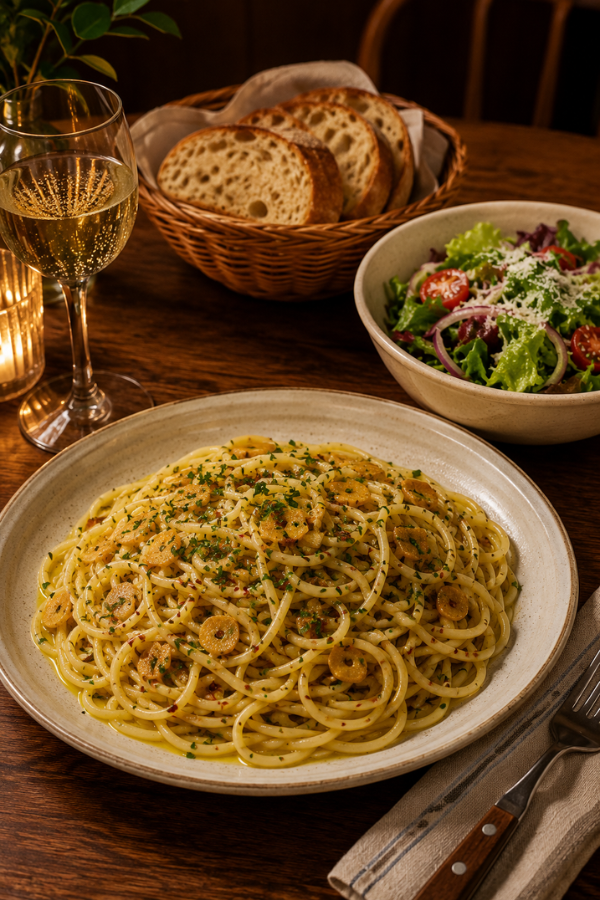
This pasta is flexible enough to sit next to almost anything simple.
- Green salad with lemon dressing
- Garlic bread or toasted sourdough
- Grilled chicken or shrimp
- White wine like Pinot Grigio or Sauvignon Blanc
- Sparkling water with lemon for a lighter option
FAQs
1. Can I make this ahead of time?
It’s best fresh. The texture changes when it sits, but you can prep ingredients ahead.
2. Can I add protein?
Yes—shrimp, chicken, or anchovies work well.
3. Is it spicy?
Only mildly. You control the heat with chili flakes.
4. Why does garlic sometimes taste bad?
It likely browned too much. Keep the heat low and watch it closely.
5. Can I use butter instead of olive oil?
You can, but it changes the entire character of the dish.
Nutrition Info
- Calories: 450–550
- Carbohydrates: 60–70g
- Fat: 18–25g
- Protein: 10–12g
Most of the fat comes from olive oil, which is part of the Mediterranean-style balance of this dish.
Final Thoughts
Some recipes feel like events. This one doesn’t.
It’s more like a reliable habit—you don’t plan for it, you just end up making it when life feels a little too full.
And somehow, that’s exactly why it works.
Don’t Miss: Creamy Sun-Dried Tomato Pasta
Don’t Miss: Italian Spaghetti Salad
Also Try: Chimichurri Shrimp Pasta
Ingredients
Method
- Step 1 – Cook The PastaBoil a large pot of salted water and cook spaghetti until al dente, usually 8–10 minutes depending on the brand.Before draining, save about 1 cup of pasta water. This is the secret to the sauce later.Don’t rinse the pasta. That starch on the surface is what helps everything cling together.

- Step 2 – Build The Garlic Oil BaseIn a large pan, heat olive oil on low to medium-low heat.Add sliced garlic and let it slowly turn golden. Not brown. Not dark. Just lightly golden with a soft aroma.Add red pepper flakes early so they bloom in the oil.This step is slow and important. If you rush it, the flavor turns harsh instead of smooth.
- Step 3 – Create The Light SauceAdd a splash of reserved pasta water into the pan.The mixture will look thin at first, then slightly creamy as you stir. That’s the starch doing its job.If it feels too thick, add a bit more water. Too loose? Let it simmer for a few seconds.This is the moment where everything starts coming together.
- Step 4 – Toss The PastaAdd the drained spaghetti directly into the pan.Toss continuously so every strand gets coated in the garlic oil mixture.This is where the dish transforms from “ingredients” into “something you actually want to eat.”If it looks dry, don’t panic—just add a little more pasta water.
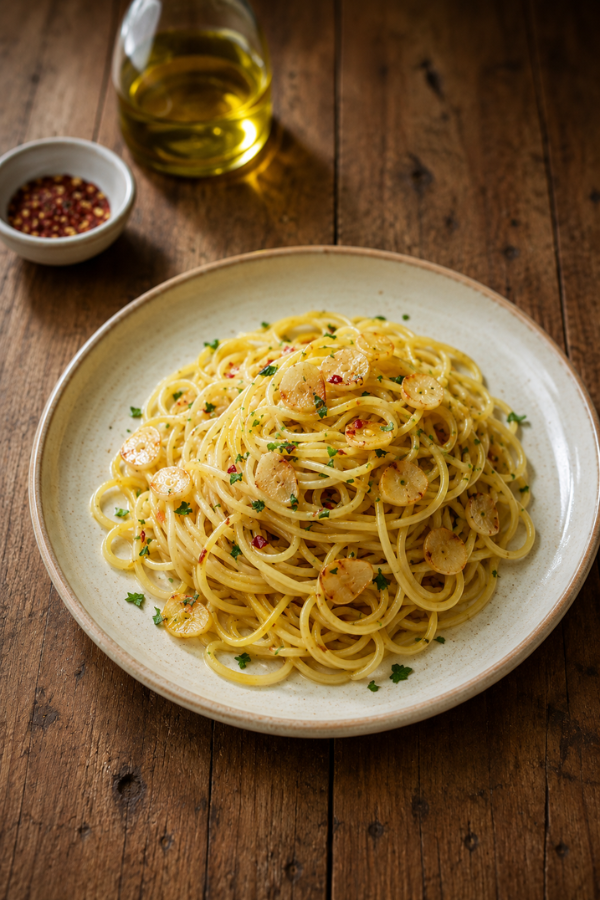
- Step 5 – Finish And ServeTurn off the heat. Add chopped parsley and toss once more.Optional: a sprinkle of Parmesan or a bit of lemon zest if you want brightness.Serve immediately while it’s still glossy and warm.
