
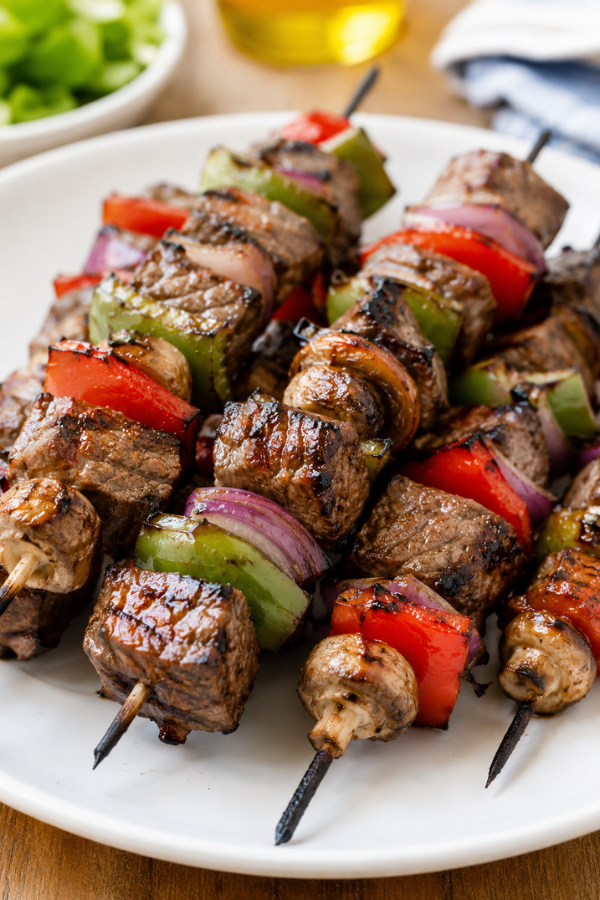
Steak Kabobs are the kind of dinner that brings people to the table fast. Maybe it’s the smell of beef hitting a hot grill, the bright peppers and onions tucked between juicy steak cubes, or the simple fun of food on a stick.
At first glance, they may look like weekend cookout food. However, they’re actually perfect for busy weeknights. You can marinate the steak in the morning, chop the vegetables ahead, and cook everything quickly when dinner rolls around. As a result, cleanup stays light while the flavor still feels big and satisfying.
This recipe uses top sirloin because it’s flavorful, easy to find, and more budget-friendly than fancy steakhouse cuts. Meanwhile, the simple marinade adds savory depth from soy sauce and Worcestershire, brightness from lemon juice, and a little sweetness to help the edges caramelize.
Serve these Steak Kabobs with rice, salad, potatoes, or warm flatbread. Or, if you’re standing near the grill, eat them straight off the skewer. Honestly, no judgment.
Why You’ll Love This Recipe
These Steak Kabobs give you that “cookout dinner” feeling without asking much from you. With a short marinade, a few colorful vegetables, and a hot grill, the meal feels special even on a regular weeknight.
You’ll love this recipe because:
- Great for prepping ahead: Marinate the steak earlier in the day and keep the vegetables ready in the fridge.
- Easy to customize: Use mushrooms, zucchini, cherry tomatoes, pineapple, or whatever grill-friendly vegetables you have.
- Family-friendly serving: Make mixed skewers for adults and simpler steak-and-pepper skewers for picky eaters.
- Minimal cleanup: Since most of the cooking happens on skewers, you’re not dealing with several pans.
- Leftovers work hard: Turn extra steak and vegetables into rice bowls, wraps, salads, or quick lunch boxes.
Ingredients
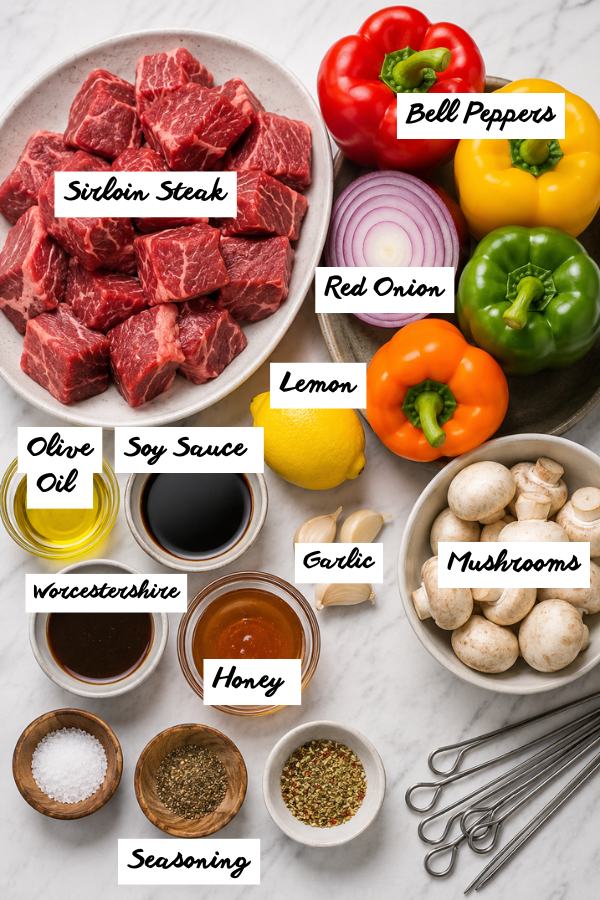
For the steak, use 1½ pounds of top sirloin, cut into 1¼-inch cubes. Sirloin is a good everyday choice because it has enough flavor to taste like steak, but it doesn’t cost as much as ribeye or tenderloin.
For the Vegetables
- 2 bell peppers, cut into 1¼-inch pieces
- 1 red onion, cut into chunks
- 8 ounces mushrooms, whole if small or halved if large
- 1 tablespoon olive oil
- Salt and black pepper
For the Marinade
- ¼ cup olive oil
- 3 tablespoons low-sodium soy sauce
- 2 tablespoons Worcestershire sauce
- 1 tablespoon lemon juice
- 1 tablespoon red wine vinegar or balsamic vinegar
- 1 tablespoon honey or brown sugar
- 3 garlic cloves, minced
- 1 teaspoon Dijon mustard
- 1 teaspoon smoked paprika
- ½ teaspoon dried oregano
- ½ teaspoon black pepper
- Optional: ¼ teaspoon red pepper flakes
You’ll also need 8 skewers. Metal skewers are easy and reusable. If you use wooden skewers, soak them in water for at least 30 minutes before grilling so they don’t burn too fast.
Easy Swaps
No mushrooms? Use zucchini instead. No red onion? Yellow onion works well, too. For a sweeter summer version, add pineapple chunks, but keep an eye on them because they can brown quickly.
If you want a richer version, use ribeye. For a special dinner, beef tenderloin makes very tender kabobs. However, for the most practical family dinner, sirloin is the move.
Step-by-Step Instructions
Step 1. Cut the Steak
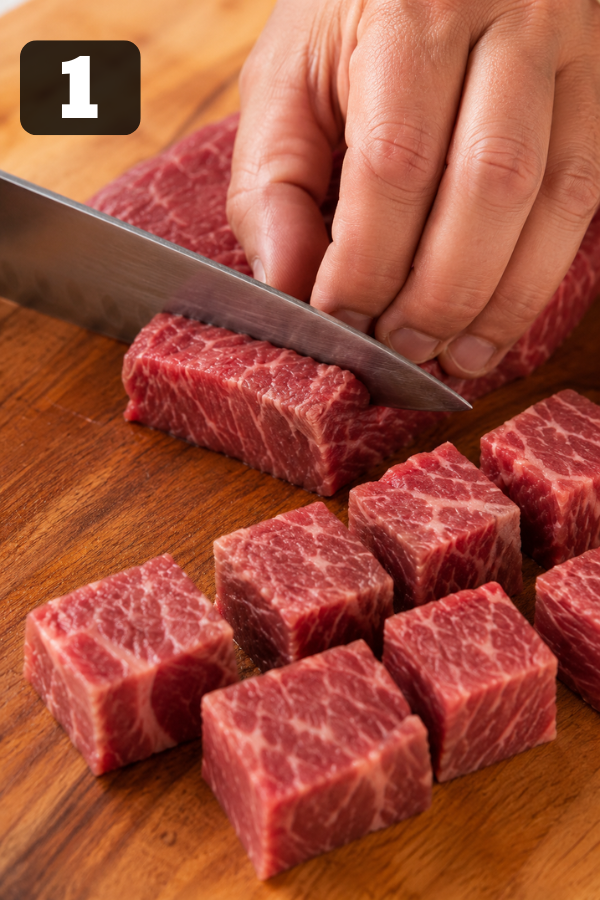
Pat the steak dry with paper towels, then cut it into even cubes. Aim for pieces about 1¼ inches wide. Smaller cubes cook too quickly and can turn dry before they get that nice grilled edge.
Also, try to keep the pieces close in size. They don’t need to be perfect, but similar pieces help every bite cook at the same pace.
Step 2. Mix the Marinade
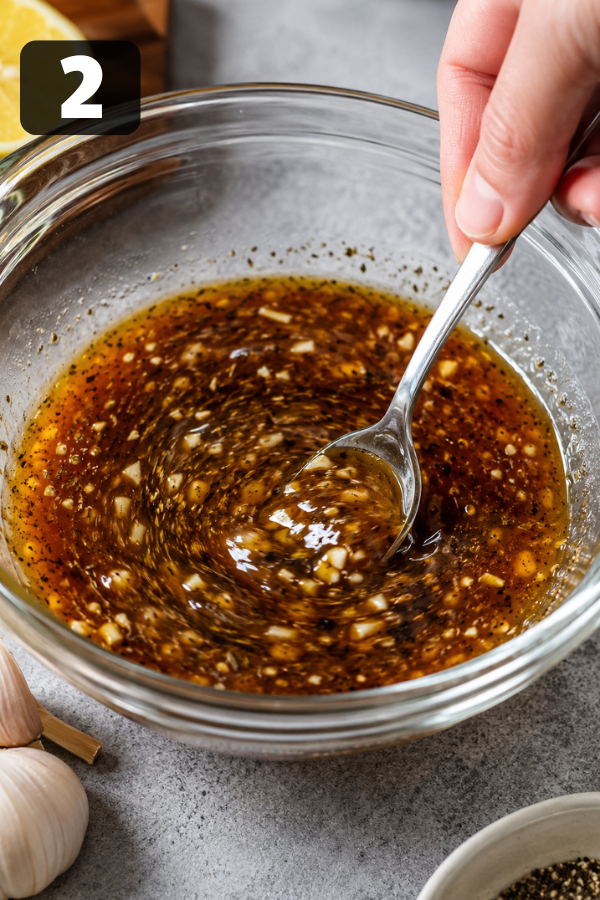
In a bowl or measuring cup, whisk together the olive oil, soy sauce, Worcestershire sauce, lemon juice, vinegar, honey, garlic, Dijon, smoked paprika, oregano, and black pepper.
Before adding salt, taste the marinade. Soy sauce and Worcestershire already bring plenty of salt, so you may not need more.
If you want to brush the kabobs later, set aside a few tablespoons of marinade before it touches raw beef.
Step 3. Marinate the Beef
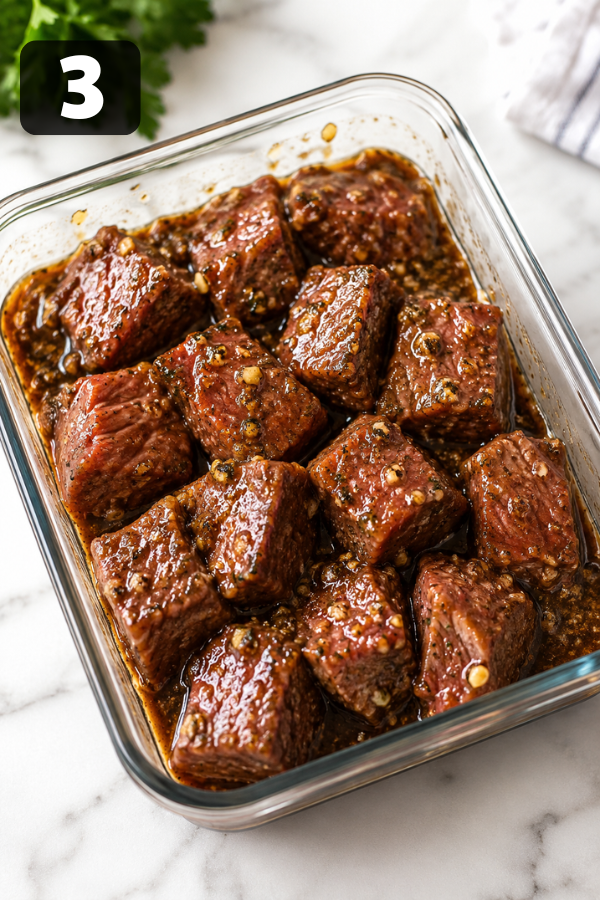
Place the steak cubes in a large zip-top bag or shallow container. Then, pour the marinade over the steak, seal it, and gently massage so each piece is coated.
Refrigerate for at least 1 hour. For deeper flavor, aim for 3 to 6 hours. You can also marinate it in the morning and cook it for dinner. That small bit of planning can make the evening feel much easier.
However, don’t marinate very acidic steak mixtures too long. A full day can work for some marinades, but too much acid for too long may make the texture soft instead of tender.
Step 4. Prep the Vegetables
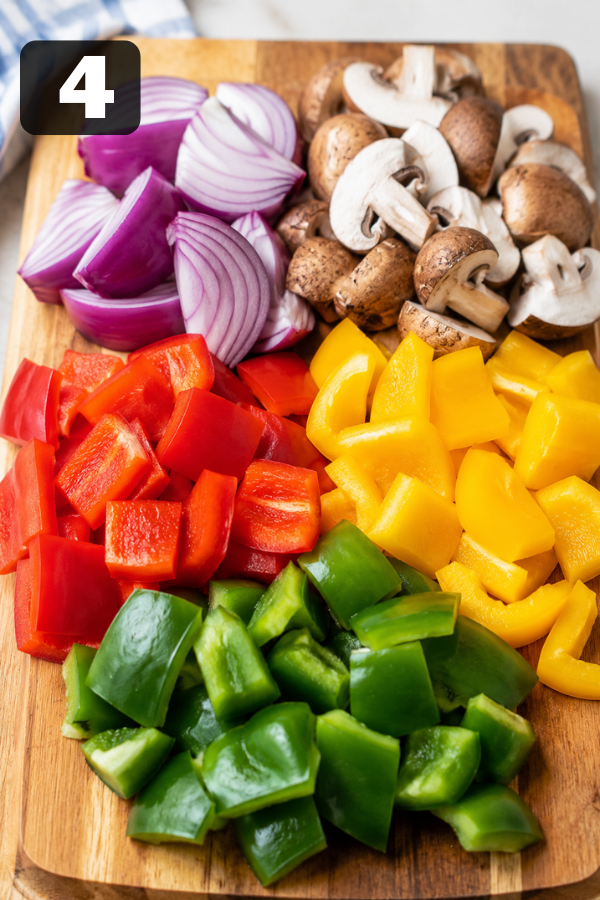
Cut the peppers and onions into pieces close to the size of the steak. Keep onion chunks in a few layers so they don’t burn too fast.
Next, toss the vegetables with olive oil, salt, and pepper. You can add a pinch of garlic powder or paprika if you want extra flavor.
Here’s a small but helpful trick: if you like your vegetables softer, make veggie-only skewers. That way, the vegetables can stay on the grill a little longer while the steak comes off right on time.
Step 5. Thread the Kabobs
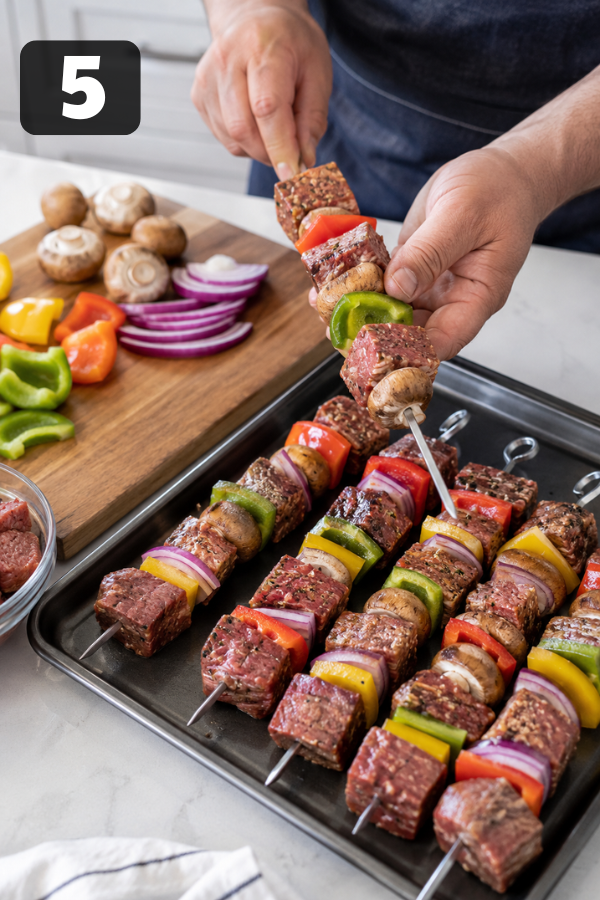
Thread the steak and vegetables onto skewers, alternating pieces as you go. A simple pattern works well: steak, pepper, onion, mushroom, then repeat.
Don’t pack everything tightly. Instead, leave tiny gaps between pieces so heat can move around them. Packed skewers steam, while loose skewers sear.
Step 6. Grill the Kabobs
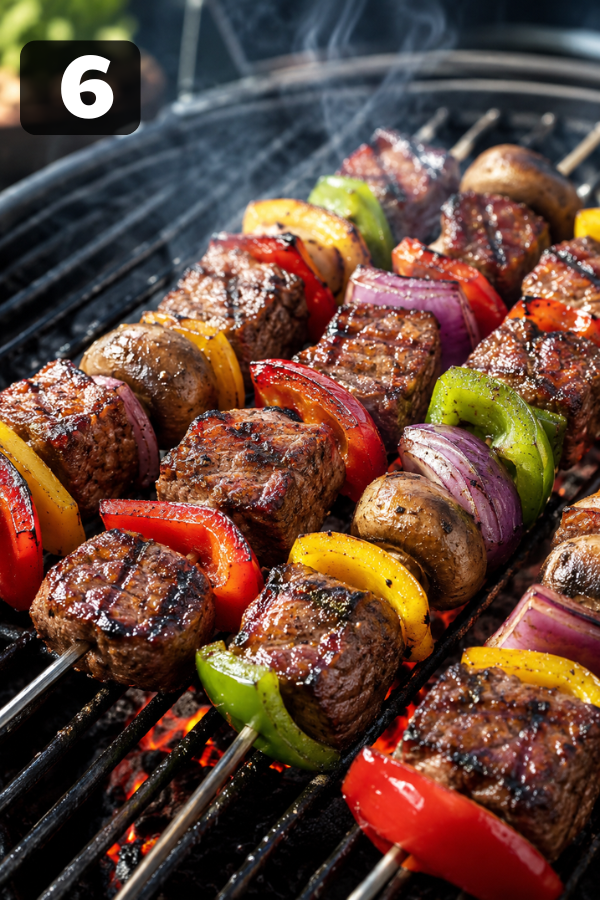
Preheat the grill to medium-high heat, about 400 to 425°F. After that, clean and oil the grates.
Place the Steak Kabobs on the grill. Cook for 8 to 15 minutes, turning every 2 to 3 minutes, until the steak has browned edges and the vegetables are tender-crisp.
Use an instant-read thermometer if you have one. Pull the steak around 130°F for medium-rare, 135 to 140°F for medium, or cook to 145°F with a short rest for food safety guidance.
Finally, let the kabobs rest for 5 minutes before serving. This helps the juices settle back into the meat instead of spilling out on the plate.
No Grill? No Problem
A grill gives Steak Kabobs that smoky backyard flavor. Still, you have plenty of good options indoors.
Grill Pan Method
For a grill pan, heat it over medium-high heat, add a light brush of oil, and cook the kabobs in batches. Turn every few minutes until the steak is browned and cooked to your liking.
Oven Method
If you prefer the oven, place the kabobs on a foil-lined sheet pan and bake at 425°F. Turn once or twice. For more char, broil them for the last 1 to 2 minutes and watch closely.
Air Fryer Method
An air fryer works, too. Use short skewers that fit the basket, then cook at 400°F for about 8 to 10 minutes, turning halfway. It’s not classic, but on a busy night, it works.
Tips for Juicy Steak Kabobs
The biggest secret is not really a secret: don’t overcook the steak.
Kabob pieces are small, so they cook fast. A few extra minutes can take them from juicy to chewy. Therefore, use a thermometer if you can. It’s not fancy; it’s just helpful.
A few more tips:
- Cut the steak into even 1¼-inch cubes.
- Marinate for at least 1 hour, but 3 to 6 hours is better.
- Don’t crowd the skewers.
- Oil the grill grates before cooking.
- Turn the kabobs every 2 to 3 minutes.
- Rest the steak before serving.
If you’re new to grilling, keep the heat at medium-high, not wild-and-flaming. Fire looks dramatic, but steady heat cooks better.
Storage and Leftovers
Leftover Steak Kabobs keep well in the fridge for 3 to 4 days. First, remove the steak and vegetables from the skewers. Then, store them in an airtight container.
To reheat, warm them gently in a skillet over medium-low heat. Add a splash of water or broth if needed. The microwave works too, but use short bursts so the steak doesn’t toughen.
You can freeze cooked steak pieces, but the vegetables may soften after thawing. For a better meal-prep idea, freeze the raw steak in the marinade. Thaw it overnight in the fridge, then thread it with fresh vegetables when you’re ready to cook.
Leftover Ideas
Leftovers are great in:
- Rice bowls with cucumber and yogurt sauce
- Flatbread wraps with lettuce and tomato
- Big salads with lemon vinaigrette
- Breakfast hash with potatoes and eggs
- Quick quesadillas with cheese and peppers
A second dinner from one cooking session? That’s always a win.
What to Serve With Steak Kabobs
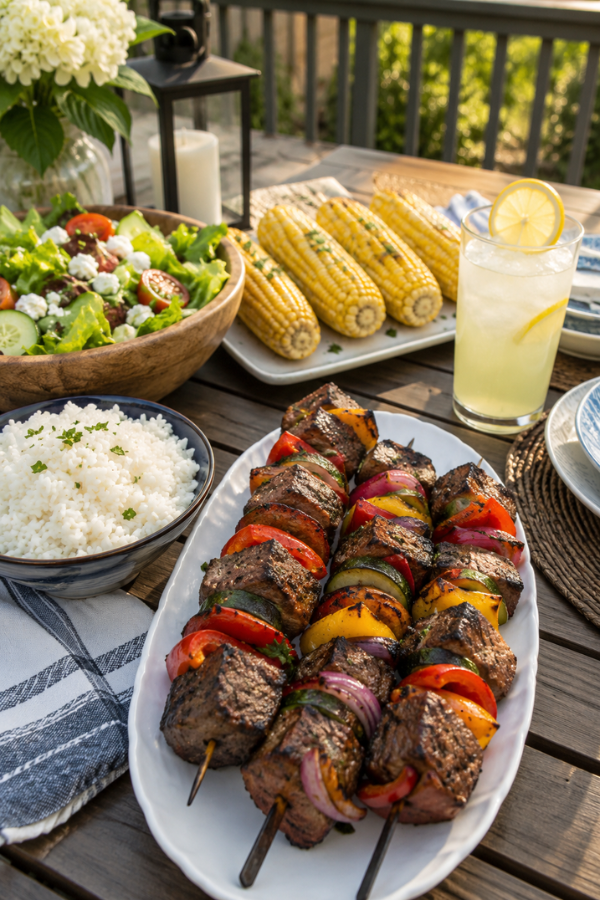
Steak Kabobs play nicely with almost anything, which is part of their charm.
Easy Weeknight Sides
For an easy weeknight plate, serve them with rice, roasted potatoes, couscous, or a bagged salad kit.
Lighter Side Dishes
For a lighter dinner, try cucumber tomato salad, grilled zucchini, cauliflower rice, or a crisp green salad.
Cookout Sides
At a cookout, add corn on the cob, pasta salad, watermelon feta salad, or coleslaw. That kind of plate feels like summer, even if you’re eating on a regular kitchen chair with laundry waiting in the next room.
Sauces and Drinks
Sauces make them even better. Try chimichurri, garlic butter, tzatziki, creamy horseradish sauce, or a lemon-garlic yogurt sauce.
For drinks, iced tea, sparkling lemonade, citrus water, or a ginger-lime mocktail all fit. For dessert, keep it simple with berry crisp, lemon bars, peach cobbler, or grilled pineapple.
Fun Variations
Garlic Butter Steak Kabobs
Brush the cooked kabobs with melted garlic butter and sprinkle with parsley. Then, serve with mashed potatoes or roasted baby potatoes.
Fajita Steak Kabobs
Use lime juice, cumin, chili powder, and smoked paprika in the marinade. After grilling, serve with tortillas, salsa, avocado, and sour cream.
Teriyaki Steak Kabobs
Use soy sauce, ginger, garlic, honey, and rice vinegar. For a sweeter bite, add pineapple and serve with rice.
Mediterranean Steak Kabobs
Use olive oil, lemon juice, garlic, and oregano. Then, pair the kabobs with flatbread, cucumber salad, and tzatziki.
Steakhouse Mushroom Kabobs
Use extra mushrooms, red onion, Worcestershire, Dijon, and garlic. To make it feel like a steakhouse meal, serve with a wedge salad or baked potato.
Common Issues and Easy Fixes
If Your Steak Is Tough
If your steak is tough, it may be overcooked or cut too small. Use sirloin, cut larger cubes, and check the temperature early.
If Your Vegetables Burn
When your vegetables burn before the steak is done, the pieces may be too small or the grill may be too hot. Cut vegetables larger, keep onion layers together, or use separate vegetable skewers.
If the Kabobs Stick
If the kabobs stick, the grill may not be hot or clean enough. Preheat it well, clean the grates, oil them, and let the steak sear before turning.
If the Marinade Tastes Too Salty
When the marinade tastes too salty, use low-sodium soy sauce next time. You can also balance salty steak by serving it with plain rice, potatoes, or a fresh salad.
If Wooden Skewers Burn
If wooden skewers burn, soak them longer or switch to metal skewers. Metal skewers are honestly worth it if you make kabobs often.
FAQs
1. What is the best steak for Steak Kabobs?
Top sirloin is the best everyday choice. It’s flavorful, tender enough for quick grilling, and usually easier on the budget than ribeye or tenderloin.
2. How long should I marinate steak for kabobs?
Marinate for at least 1 hour. For better flavor, aim for 3 to 6 hours. However, if your marinade has a lot of acid, avoid going too long because the texture can become too soft.
3. Can I make Steak Kabobs ahead of time?
Yes. You can mix the marinade, cut the vegetables, and marinate the steak ahead. You can also assemble the skewers a few hours before cooking and keep them covered in the fridge.
4. Can I cook Steak Kabobs in the oven?
Yes. Bake them at 425°F on a lined sheet pan, turning once or twice. Then, broil briefly at the end if you want more browning.
5. Should steak and vegetables go on the same skewer?
They can, and it looks beautiful. However, if you want more control, cook steak and vegetables on separate skewers. Steak cooks fast, while some vegetables need more time.
6. How do I keep Steak Kabobs from drying out?
Use evenly cut steak cubes, marinate the beef, cook over medium-high heat, and check the temperature early. Also, rest the kabobs for 5 minutes before serving.
7. Are Steak Kabobs healthy?
They can be. They’re high in protein and include vegetables. For a lighter meal, use lean sirloin, low-sodium soy sauce, less sugar in the marinade, and serve with salad or cauliflower rice.
Nutrition Info
Nutrition will vary based on the steak cut, vegetables, and marinade amount used. A typical serving of Steak Kabobs may have about 330 to 420 calories, 28 to 35 grams of protein, 10 to 20 grams of carbs, and 14 to 25 grams of fat.
To lower sodium, use low-sodium soy sauce. To lower carbs, reduce the honey or brown sugar. To make the meal higher in fiber, serve it with vegetables, salad, quinoa, or brown rice.
Conclusion
Steak Kabobs are an easy way to make dinner feel fresh, colorful, and a little more special without adding much work. With tender marinated steak, crisp-tender vegetables, and quick grill time, they’re perfect for busy weeknights, summer cookouts, or simple meal prep.
Serve them with rice, salad, potatoes, or your favorite sauce, and you’ve got a satisfying meal that’s flexible, flavorful, and family-friendly.
Don’t Miss: BBQ Chicken Bacon Pineapple Kabobs
Don’t Miss: Huli Huli Chicken Recipe
Also Try: Best Coleslaw Recipe
Ingredients
Method
- Cut the steak: Pat steak dry, then cut into even 1¼-inch cubes so the pieces cook at the same pace.

- Make the marinade: Whisk together olive oil, soy sauce, Worcestershire sauce, lemon juice, vinegar, honey, garlic, Dijon, smoked paprika, oregano, and black pepper. Reserve a few tablespoons before adding raw beef if you want extra brushing sauce.
- Marinate the beef: Add steak cubes to a zip-top bag or shallow container. Pour in the marinade, coat well, and refrigerate for at least 1 hour, or 3–6 hours for deeper flavor.
- Prep the vegetables: Cut peppers, onions, and mushrooms into pieces close to the steak size. Toss with olive oil, salt, and pepper.
- Thread the kabobs: Alternate steak and vegetables on skewers, leaving small gaps between pieces so they sear instead of steam.
- Grill and rest: Grill over medium-high heat, about 400–425°F, for 8–15 minutes, turning every 2–3 minutes. Cook to your preferred doneness, then rest for 5 minutes before serving.
