
High Protein Low Carb Steak Fajita Bowl Recipe
You know those nights when you want real food, not another sad salad… but you also don’t want to babysit three pots on the stove? That’s exactly where this steak fajita bowl shines.
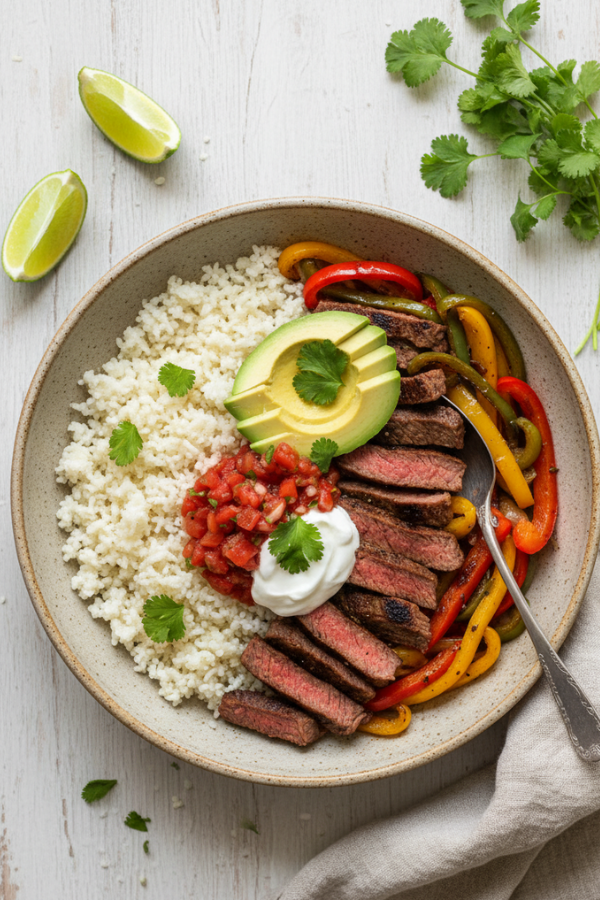
It’s basically your favorite fajita order from a Mexican place, only lighter on carbs, heavier on protein, and built for busy home cooks. The winning formula is simple: marinated steak, bell peppers, onions, cauliflower rice, and creamy toppings.
Most versions of this kind of bowl land around 400–450 calories, roughly 35–40g protein, about 12g carbs, and a good hit of fiber thanks to veggies and cauliflower rice. So you get that “bowl comfort” feeling without a carb crash afterward.
Let’s walk through it step by step.
Why This Bowl Works So Well for Busy Home Cooks
Fast, Filling, And Actually Satisfying
Most women trying to eat “healthier” hit the same wall: the food looks good on Instagram but leaves you hungry an hour later. Here, the base is steak, not just lettuce.
- Steak plus Greek yogurt easily gives you around 35–40g protein per serving.
- Cauliflower rice and peppers add bulk and fiber, so the bowl feels generous without heavy carbs.
It feels like comfort food, but you can still sleep well knowing tomorrow’s jeans will zip.
Low Carb, Not Low Joy
Many low-carb dinners feel like they’re missing something. This doesn’t.
- Cauliflower rice sits under everything like regular rice, so the bowl looks and eats the same way as a classic fajita bowl.
- Avocado, Greek yogurt or sour cream, salsa, and cilantro keep everything bright and creamy.
You get smoky, tangy, creamy, crunchy—in one bowl. That’s why this style of recipe shows up again and again on healthy weeknight dinner lists.
Great For Meal Prep (Without Turning To Mush)
If you love cooking once and eating three times, this is a keeper:
- The recipe naturally makes 4 servings in about 1 hour total, including marinating time.
- Components keep up to 3 days in the fridge if stored separately, and steak + veggies can sit in the freezer for up to 3 months.
So you can have one bowl fresh on Sunday night, then stash three more for lunches.
Ingredients You’ll Need
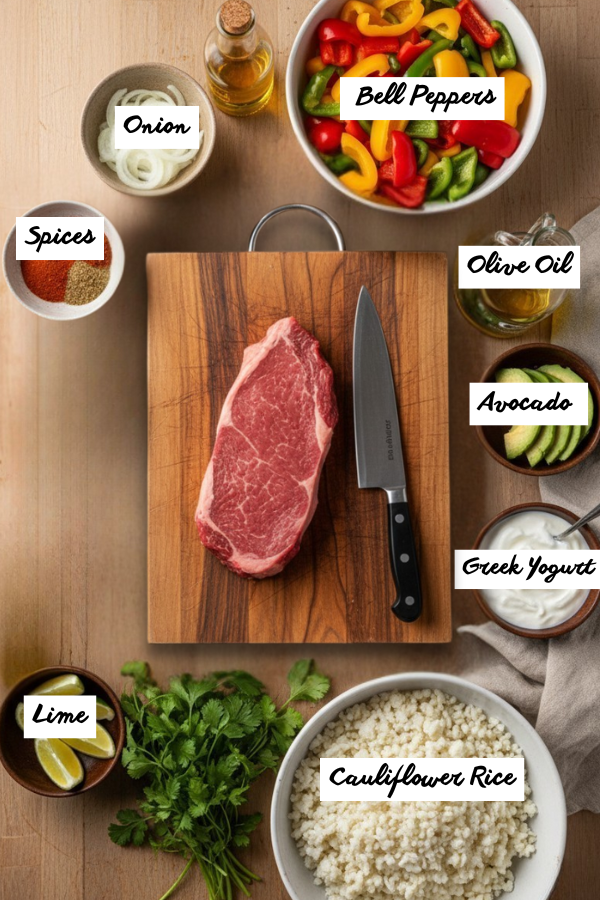
You don’t need fancy stuff here—most of this is regular grocery store food.
Steak And Marinade
- 1 lb flank or sirloin steak
- Lean, flavorful, and great for marinating.
- Olive oil – Helps the marinade cling and keeps the steak juicy.
- Fresh lime juice – Bright, tangy, and helps tenderize.
- Garlic – Fresh if you can; jarred is fine on a weeknight.
- Spices:
- Chili powder
- Smoked paprika
- Ground cumin
- Salt + black pepper
These spices bring that classic fajita flavor you expect from a good Tex-Mex bowl.
Simple swaps:
- No flank steak? Use thin-cut sirloin or even ribeye (richer, a bit more fat).
- No lime? Lemon works in a pinch.
Veggies And Base
- Bell peppers – Mix colors (red, yellow, green) for sweetness and crunch.
- Onion – Yellow or red, sliced.
- Cauliflower rice – Fresh or frozen, for the low-carb base.
If someone at home doesn’t care about carbs:
- Use brown rice or even half rice, half cauliflower rice for a compromise.
High-Protein, High-Satisfaction Toppings
- Greek yogurt (plain) – Extra protein and tang; an easy swap for sour cream.
- Avocado or guacamole – Healthy fats + creaminess.
- Fresh salsa – Adds brightness without many calories.
- Fresh cilantro + lime wedges – For finishing.
- Optional extras: shredded cheese, jalapeños, hot sauce.
You can keep toppings simple on a weeknight and save the “full bar” for Friday.
Step-by-Step Instructions
Here’s the flow busy cooks care about: marinate → sear steak → cook veggies + base → assemble.
Step 1 – Marinate The Steak
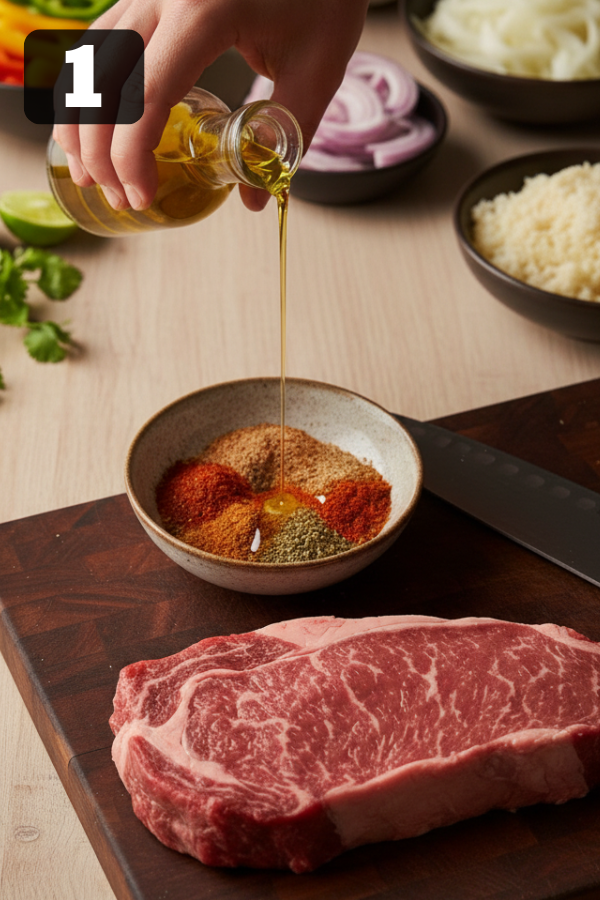
Mix in a bowl:
- 2 Tbsp olive oil
- Juice of 1 lime
- 3 cloves garlic, minced
- 1 Tbsp chili powder
- 1 tsp smoked paprika
- 1 tsp ground cumin
- 1 tsp salt + ½ tsp black pepper
Add the steak and coat well. Cover and chill:
- Minimum: 20–30 minutes
- Better: 2 hours
- Maximum: overnight for deeper flavor
Is it worth marinating longer? Yes. The longer the steak sits in that mixture of acid, oil, and spices, the more tender and flavorful it becomes—with no extra work from you.
Step 2 – Prep Veggies And Base While The Steak Rests
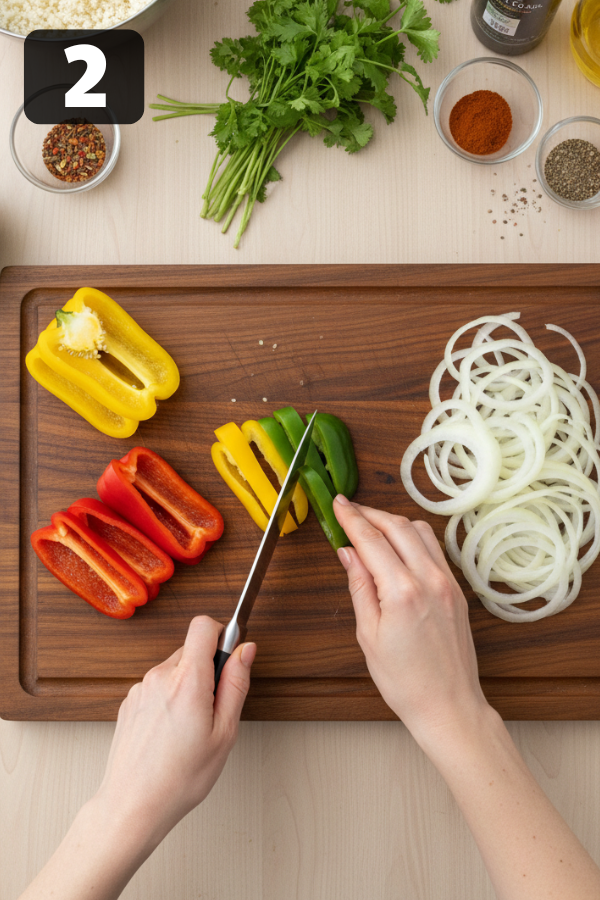
You don’t need to stand around watching the fridge.
- Slice 2 bell peppers into strips.
- Slice 1 onion into thin half-moons.
- If using fresh cauliflower, grate or pulse florets in a food processor. If using frozen, just break up any big clumps.
It’s simple knife work, and once you’ve done it once, you can do it almost on autopilot while listening to a podcast.
Step 3 – Sear The Steak
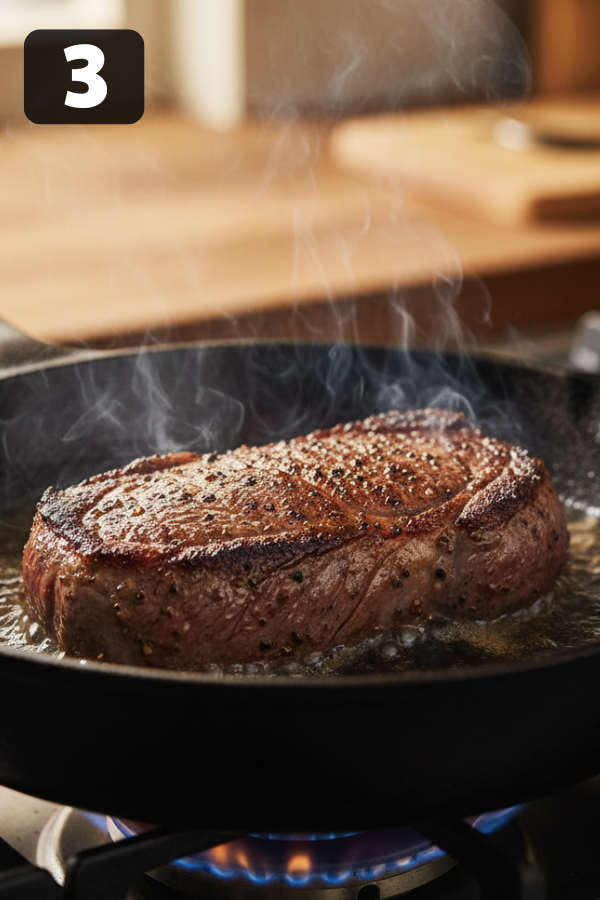
Grab a heavy skillet (cast iron if you have it).
- Heat 1 Tbsp oil over medium-high to high until the pan is very hot.
- Shake excess marinade off the steak so it sears instead of steams.
- Lay the steak flat and cook:
- Around 3–4 minutes per side for medium-rare (adjust by a minute or so depending on thickness).
Use a thermometer if you like precision:
- About 130–135°F (54–57°C) for medium-rare
- About 135–145°F (57–63°C) for medium
Food-safety guidelines recommend at least 145°F (63°C) for beef steaks plus a short rest. Choose what feels right for you and your family.
Transfer the steak to a cutting board, tent with foil, and let it rest 5–10 minutes. That pause keeps the juices inside instead of all over your board.
Step 4 – Sauté The Fajita Veggies
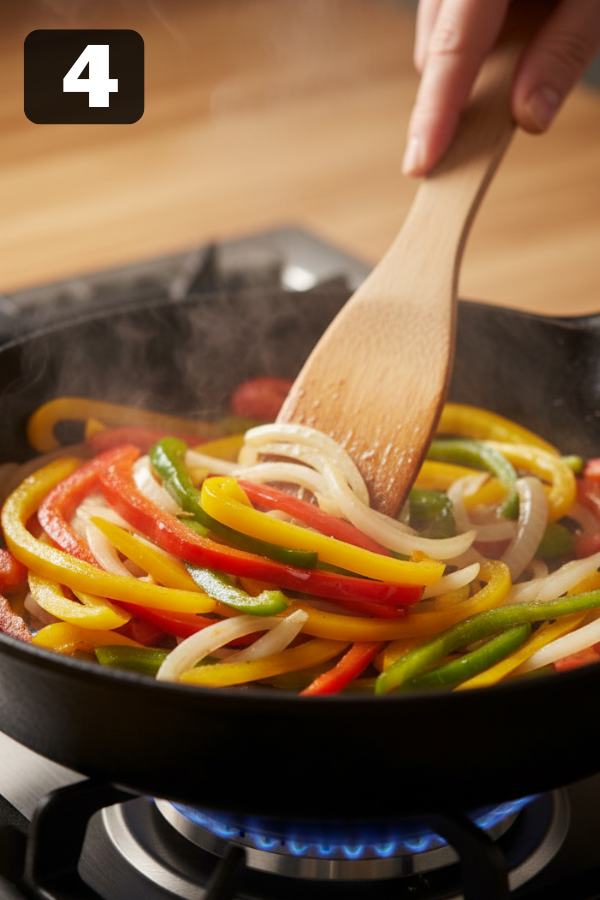
In the same pan:
- Add 1–2 Tbsp oil if the pan looks dry.
- Toss in the peppers and onions with a pinch of salt.
- Cook over medium-high for 5–7 minutes, stirring occasionally.
You want them slightly softened with a bit of char on some edges. Here’s a small trick: don’t stir too much. Let the veggies sit for 30–40 seconds between stirs so they can colour instead of just steaming.
Step 5 – Cook The Low-Carb Base
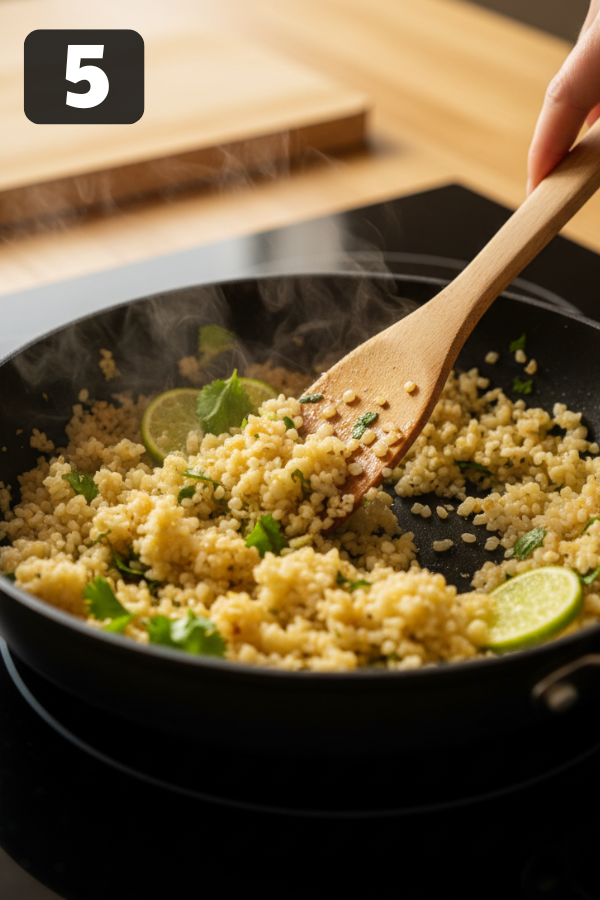
If you’re like most busy people, this will be cauliflower rice. It’s quick.
- Heat a second skillet over medium-high with 1 Tbsp oil.
- Add 3–4 cups cauliflower rice.
- Cook for 5–7 minutes, breaking up clumps, until the rice is hot and just slightly toasted.
- Season with salt and a squeeze of lime.
Frozen cauliflower rice can go straight from the bag to the pan. If you’re using brown rice or quinoa for family members, reheat leftovers in the microwave or on the stove with a bit of water or broth.
Step 6 – Slice The Steak And Assemble Bowls
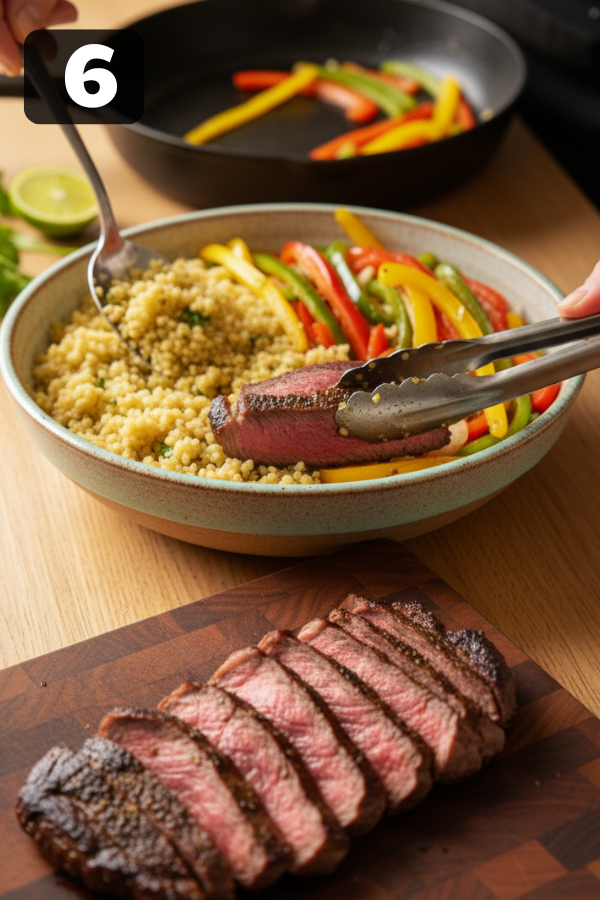
Now the fun part.
- Slice the rested steak thinly against the grain. This single step is one of the big tenderness secrets.
- Fill each bowl with:
- 1–1½ cups cauliflower rice (or salad greens)
- A generous handful of peppers and onions
- 4–5 oz sliced steak
Top with:
- A spoonful of Greek yogurt or sour cream
- Sliced avocado or a scoop of guacamole
- Salsa, cilantro, jalapeños, lime wedges
It looks like something from your favorite burrito chain, only you know exactly what went into it.
Step 7 – Turn It Into Meal Prep
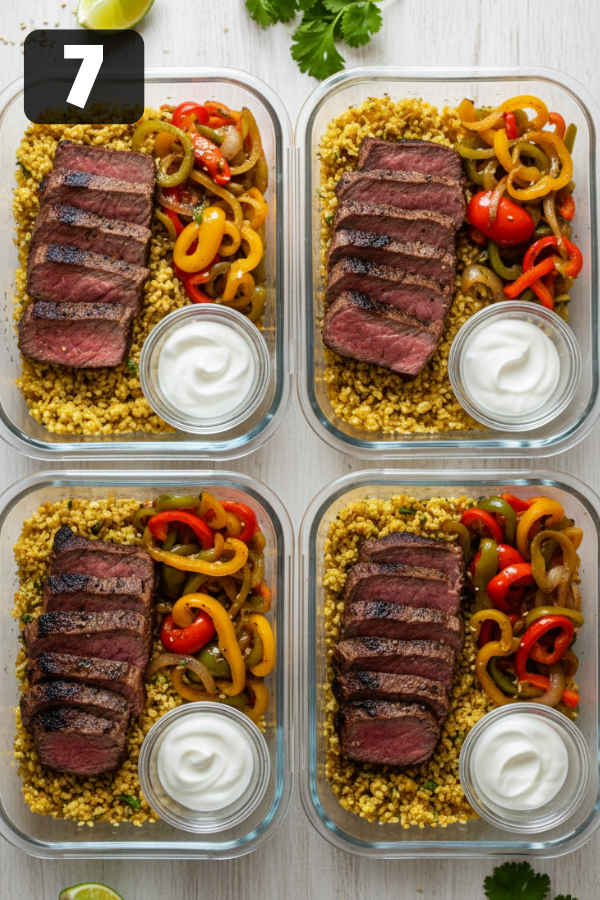
For 4 bowls:
- Divide the base, veggies, and steak into 4 containers.
- Keep “cold toppings” (avocado, yogurt) in small separate cups so they stay fresh.
- Store:
- In the fridge: up to 3 days
- In the freezer: steak + veggie mix up to 3 months; add fresh cauliflower rice and toppings on the day you eat
Reheat the hot parts in a skillet with a splash of lime juice; it wakes the flavors back up.
Tips That Make a Big Difference
A few small tweaks give you restaurant-level bowls at home.
For Flavor
- Use smoked paprika instead of regular for a subtle smoky note.
- Don’t rush the marinade. Even 30 minutes changes the taste; 2 hours is better.
- Deglaze the steak pan with a splash of lime juice or water before adding veggies so they pick up all the brown bits.
For Texture
- Hot pan, dry steak: this is how you get a crust instead of grey meat.
- Don’t overcrowd the pan—cook steak in batches if your skillet is small.
- For cauliflower rice that isn’t soggy, cook it in a thin layer and don’t cover the pan.
For Macros
- Want more protein? Add a bit more steak per bowl or use extra Greek yogurt.
- Want fewer calories? Use less oil, choose 0% Greek yogurt, and keep avocado to a small portion.
You can steer this bowl toward “gym-night fuel” or “light dinner” just by nudging toppings.
What to Serve With Your Fajita Bowl
You don’t have to serve anything else—it’s a full meal—but if you want to round out the table:
- Light sides:
- Simple green salad with lime vinaigrette
- Cucumber salad
- Roasted Brussels sprouts or broccoli
- For non–low-carb eaters:
- Tortilla chips with salsa or guac
- Cilantro-lime rice
- Easy dessert:
- Square of dark chocolate
- Chia pudding
- Greek yogurt with berries
Nothing fancy, just things you can manage on a busy Tuesday.
Nutrition Snapshot
Based on a typical version of this recipe (1 lb steak, peppers, onion, cauliflower rice, avocado, Greek yogurt):
Per serving (1 bowl, about ¼ of the recipe):
- Calories: ~400–450 kcal
- Protein: ~35–38 g
- Fat: ~25–28 g
- Carbs: ~12 g
- Fiber: ~7 g
That’s why this High Protein Low Carb Steak Fajita Bowl Recipe works so well if you’re trying to keep blood sugar stable, stay full between meals, or just feel better after dinner.
FAQs
1. Can I use chicken or shrimp instead of steak?
Yes—swap the steak for chicken breast, chicken thighs, or shrimp, cook until safely done (chicken to 165°F / 74°C, shrimp just pink), then build the bowl with the same veggies, base, and toppings.
2. Is this keto-friendly?
Yes, as long as you use cauliflower rice or salad as the base, skip beans and corn, and stick to low-carb toppings like Greek yogurt, sour cream, avocado, and salsa.
3. How do I keep the steak tender?
Marinate the steak at least 30 minutes, sear it in a very hot pan without crowding, avoid overcooking, let it rest, and always slice it thinly against the grain.
4. Can I make this ahead for the whole week?
You can prep 3 days’ worth for the fridge and freeze extra steak and veggies for up to about 3 months, then thaw, reheat, and add fresh cauliflower rice and toppings when you’re ready to eat.
Conclusion
In the end, this High Protein Low Carb Steak Fajita Bowl Recipe gives you exactly what most busy home cooks want: real flavor, real protein, and real flexibility. You can serve it hot for a quick family dinner, pack it into neat meal-prep boxes for the next few days, or tweak it with chicken, shrimp, or extra veggies when you feel like changing things up. It’s the kind of bowl that slips easily into your weekly rotation—and quietly supports your health goals while still tasting like something you actually look forward to eating.
| Prep Time | 20-30 minutes |
| Cook Time | 20 minutes |
| Servings |
bowls
|
- For the steak & marinade
- 1 lb flank or sirloin steak 450 g
- 2 tbsp olive oil
- Juice of 1 lime 2–3 Tbsp
- 3 cloves garlic minced
- 1 Tbsp chili powder
- 1 tsp Smoked paprika
- 1 tsp ground cumin
- 1 tsp Salt
- tsp ½black pepper
- For the veggies & base
- 2 bell peppers sliced
- 1 medium onion sliced
- 1 –2 Tbsp olive oil for sautéing
- 3 cups –4cauliflower rice fresh or frozen
- Salt + extra lime juice to taste
- For toppings
- cup ½–1plain Greek yogurt or sour cream
- 1 avocado sliced or cubed
- cup ½–1fresh salsa
- Fresh cilantro chopped
- Lime wedges jalapeños (optional)
Ingredients
|
|
- Marinate The Steak Mix in a bowl: 2 Tbsp olive oil Juice of 1 lime 3 cloves garlic, minced 1 Tbsp chili powder 1 tsp smoked paprika 1 tsp ground cumin 1 tsp salt + ½ tsp black pepper Add the steak and coat well. Cover and chill: Minimum: 20–30 minutes Better: 2 hours Maximum: overnight for deeper flavor Is it worth marinating longer? Yes. The longer the steak sits in that mixture of acid, oil, and spices, the more tender and flavorful it becomes—with no extra work from you.

- Prep Veggies And Base While The Steak Rests You don’t need to stand around watching the fridge. Slice 2 bell peppers into strips. Slice 1 onion into thin half-moons. If using fresh cauliflower, grate or pulse florets in a food processor. If using frozen, just break up any big clumps. It’s simple knife work, and once you’ve done it once, you can do it almost on autopilot while listening to a podcast.
- Sear The Steak Grab a heavy skillet (cast iron if you have it). Heat 1 Tbsp oil over medium-high to high until the pan is very hot. Shake excess marinade off the steak so it sears instead of steams. Lay the steak flat and cook: Around 3–4 minutes per side for medium-rare (adjust by a minute or so depending on thickness). Use a thermometer if you like precision: About 130–135°F (54–57°C) for medium-rare About 135–145°F (57–63°C) for medium Food-safety guidelines recommend at least 145°F (63°C) for beef steaks plus a short rest. Choose what feels right for you and your family. Transfer the steak to a cutting board, tent with foil, and let it rest 5–10 minutes. That pause keeps the juices inside instead of all over your board.
- Sauté The Fajita Veggies In the same pan: Add 1–2 Tbsp oil if the pan looks dry. Toss in the peppers and onions with a pinch of salt. Cook over medium-high for 5–7 minutes, stirring occasionally. You want them slightly softened with a bit of char on some edges. Here’s a small trick: don’t stir too much. Let the veggies sit for 30–40 seconds between stirs so they can colour instead of just steaming.
- Cook The Low-Carb Base If you’re like most busy people, this will be cauliflower rice. It’s quick. Heat a second skillet over medium-high with 1 Tbsp oil. Add 3–4 cups cauliflower rice. Cook for 5–7 minutes, breaking up clumps, until the rice is hot and just slightly toasted. Season with salt and a squeeze of lime. Frozen cauliflower rice can go straight from the bag to the pan. If you’re using brown rice or quinoa for family members, reheat leftovers in the microwave or on the stove with a bit of water or broth.
- Slice The Steak And Assemble Bowls Now the fun part. Slice the rested steak thinly against the grain. This single step is one of the big tenderness secrets. Fill each bowl with: 1–1½ cups cauliflower rice (or salad greens) A generous handful of peppers and onions 4–5 oz sliced steak Top with: A spoonful of Greek yogurt or sour cream Sliced avocado or a scoop of guacamole Salsa, cilantro, jalapeños, lime wedges It looks like something from your favorite burrito chain, only you know exactly what went into it.
- Turn It Into Meal Prep For 4 bowls: Divide the base, veggies, and steak into 4 containers. Keep “cold toppings” (avocado, yogurt) in small separate cups so they stay fresh. Store: In the fridge: up to 3 days In the freezer: steak + veggie mix up to 3 months; add fresh cauliflower rice and toppings on the day you eat Reheat the hot parts in a skillet with a splash of lime juice; it wakes the flavors back up.
