
Easy Slow Cooker Mexican Pozole Rojo Recipe
You know those nights when you want something comforting, but you’re staring at a full sink, a packed schedule, and zero mental energy?
Pozole rojo is perfect for that kind of day.
It’s hearty but not heavy, bold but not fussy. You do a little prep, blend a deep red chile sauce, let the slow cooker hum quietly in the background, and then just show up at dinner time with a ladle in your hand and a big bowl waiting.
Let’s walk through how to get there—without turning your kitchen upside down.
Why This Pozole Rojo Actually Works for Busy Home Cooks
This isn’t one of those recipes that only makes sense for lazy Sundays. It’s built for real life.
Mostly hands-off cooking
You’ll spend about 25–30 minutes doing the important parts: toasting chiles, blending the sauce, seasoning the pork. After that, the slow cooker does the slow simmering for 4–8 hours. No constant stirring, no babysitting.
Big flavor from simple ingredients
The ingredient list looks humble: pork shoulder, canned hominy, dried chiles, chicken broth, onion, garlic, a few spices. But slow cooking pulls everything together into a deep, rich bowl of comfort that tastes like you fussed all day.
Easy to adjust for your family
Want it mild for kids? Stick to ancho and guajillo chiles, remove the seeds, and skip the tiny spicy chiles. Want more kick? Add a couple of hotter chiles or a pinch of chili powder. You’re in charge.
Built for meal prep
A pot of pozole gives you 6–8 generous servings. It keeps well in the fridge for several days and freezes beautifully. Make it once, reheat it for lunches and busy nights, and just refresh with fresh toppings.
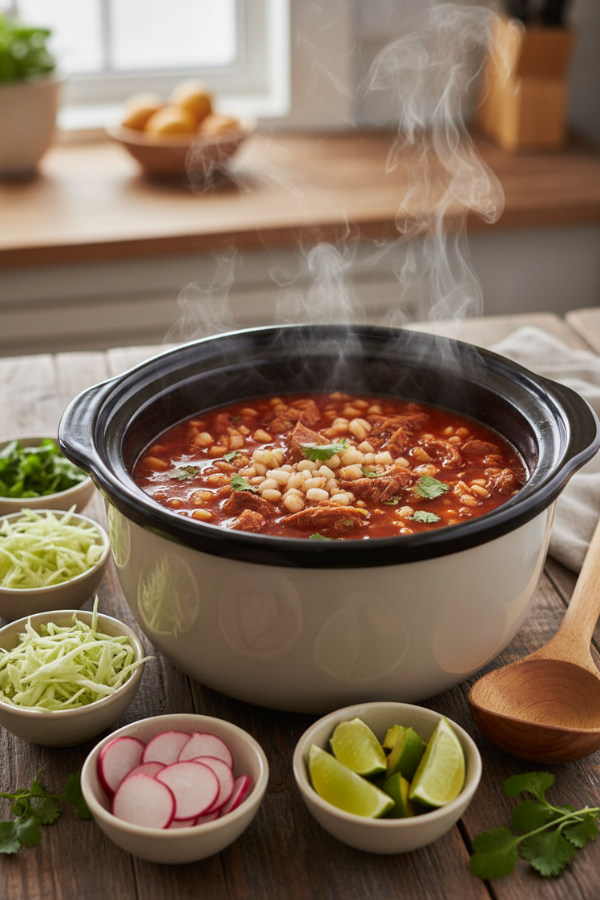
And honestly, the toppings bar is half the fun—cabbage, radish, avocado, cilantro, lime. It feels like a small fiesta, even on a random Tuesday.
So… What Exactly Is Pozole Rojo?
Pozole is a traditional Mexican soup or stew made with hominy (a special kind of treated corn), meat—usually pork or chicken—and a flavorful broth. It’s often served for gatherings and holidays, but there’s no rule saying you can’t enjoy it on a weeknight.
There are three classic versions:
- Pozole blanco (white) – no red or green sauce; more of a clear broth.
- Pozole verde (green) – made with tomatillos, green chiles, and herbs.
- Pozole rojo (red) – what we’re making: a deep red chile broth with smoky, warm notes.
The slow cooker spin keeps the spirit of pozole—pork, hominy, chiles—but adapts the method so it matches how most of us actually live: work, kids, errands, laundry, and a brain that’s tired by 6 p.m.
Think of it as traditional comfort food with a modern schedule.
Ingredients You’ll Need
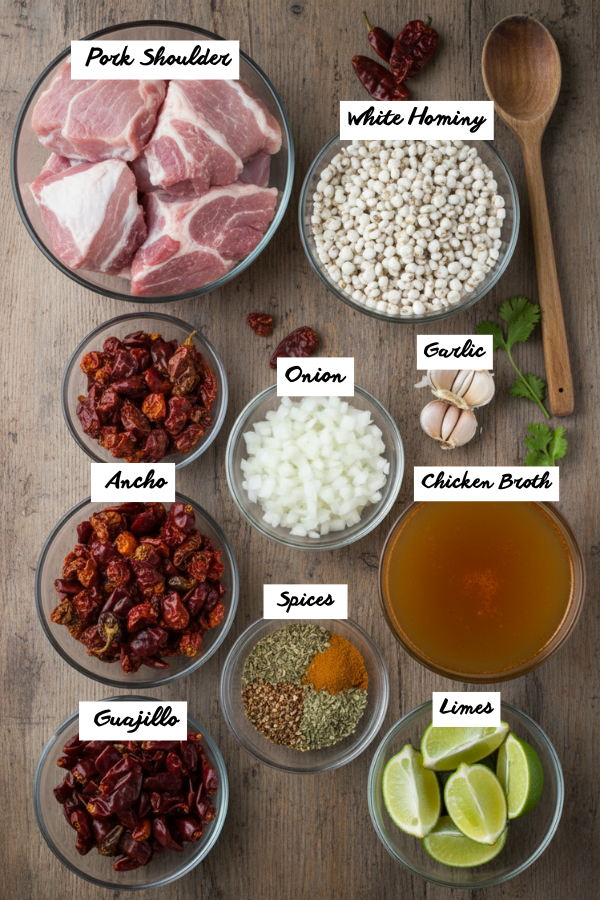
You don’t need anything fancy here, but each ingredient plays a role.
Pork: The Cozy Protein Base
- Pork shoulder/Boston butt – about 2–2.5 lb, boneless if you can find it
- Nicely marbled, which means it turns tender and shreddable after a long, low cook.
- If you choose pork loin, it will be leaner and a bit easier to dry out, so keep an eye on time.
- Seasoning for the pork:
- Salt and black pepper
- Dried oregano (Mexican oregano if available)
- A splash of oil for browning
You can use boneless skinless chicken thighs instead if you want a lighter version, but pork shoulder is classic and gives that deep, comforting flavor.
Hominy: The Chewy Heart of Pozole
- Canned white hominy – 2 large cans (around 25–30 oz each), drained and rinsed
Hominy is corn that has been treated in a way that changes its texture and flavor. It becomes chewy, slightly nutty, and perfect for soaking up broth. It’s what makes pozole pozole instead of just “pork and soup.”
Rinsing it removes extra starch and some of the canning liquid so your broth stays clean and bright.
Dried Chiles: Where the Red Magic Comes From
This is where you get color and flavor, not just heat.
- Ancho chiles – mild, a bit smoky, almost like dried fruit
- Guajillo chiles – mild to medium, bright, and a little tangy
- Chiles de árbol (optional) – small, spicy chiles; just a couple will bring heat
These get toasted, soaked, and blended into a smooth red sauce. That sauce is the backbone of your broth and the reason the stew looks and tastes special.
Aromatics, Broth, and Spices
- 1 white or yellow onion, roughly chopped
- 6–10 cloves of garlic (go generous)
- 6–8 cups low-sodium chicken broth
- Ground cumin
- More dried oregano
- 1–2 bay leaves
- Salt and black pepper
Using low-sodium broth gives you room to season at the end, especially since toppings like cheese and chips also bring salt.
Toppings (Don’t Skip These)
Toppings look optional, but they really change each bowl.
- Shredded green cabbage or romaine lettuce
- Thinly sliced radishes
- Chopped white onion
- Fresh cilantro
- Avocado slices or cubes
- Lime wedges
- Optional extras: crumbled cotija cheese, Mexican crema or sour cream, sliced jalapeños, tortilla chips or tostadas, warm corn tortillas
If you have kids, letting them build their own bowl—with choices—is an easy way to get them interested in dinner.
Step-by-Step Instructions
There are several steps, but none of them are difficult. Take them one at a time.
Step 1 – Toast and Soak the Chiles
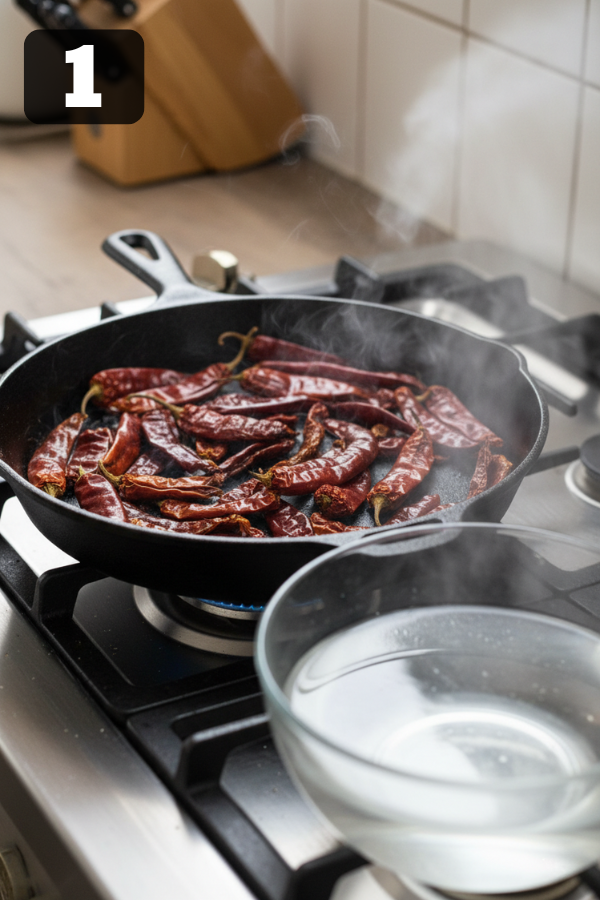
- Remove the stems from your ancho and guajillo chiles. Shake or scrape out most of the seeds.
- Heat a dry skillet over medium heat.
- Lay the chiles in the skillet and toast for about 20–30 seconds per side, just until fragrant. They should soften slightly and darken a bit, but not burn.
- Transfer the chiles to a bowl. Cover with very hot or boiling water. Press them down so they’re fully submerged.
- Let them soak for 20–30 minutes, until they’re completely soft.
This step deepens the flavor and wakes the chiles back up. Burned chiles taste bitter, so if any get too dark, toss them and toast new ones.
Step 2 – Blend the Red Chile Sauce
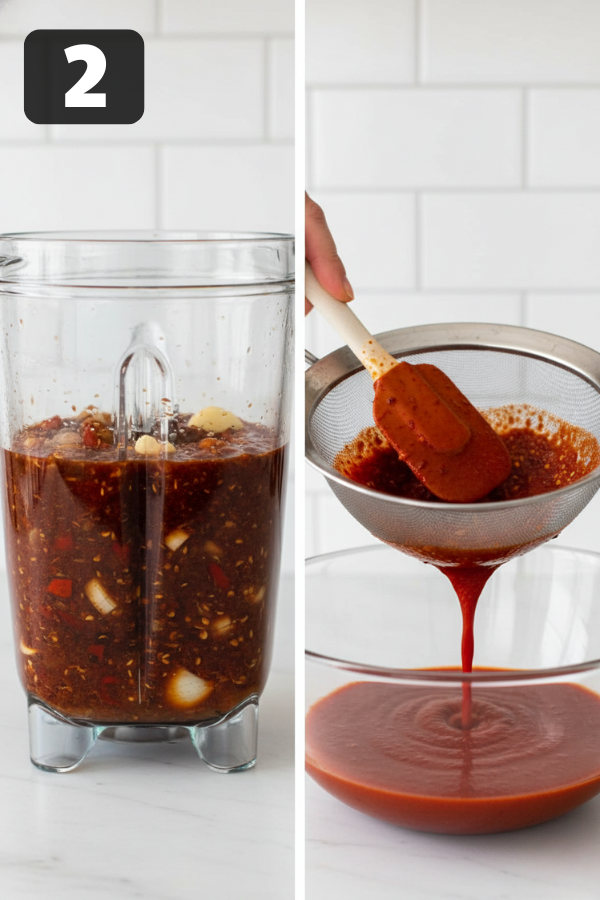
- Add the softened chiles to a blender with:
- 1–2 cups of their soaking liquid
- The chopped onion
- The peeled garlic cloves
- A pinch of salt
- Blend until very smooth. If it’s too thick to pour, add a bit more soaking liquid.
- Set a fine mesh strainer over a bowl or measuring jug and pour the blender mixture through.
- Use a spoon or spatula to press the sauce through the strainer. Discard the skins and seeds left behind.
You’ll end up with a glossy, brick-red sauce that smells amazing and looks like something from a restaurant kitchen.
Step 3 – Season and Brown the Pork
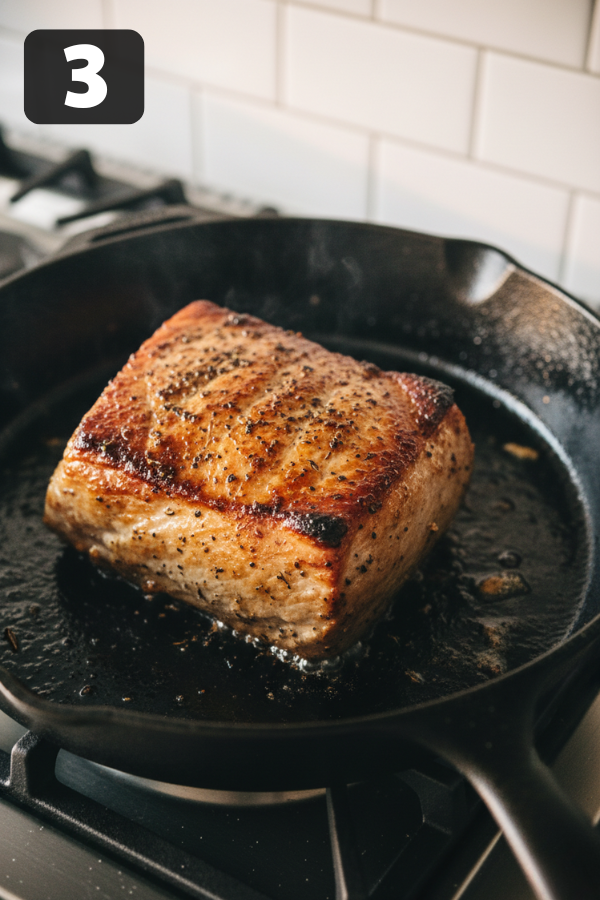
- Pat the pork shoulder dry and cut it into large chunks, about 1.5–2 inches each.
- Season the pieces with salt, pepper, and a spoonful of dried oregano.
- Heat a little oil in a large skillet over medium-high heat.
- Brown the pork in batches, without crowding the pan, for 2–3 minutes per side until lightly golden.
- Transfer the browned pork to the slow cooker.
You can skip browning if you’re in a big rush, but that extra color on the meat adds a lot of flavor to the final bowl.
Step 4 – Build the Pozole in the Slow Cooker
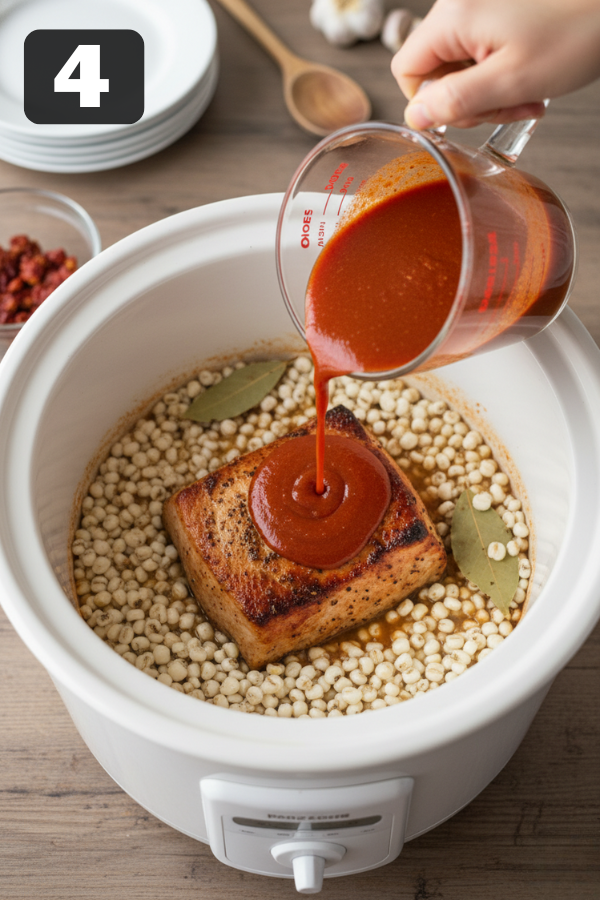
- Add the drained and rinsed hominy to the slow cooker.
- Sprinkle in ground cumin, a bit more dried oregano, and tuck in the bay leaves.
- Pour in the strained red chile sauce.
- Add enough chicken broth to cover everything by about an inch—usually 6–8 cups, depending on pot size.
- Stir gently to combine.
At this point, the slow cooker looks like a big red stew-in-progress, and you’re basically done with the hard work.
Step 5 – Let It Cook Low and Slow
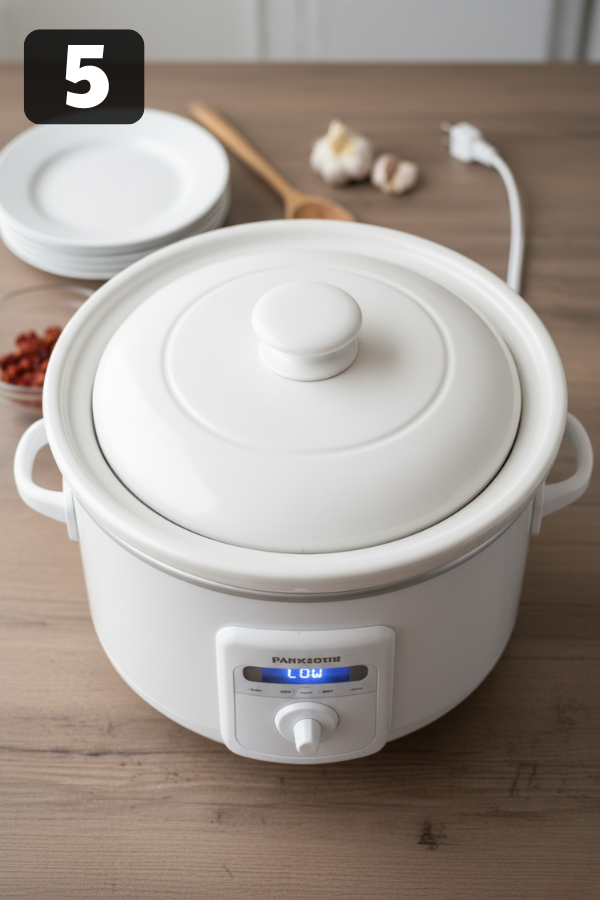
- Cover the slow cooker and cook:
- On LOW for 6–8 hours, or
- On HIGH for 4–5 hours
- The pork is ready when it pulls apart easily with a fork and feels very tender.
This is the part where you go live your life: work, school run, gym, scrolling Instagram—whatever your evening looks like.
Step 6 – Finish, Taste, and Garnish
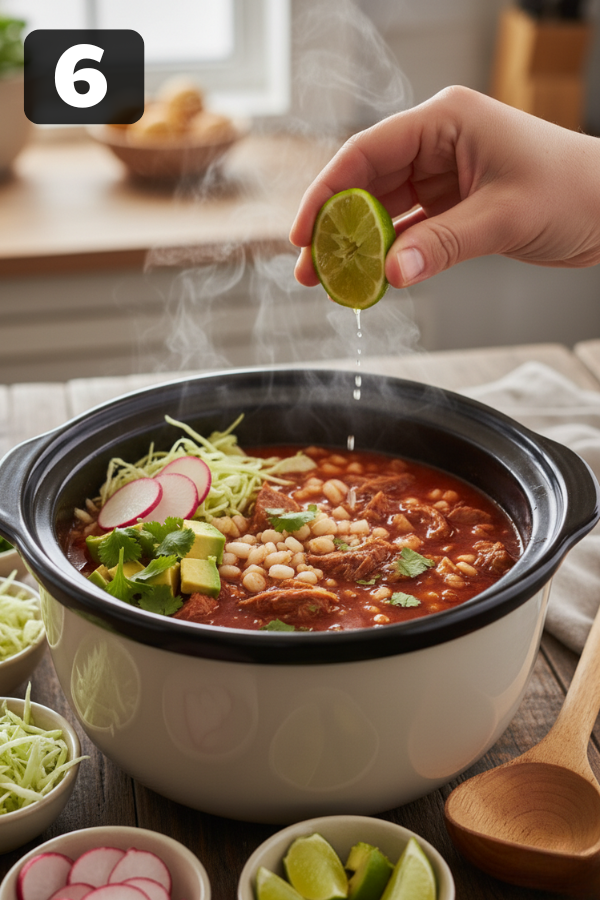
- Once the pork is tender, skim off any excess fat from the top if there’s a lot.
- Use tongs or a large spoon to shred the pork right in the slow cooker. Discard big fatty pieces if you see them.
- Squeeze in the juice of 1–2 limes and stir.
- Taste the broth. Adjust with more salt, pepper, or a little extra lime. If you want more heat, add a pinch of chili powder or your favorite hot sauce.
- Serve the pozole in deep bowls and top generously with cabbage, radishes, onion, cilantro, avocado, and extra lime wedges.
Take a second to actually smell the bowl before you eat. That mix of chile, lime, pork, and corn is something special.
What To Serve With Pozole Rojo
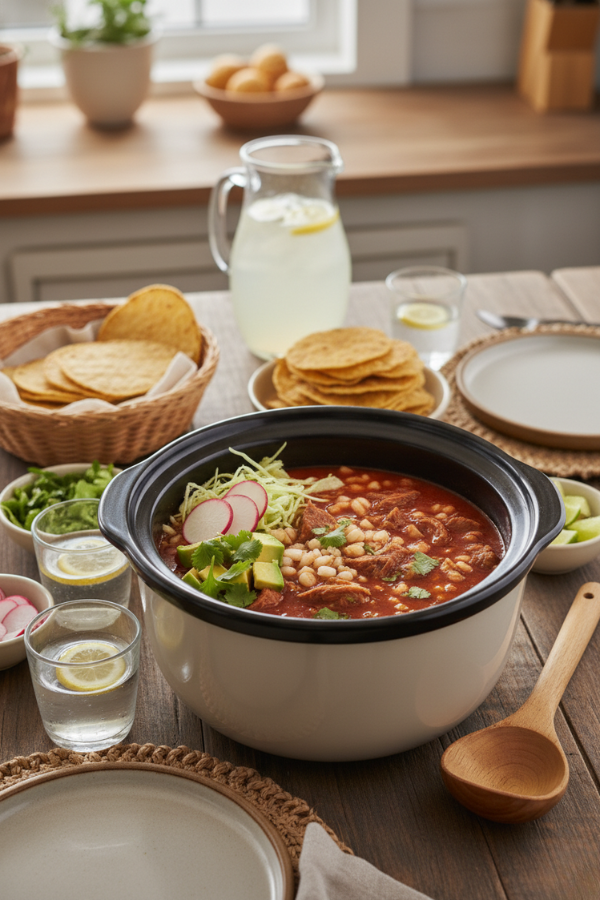
Pozole is a complete meal by itself, but a few simple sides take it up a notch.
Good carbs to pair:
- Warm corn tortillas
- Crispy tostadas
- Tortilla chips for scooping and crunch
Fresh, light sides:
- Simple cabbage slaw with lime, salt, and cilantro
- Green salad with lettuce, radish, and avocado
Easy dessert ideas:
- Orange or grapefruit wedges dusted with cinnamon sugar
- A small slice of flan
- Even just a little dark chocolate after dinner
You don’t have to go all out; a few small touches make the meal feel “complete” without extra stress.
Storage, Leftovers, and Reheating
Pozole rojo is one of those dishes that almost tastes better the next day.
In the fridge:
- Let it cool a bit, then store in tightly sealed containers.
- Keeps well for about 3–4 days.
- Store toppings separately so they stay crisp and bright.
In the freezer:
- Freeze the soup without toppings for up to about 3 months.
- Label containers with the date so you know what’s what.
Reheating:
- On the stovetop, warm gently over medium-low heat, stirring now and then.
- In the microwave, heat in short bursts, stirring in between, until steaming hot.
If it thickens as it sits, just add a splash of water or broth while reheating. The flavor will still be deep and comforting.
FAQs
- Is this Easy Slow Cooker Mexican Pozole Rojo Recipe spicy?
It can be, but it doesn’t have to be. If you remove the seeds from your ancho and guajillo chiles and skip hotter chiles, it will be mild. If you like heat, leave in some seeds or add a couple of spicy chiles. - Can I make it ahead for guests?
Yes, absolutely. Pozole often tastes even better the next day. Make it the day before, chill, skim off excess fat, and reheat slowly. Put all the toppings in separate bowls and let everyone build their own. - Can I use dried hominy instead of canned?
You can, but it takes much longer because dried hominy needs soaking and extra cooking. Canned hominy is perfect if you’re a busy home cook and want predictable results. - What if I don’t have a blender?
In that case, use a good-quality red enchilada sauce and focus on seasoning with garlic, cumin, and oregano. It’s not traditional, but it still gives you a cozy, satisfying bowl.
Nutrition Info
Based on 8 servings, using pork shoulder and standard toppings. Values will vary with exact ingredients and portion sizes.
- Calories: ~250–320 kcal
- Protein: ~18–25 g
- Fat: ~8–14 g
- Carbohydrates: ~20–28 g
- Fiber: ~3–5 g
- Sodium: depends heavily on broth and added salt; use low-sodium broth if needed
You can make it lighter by using chicken and skimming fat, or lower in sodium by choosing low-sodium broth and seasoning at the end.
A Little Closing Note
This Easy Slow Cooker Mexican Pozole Rojo Recipe isn’t about perfection.
It’s about having a big pot of something warm, fragrant, and deeply satisfying waiting for you when you’re tired and hungry.
Big pot. Big flavor. Not a lot of effort.
For a busy home cook, that’s a recipe worth keeping.
| Prep Time | 25-30 minutes |
| Cook Time | 4-8 hours |
| Servings |
servings
|
- 2 lb –2.5pork shoulder cut into large chunks
- Salt black pepper, dried oregano, ground cumin
- 2 large cans white hominy drained and rinsed
- 6 cups –8low-sodium chicken broth
- 6 –10 garlic cloves 1 onion
- Dried ancho and guajillo chiles plus a few árbol chiles if you like it spicy
- 1 –2 bay leaves
- lime juice shredded cabbage, sliced radishes, onion, cilantro, avocado, lime wedges for serving
Ingredients
|
|
- Toast and Soak the Chiles Remove the stems from your ancho and guajillo chiles. Shake or scrape out most of the seeds. Heat a dry skillet over medium heat. Lay the chiles in the skillet and toast for about 20–30 seconds per side, just until fragrant. They should soften slightly and darken a bit, but not burn. Transfer the chiles to a bowl. Cover with very hot or boiling water. Press them down so they’re fully submerged. Let them soak for 20–30 minutes, until they’re completely soft. This step deepens the flavor and wakes the chiles back up. Burned chiles taste bitter, so if any get too dark, toss them and toast new ones.

- Blend the Red Chile Sauce Add the softened chiles to a blender with: 1–2 cups of their soaking liquid The chopped onion The peeled garlic cloves A pinch of salt Blend until very smooth. If it’s too thick to pour, add a bit more soaking liquid. Set a fine mesh strainer over a bowl or measuring jug and pour the blender mixture through. Use a spoon or spatula to press the sauce through the strainer. Discard the skins and seeds left behind. You’ll end up with a glossy, brick-red sauce that smells amazing and looks like something from a restaurant kitchen.
- Season and Brown the Pork Pat the pork shoulder dry and cut it into large chunks, about 1.5–2 inches each. Season the pieces with salt, pepper, and a spoonful of dried oregano. Heat a little oil in a large skillet over medium-high heat. Brown the pork in batches, without crowding the pan, for 2–3 minutes per side until lightly golden. Transfer the browned pork to the slow cooker. You can skip browning if you’re in a big rush, but that extra color on the meat adds a lot of flavor to the final bowl.
- Build the Pozole in the Slow Cooker Add the drained and rinsed hominy to the slow cooker. Sprinkle in ground cumin, a bit more dried oregano, and tuck in the bay leaves. Pour in the strained red chile sauce. Add enough chicken broth to cover everything by about an inch—usually 6–8 cups, depending on pot size. Stir gently to combine. At this point, the slow cooker looks like a big red stew-in-progress, and you’re basically done with the hard work.
- Let It Cook Low and Slow Cover the slow cooker and cook: On LOW for 6–8 hours, or On HIGH for 4–5 hours The pork is ready when it pulls apart easily with a fork and feels very tender. This is the part where you go live your life: work, school run, gym, scrolling Instagram—whatever your evening looks like.
- Finish, Taste, and Garnish Once the pork is tender, skim off any excess fat from the top if there’s a lot. Use tongs or a large spoon to shred the pork right in the slow cooker. Discard big fatty pieces if you see them. Squeeze in the juice of 1–2 limes and stir. Taste the broth. Adjust with more salt, pepper, or a little extra lime. If you want more heat, add a pinch of chili powder or your favorite hot sauce. Serve the pozole in deep bowls and top generously with cabbage, radishes, onion, cilantro, avocado, and extra lime wedges. Take a second to actually smell the bowl before you eat. That mix of chile, lime, pork, and corn is something special.
