
Easy One Pan Creamy Lemon Caper Butter Salmon
You know those nights when you want dinner to feel comforting and a little special… but you also don’t want a sink full of dishes? Same. This Easy One Pan Creamy Lemon Caper Butter Salmon is my go-to “I can’t deal with chaos” meal.
It’s tender salmon with a golden sear, finished in a creamy lemon-butter sauce with capers. Bright, briny, and cozy all at once. It tastes like something you’d order at a nice spot, but it’s still very much an “I made this in real life, in my real kitchen” recipe.
Why You’ll Love This Recipe
- One pan, no drama. Sear the salmon, build the sauce, and finish everything in the same skillet.
- Creamy but not heavy. Lemon and capers keep the sauce lively, so it doesn’t feel like a blanket of cream.
- Fast enough for weeknights. If you can stand near a pan for about 15 minutes, you can make this.
- Flexible for picky eaters and busy schedules. You can dial capers up or down, swap the liquid, and pair it with anything from rice to salad.
A small confession: I used to think “creamy lemon sauce” sounded risky—like it might curdle or turn weird. Here’s the thing. When you use the right dairy and keep the heat gentle, it’s incredibly forgiving. And once you’ve done it once, it becomes one of those recipes you can make while half-tired.
Ingredients
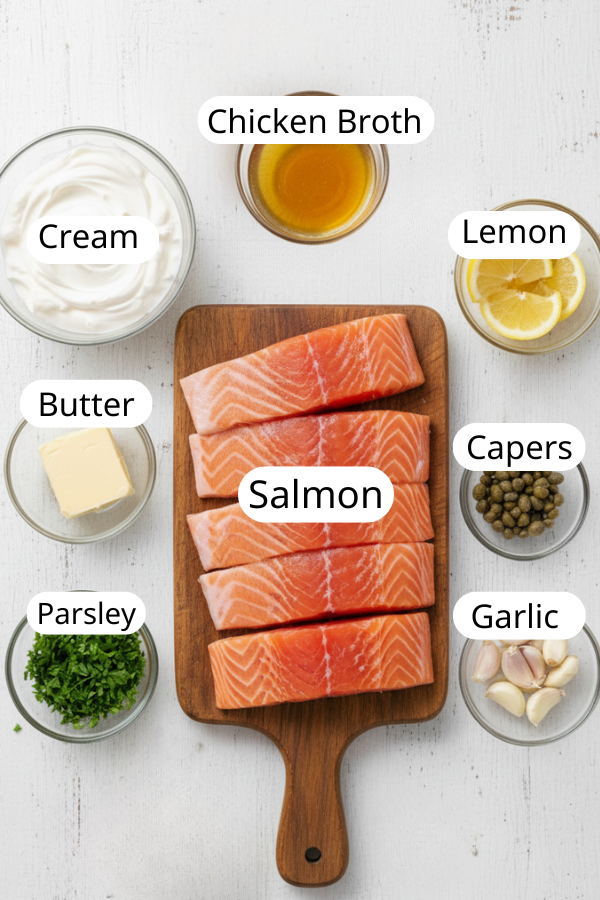
For the salmon
- 1 pound salmon, cut into 4 fillets (skin-on or skinless)
- Salt and black pepper, to taste
- 1/4 teaspoon garlic powder (optional, but adds warmth)
- 2–4 tablespoons all-purpose flour (optional; for a light crust and a slightly thicker sauce)
- 1 tablespoon olive oil
- 2 tablespoons butter
For the creamy lemon caper butter sauce
- 1/2 cup chicken broth or dry white wine
- 1 lemon (you’ll use zest + juice)
- 1–2 tablespoons capers, drained
- 1 cup heavy cream
- 1–2 tablespoons chopped parsley, optional
Optional add-ins (only if you want)
- 1 small clove garlic, minced (extra cozy flavor)
- Pinch of paprika (mostly for color)
- Parmesan, for serving (a little salty finish can be great)
Quick shopping note:
If you can, choose salmon fillets that are similar thickness. Even cooking is so much easier when one piece isn’t thin like a bookmark while another is a thick brick.
Step-by-Step Instructions
1) Pat the salmon dry and season it.
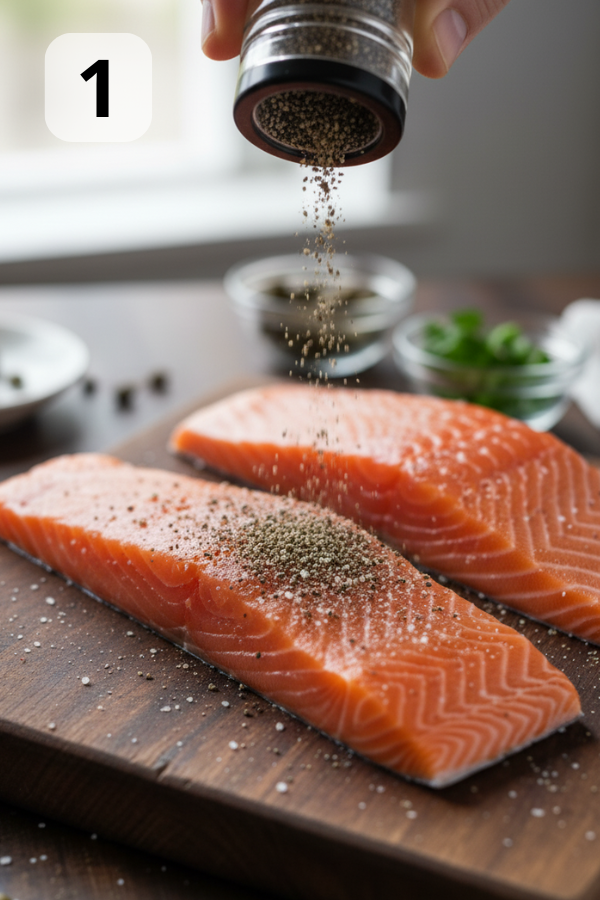
Lay the salmon on a plate and pat it dry with paper towels. Season with salt, pepper, and garlic powder if you’re using it.
Why this matters: Dry fish browns. Wet fish steams. And steaming is fine… but searing tastes better.
2) Lightly dredge in flour (optional, but helpful).
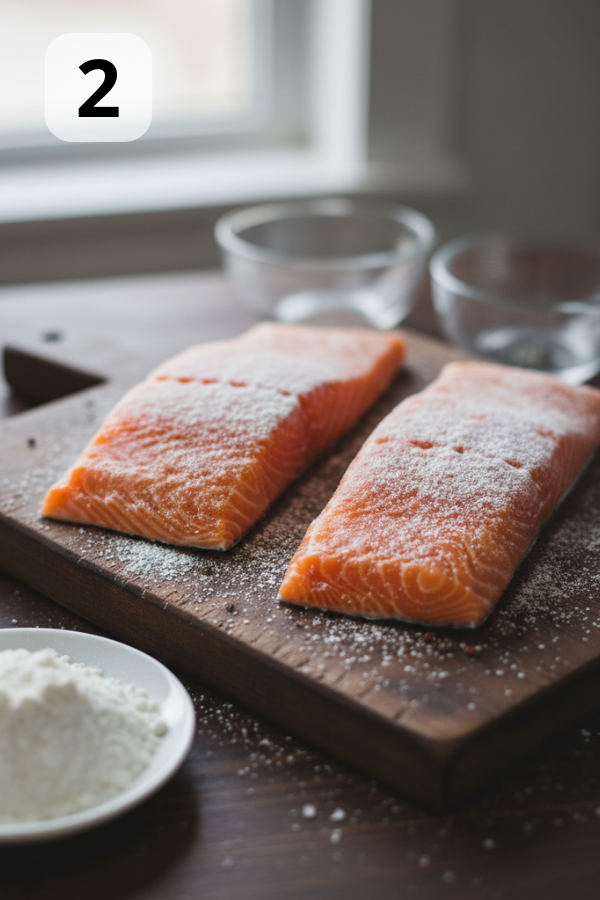
Sprinkle flour on a plate. Lightly coat the salmon and tap off the excess.
If you’re skipping flour, no problem. Just know the sauce may need an extra minute or two to thicken.
3) Sear the salmon.
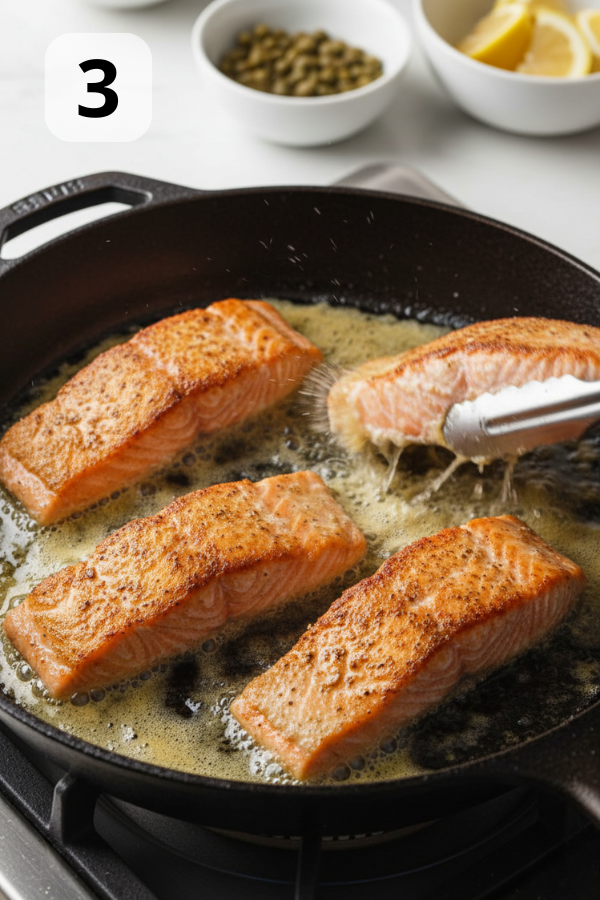
Heat olive oil and butter in a large skillet over medium-high heat. Once the butter melts and looks a little foamy, add the salmon.
Cook about 3–4 minutes per side, depending on thickness.
Small tip: If the salmon sticks when you try to flip, it’s not ready. Give it another 30–60 seconds. It usually releases when the crust is set.
4) Move salmon to a plate.
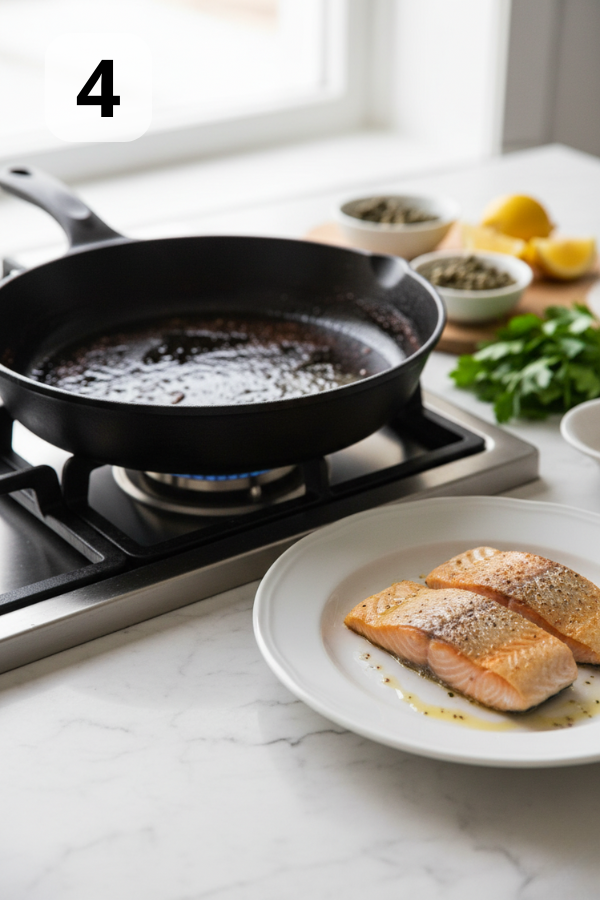
Remove the salmon to a plate. It does not need to be fully cooked yet. You’ll finish it in the sauce, which is the easiest way to avoid dry salmon.
5) Deglaze and start the sauce.
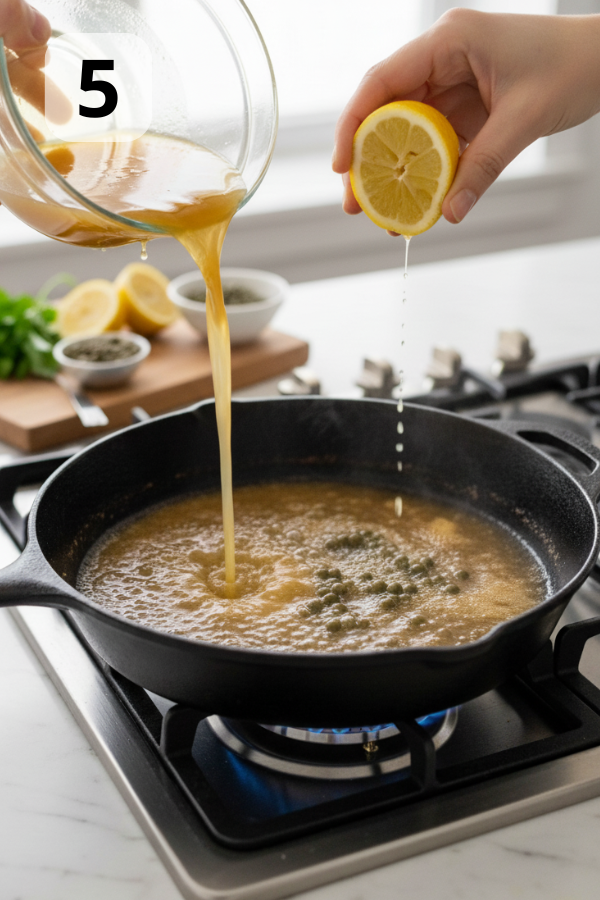
Pour in the broth (or wine). Use a wooden spoon or spatula to scrape up the browned bits from the bottom of the pan.
Add lemon juice, lemon zest, and drained capers. Let it bubble for 1–2 minutes to reduce slightly.
This part is doing a lot: It pulls flavor off the pan, and it sets the “bright + briny” backbone of the sauce.
6) Add cream and simmer gently.
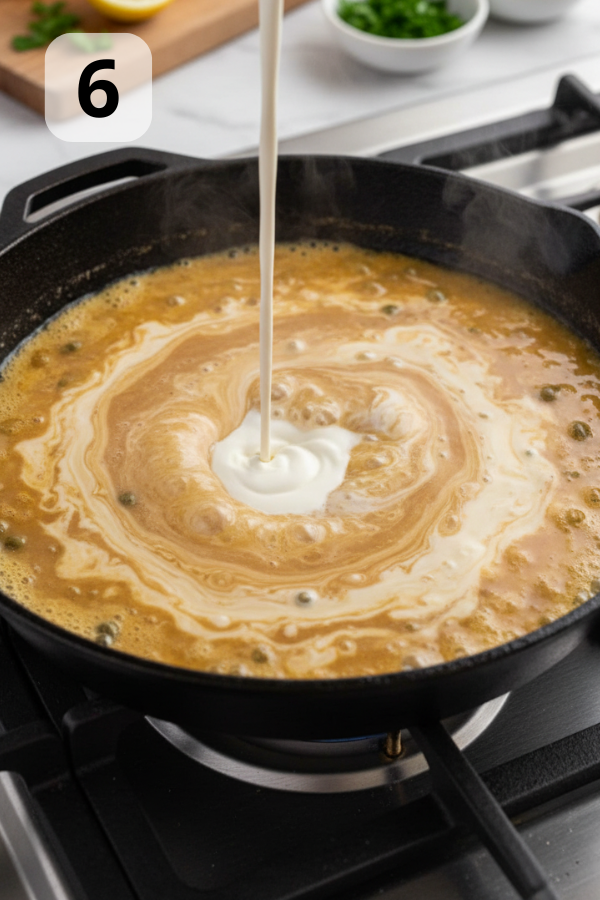
Pour in the heavy cream. Stir, then lower the heat to a gentle simmer. Let it simmer 2–3 minutes until it thickens enough to coat the back of a spoon.
If it starts bubbling aggressively, turn the heat down. You want a calm simmer, not a rolling boil.
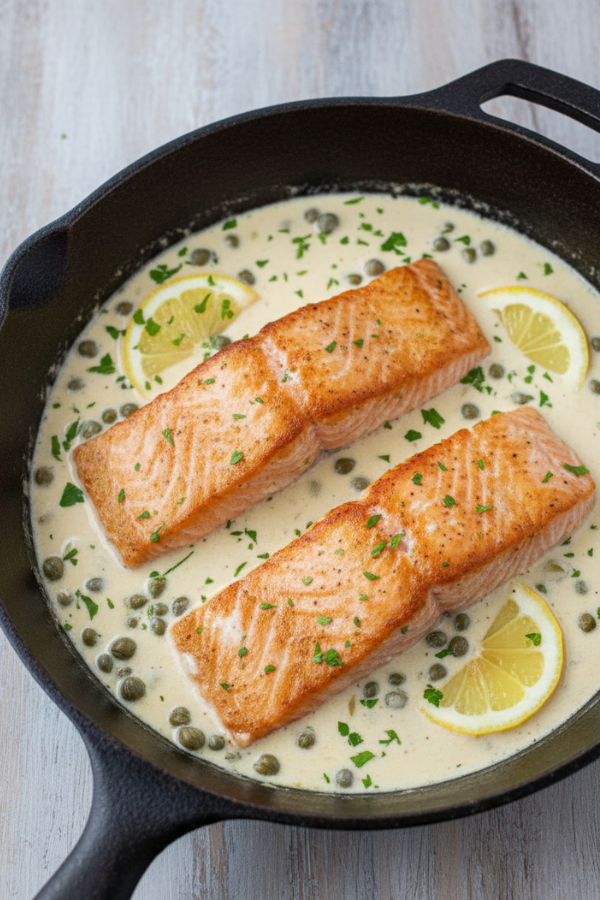
7) Return salmon to the pan and finish.
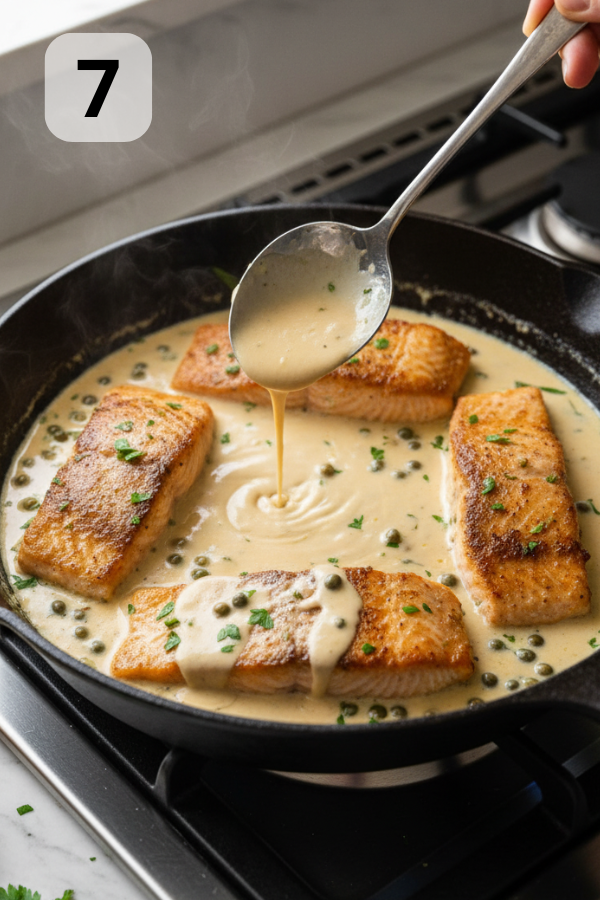
Place salmon back into the sauce. Spoon sauce over the top. Simmer gently 3–5 minutes, until the salmon flakes easily.
If you like using a thermometer, 145°F at the thickest part is the standard “fully cooked” target.
8) Taste, adjust, and serve.
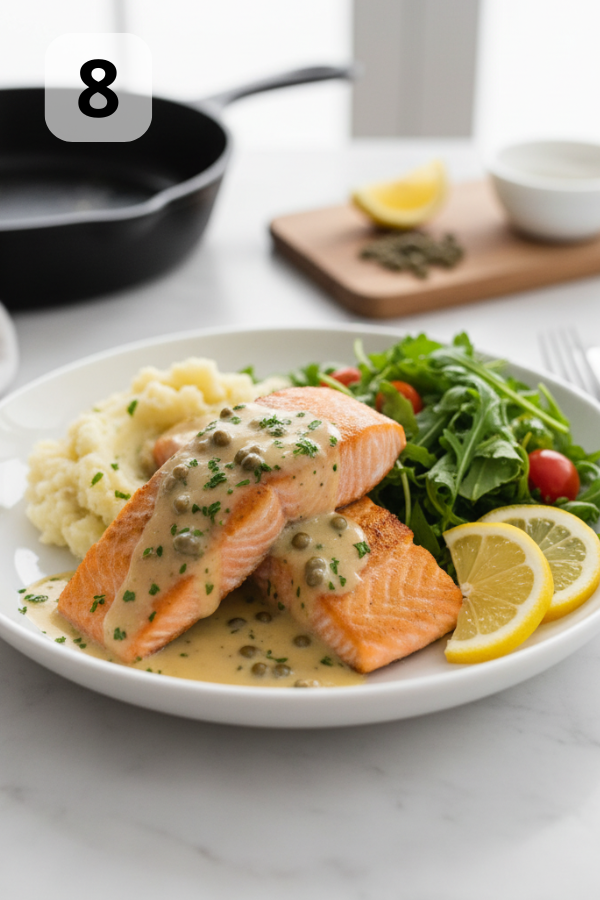
Taste the sauce. Add pepper and only add salt if needed (capers can be salty, and salted butter can push it over the edge). Sprinkle parsley on top.
Serve right away, with plenty of sauce.
Tips for Success
How to keep salmon tender (even if you’ve overcooked it before)
- Finish in the sauce. This is the single biggest protection against dry salmon.
- Watch thickness, not the clock. Thin pieces cook fast. Thick pieces need a bit longer.
- Don’t chase “extra done.” Salmon goes from juicy to dry quickly. If you’re unsure, pull it a little early and let it finish in the warm sauce.
How to keep the sauce silky
- Use heavy cream. Lower-fat dairy can act unpredictable with lemon.
- Keep the heat gentle once cream goes in. A calm simmer gives a smooth sauce.
- Zest + juice works better than juice alone. Zest adds lemon flavor without making the sauce too sharp.
Capers: the salty little wild card
Capers are amazing, but they can trick you into oversalting. Start with 1 tablespoon if you’re new to them. You can always add more. And taste before adding extra salt.
Easy variations that still feel “right”
- More comfort: Add a pinch of paprika and finish with a little parmesan.
- More bright: Add an extra squeeze of lemon right before serving.
- More mild: Use fewer capers and add an extra tablespoon of cream.
Storage & Leftover Notes
This is best fresh, but leftovers can still be lovely if you treat them gently.
- Fridge: Store in an airtight container for 2–3 days.
- Reheat: Warm slowly on the stove over low heat. Add a splash of broth or water if the sauce thickened too much.
- Freezing: Not recommended. Cream sauces often separate after thawing.
Meal-prep reality check: If you plan to reheat, cook the salmon just until done—don’t take it beyond that “perfect” point.
What to Serve With It
Cozy, saucy pairings
- White rice (the sauce soaks in like a dream)
- Mashed potatoes (classic comfort)
- Pasta or egg noodles (easy, and it feels restaurant-y)
Light, fresh pairings
- Steamed broccoli, green beans, or asparagus
- Simple salad with a tangy vinaigrette (it balances the creamy sauce)
- Roasted tomatoes (sweet + acidic = great contrast)
Drinks
- Sparkling water with lemon
- Iced tea
- If you used wine in the sauce, the same style of dry white wine pairs well
FAQs
- Can I make this ahead of time?
You can make the sauce ahead and reheat it gently, but salmon is best cooked fresh. If you must cook ahead, slightly undercook the salmon and warm it in the sauce right before serving. - Can I use frozen salmon?
Yes. Thaw it fully in the fridge and pat it very dry before cooking so you can still get a good sear. - Do I have to use wine?
No. Chicken broth works beautifully. Wine adds a sharper edge, broth is softer and more family-friendly. - Is this dish spicy?
Not at all. It’s tangy and briny, not hot. If you want heat, add a pinch of red pepper flakes at the end. - What can I use instead of capers?
Chopped green olives can give a similar salty-briny note. Not identical, but still delicious. - Can I skip the flour?
Yes. Just simmer the sauce a little longer to thicken. - Can I swap the protein?
This sauce works well with chicken cutlets or shrimp. Adjust cook times and keep the heat gentle once cream is in.
Nutrition Info
Nutrition varies a lot based on salmon size and how much cream/butter you use. As a general range, expect a high-protein meal with moderate-to-high fat because of salmon + cream + butter. If you want it lighter, reduce cream slightly and lean more on broth plus a smaller amount of butter.
Conclusion
This is one of those dinners that makes you feel like you’ve got your life together—even if you absolutely don’t. Bright lemon, briny capers, tender salmon, and a creamy sauce that makes everything on the plate taste better. Try it once, then make it yours: more lemon, fewer capers, extra parsley… whatever fits your kitchen mood.
| Prep Time | 10 minutes |
| Cook Time | 15 minutes |
| Servings |
servings
|
- 1 lb salmon 4 fillets
- tsp Salt pepper, 1/4garlic powder
- 2 tbsp –4flour optional
- 1 tbsp olive oil + 2butter
- 1/2 cup chicken broth or dry white wine
- 1 tbsp lemon zest + 2juice
- 1 tbsp –2capers drained
- 1 cup heavy cream
- Parsley optional
Ingredients
|
|
- 1) Pat the salmon dry and season it. Lay the salmon on a plate and pat it dry with paper towels. Season with salt, pepper, and garlic powder if you’re using it. Why this matters: Dry fish browns. Wet fish steams. And steaming is fine… but searing tastes better.

- 2) Lightly dredge in flour (optional, but helpful). Sprinkle flour on a plate. Lightly coat the salmon and tap off the excess. If you’re skipping flour, no problem. Just know the sauce may need an extra minute or two to thicken.
- 3) Sear the salmon. Heat olive oil and butter in a large skillet over medium-high heat. Once the butter melts and looks a little foamy, add the salmon. Cook about 3–4 minutes per side, depending on thickness. Small tip: If the salmon sticks when you try to flip, it’s not ready. Give it another 30–60 seconds. It usually releases when the crust is set.
- 4) Move salmon to a plate. Remove the salmon to a plate. It does not need to be fully cooked yet. You’ll finish it in the sauce, which is the easiest way to avoid dry salmon.
- 5) Deglaze and start the sauce. Pour in the broth (or wine). Use a wooden spoon or spatula to scrape up the browned bits from the bottom of the pan. Add lemon juice, lemon zest, and drained capers. Let it bubble for 1–2 minutes to reduce slightly. This part is doing a lot: It pulls flavor off the pan, and it sets the “bright + briny” backbone of the sauce.
- 6) Add cream and simmer gently. Pour in the heavy cream. Stir, then lower the heat to a gentle simmer. Let it simmer 2–3 minutes until it thickens enough to coat the back of a spoon. If it starts bubbling aggressively, turn the heat down. You want a calm simmer, not a rolling boil.
- 7) Return salmon to the pan and finish. Place salmon back into the sauce. Spoon sauce over the top. Simmer gently 3–5 minutes, until the salmon flakes easily. If you like using a thermometer, 145°F at the thickest part is the standard “fully cooked” target.
- 8) Taste, adjust, and serve. Taste the sauce. Add pepper and only add salt if needed (capers can be salty, and salted butter can push it over the edge). Sprinkle parsley on top. Serve right away, with plenty of sauce.
