
Baked Cajun Salmon with Avocado Lime Sauce
You know those nights when you want something healthy, but you also want it to feel like a treat? This is that dinner.
You bake Cajun-spiced salmon at 400°F, then top it with a cool, creamy avocado lime sauce that’s bright, tangy, and a little addictive. It’s fast (often ~25 minutes start to finish), it’s simple, and cleanup is basically one pan and one blender. That’s the kind of math weeknights deserve.
Why You’ll Love This Recipe
This recipe has a very specific personality: bold, fresh, and low-maintenance.
- Quick and reliable: A hot oven does the work while you make the sauce.
- Big flavor without fuss: Cajun seasoning brings smoky heat, garlic, and depth in one step.
- That hot + cool contrast: Spicy salmon with a chilled avocado-lime sauce just makes sense.
- Minimal cleanup: Sheet pan + parchment + a blender jar. Done.
- Meal-prep friendly: Salmon bowls, tacos, salads—leftovers don’t feel like leftovers.
A small note for labels: this can be naturally gluten-free depending on your Cajun seasoning, and you can make the sauce dairy-free by using a plant-based yogurt (or using a version that relies on avocado + lime + olive oil instead of yogurt).
Ingredients
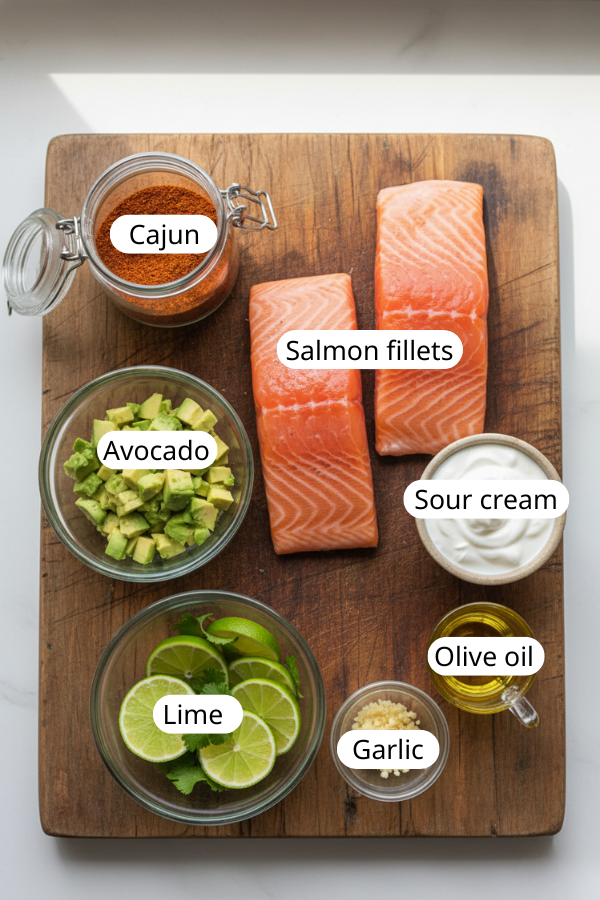
Salmon + Cajun Seasoning
- Salmon fillets: about 1 lb total (often 4 fillets, roughly 5–6 oz each)
- Skin-on helps protect the fish from drying out, but skinless is fine.
- Olive oil: about 1 tablespoon
- Cajun seasoning: usually 1 to 2 tablespoons
- Cajun blends vary a lot in salt and heat. Start lighter if you’re unsure.
- Black pepper: a few cracks
- Salt: optional (only if your Cajun blend is low-salt)
Optional flavor boosters (nice, not required)
- Smoked paprika: for extra warmth and color
- Garlic powder: for deeper savory notes
- Fresh lime: for squeezing at the end
Avocado Lime Sauce (Two Easy Styles)
Here’s the thing: people use “avocado lime sauce” to mean different textures. Both work beautifully. Pick your mood.
Option A: Creamy Crema-Style (thicker, spoonable)
- 1 ripe avocado
- Juice of 1–2 limes (start with 1, add more as needed)
- Greek yogurt or sour cream: about 1/4 cup
- Dairy-free yogurt also works.
- 1 small garlic clove (or a pinch of garlic powder)
- Salt: to taste
- Water: 1–3 tablespoons, only if needed to thin
Option B: Bright Dressing-Style (thinner, very zippy)
- 1 ripe avocado
- Lime juice: about 2 tablespoons
- Olive oil: 1–2 tablespoons
- Water: to thin (start with 2–4 tablespoons)
- Vinegar (optional): a small splash for extra tang
- Cilantro (optional): a small handful
- Salt + garlic: to taste
- A tiny bit of sweetness (optional): a drizzle of honey or maple if it tastes too sharp
Quick substitutions
- No cilantro? Use parsley, or skip herbs entirely.
- No limes? Lemon works. Add a tiny splash of vinegar to mimic lime’s bite.
- No blender? Mash avocado very smooth, then whisk everything in.
Step-by-Step Instructions
Step 1: Heat The Oven + Set Up The Pan
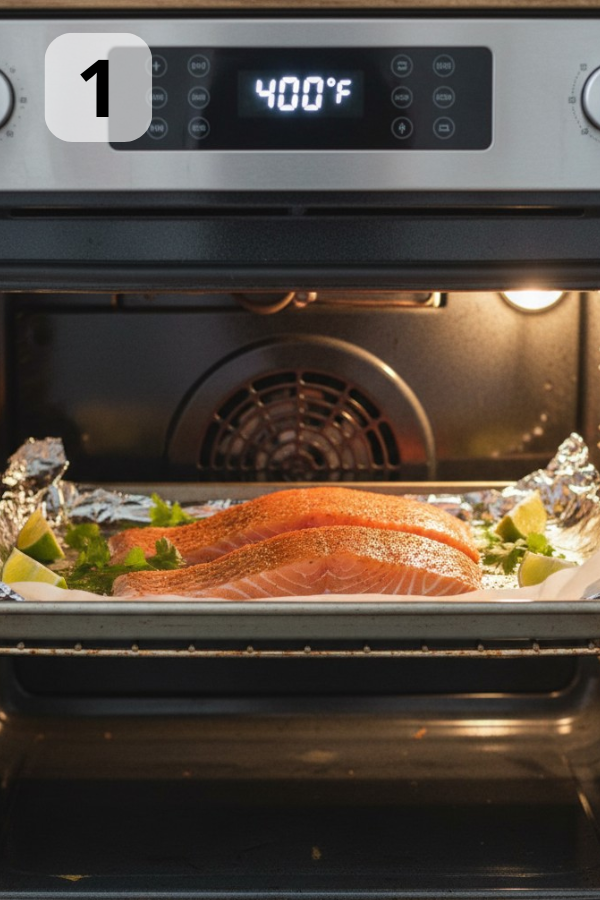
Preheat your oven to 400°F.
Line a sheet pan with parchment paper or foil. This is not a fancy step. This is a “I don’t want to scrub a pan tonight” step. Totally valid.
Step 2: Season The Salmon
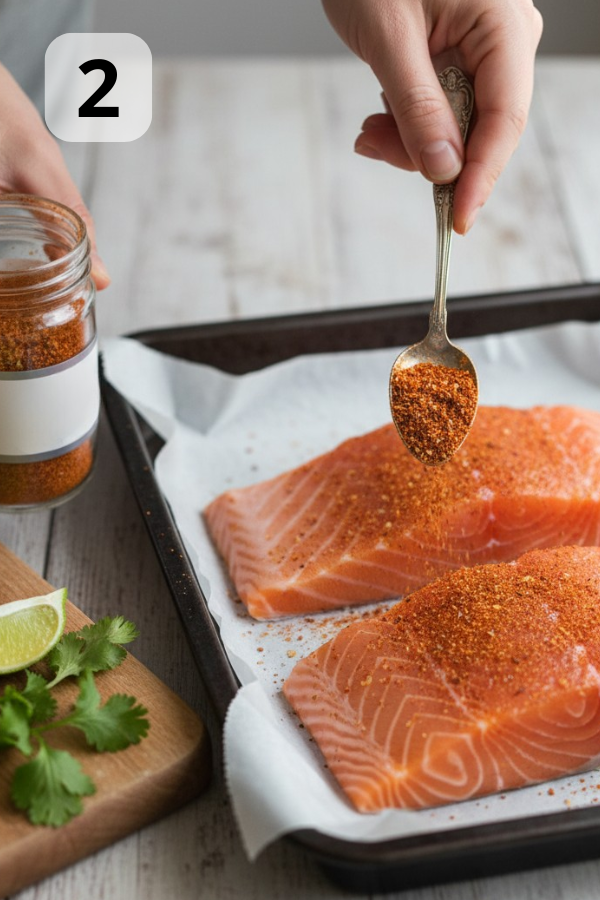
Pat the salmon dry with paper towels. It helps the seasoning stick, and it helps the surface roast instead of steam.
Place salmon on the pan. Drizzle with olive oil. Sprinkle Cajun seasoning evenly over the top. Add black pepper.
Now pause for one second: does your Cajun blend already taste salty? If yes, skip extra salt. If it’s mild, add a small pinch.
Step 3: Bake Until Flaky (Without Drying It Out)
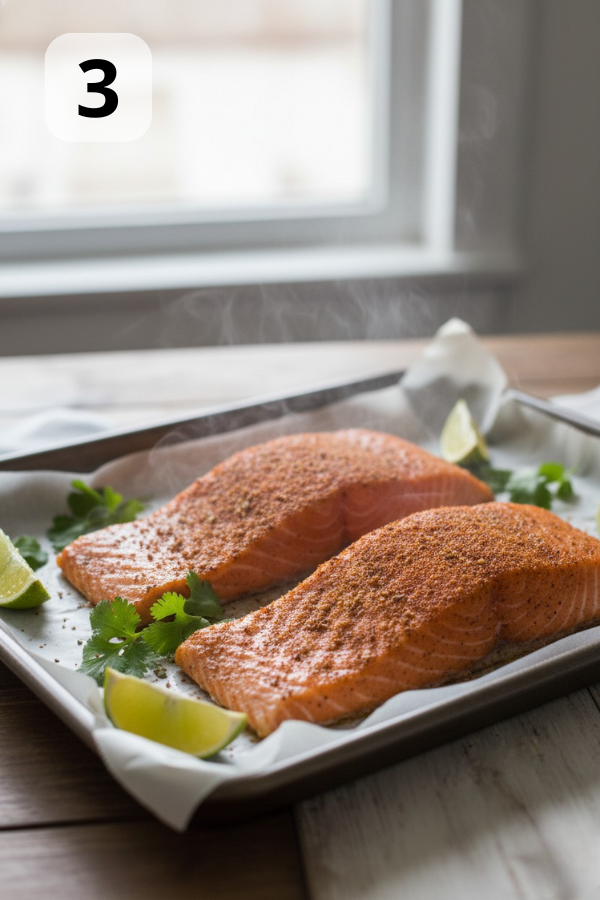
Bake at 400°F. Timing depends on thickness, but here’s a helpful guide:
- Thinner fillets: start checking at 12 minutes
- Average fillets: usually 12–15 minutes
- Thicker fillets (~1 inch+): 16–18 minutes
Salmon is done when it flakes easily and looks opaque. If you use a thermometer, the official safe temperature is 145°F at the thickest part. (Some people prefer pulling it slightly earlier for a softer center, but 145°F is the safety benchmark.)
Honestly, salmon can be dramatic. Two extra minutes can change everything. Check early. You can always add time.
Step 4: Make The Avocado Lime Sauce While It Bakes
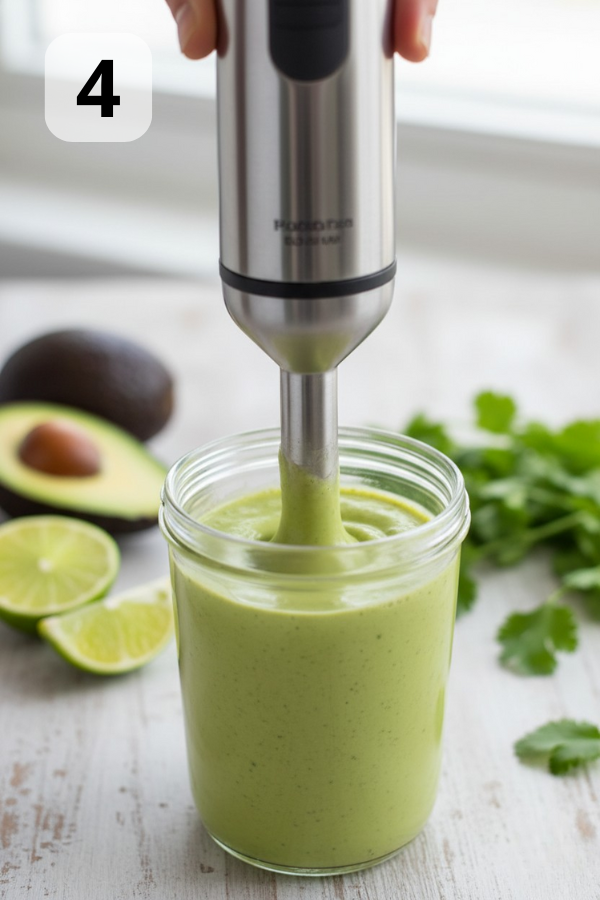
While the salmon is in the oven, make your sauce.
Add sauce ingredients to a blender or food processor and blend until smooth. If it’s too thick, add water a tablespoon at a time.
Taste and adjust:
- Too flat? Add lime and salt.
- Too sharp? Add a tiny drizzle of honey/maple (optional).
- Too thick? Add water.
- Too garlicky? Add more yogurt/avocado to soften it.
Small batch tip: If your blender struggles with small quantities, an immersion blender in a tall cup can make the sauce smoother with less fuss.
Step 5: Serve
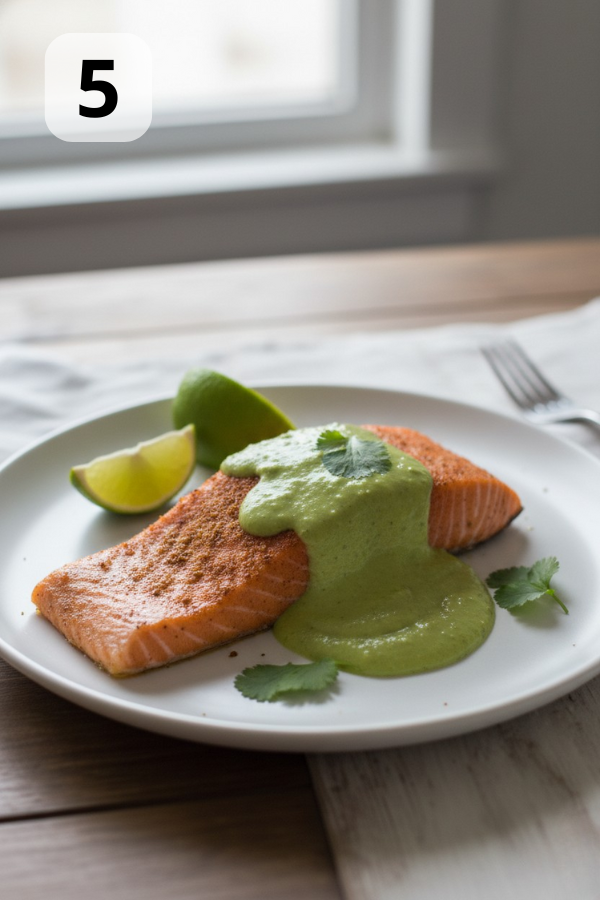
When the salmon comes out, let it rest for 2 minutes. This helps the juices settle.
Spoon sauce over salmon. Add extra lime if you want that bright finishing pop.
That’s dinner.
Tips for Success
How To Keep Salmon Juicy
- Don’t overbake. Start checking at minute 12.
- Choose center-cut fillets when possible for more even cooking.
- Pat dry before seasoning so it roasts properly.
How To Control Spice
Cajun seasoning varies wildly. Some are warm and smoky. Some are spicy and salty. Here’s an easy approach:
- First time: use less, taste next time, adjust.
- If it’s too spicy: serve with rice and extra sauce. The cool creamy sauce softens heat fast.
- If it’s too mild: add a pinch of cayenne, smoked paprika, or black pepper.
How To Get The Sauce Texture You Want
- Want it spoonable and thick? Use the crema-style version and go light on water.
- Want it drizzleable like dressing? Add water and a little oil, blend longer.
- Want it extra bright? Add lime zest (just a little) or a splash of vinegar.
Why The Sauce Sometimes Turns Brown (And What To Do)
Avocado oxidizes. It happens. It doesn’t mean it’s bad.
To slow browning:
- Press plastic wrap directly on the surface of the sauce (no air gap).
- Add a bit more lime juice.
- Store in an airtight container and chill.
Storage & Leftovers
How Long It Lasts
- Cooked salmon: typically keeps well in the fridge for 3–4 days in a sealed container.
- Avocado lime sauce: best in the first 1–2 days for color and fresh flavor, but it can last longer depending on acidity and how it’s stored.
If you’re meal-prepping, store salmon and sauce separately. Sauce stays brighter. Salmon stays less soggy.
Reheating (Without Turning It Dry)
- Best gentle method: 300°F oven for about 8–10 minutes, just until warm.
- Microwave method: short bursts, low power if possible.
Add the sauce after reheating. Warm avocado sauce isn’t a crime, but it’s not the point.
Freezing?
- You can freeze cooked salmon, but texture changes a bit.
- I don’t recommend freezing the avocado sauce. It tends to separate and lose its creamy feel.
What to Serve With It
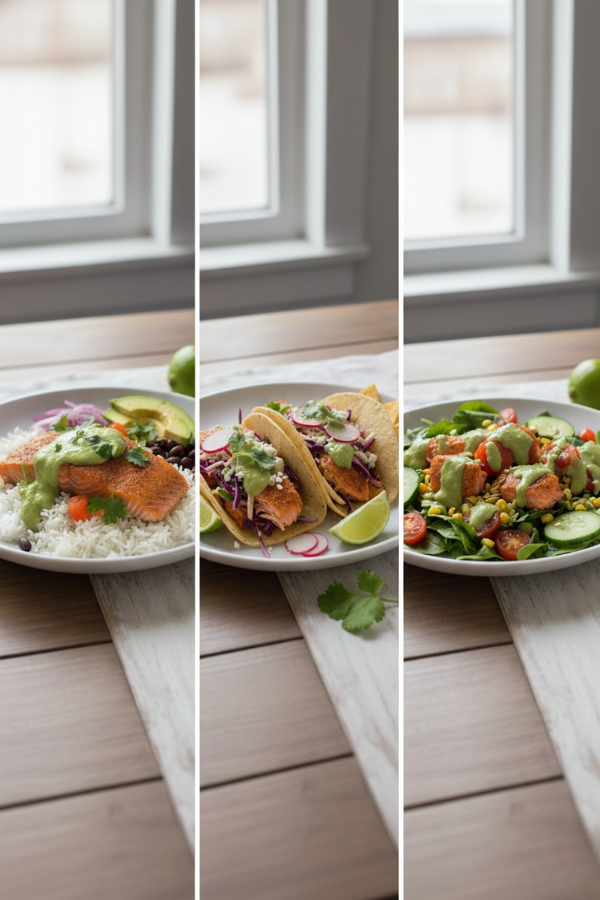
You don’t need a whole production. A couple of smart sides make this feel like a full dinner.
Easy Sides
- Roasted broccoli or asparagus (toss with oil + salt, bake alongside if you want)
- Bagged salad (use extra sauce as dressing)
- Microwave rice or quinoa
- Corn on the cob (fast, sweet, good with Cajun)
Drinks
- Sparkling water with lime
- Iced tea
- A light, crisp white wine if that’s your style
Dessert Ideas (optional, but nice)
- Berries with yogurt
- A citrus sorbet
- Anything with lemon or lime—keeps the vibe consistent
FAQs
-
Can I use frozen salmon?
Yes. Thaw fully, then pat it dry before seasoning. If it’s still wet, it tends to steam and lose that roasted edge.
-
How do I know salmon is done?
It should flake easily and look opaque. If you use a thermometer, 145°F in the thickest part is the safe target.
-
Is this dish spicy?
It can be. Cajun blends vary. Start with less, then adjust next time. The avocado lime sauce cools the heat nicely, so even “medium spicy” usually feels balanced.
-
Can I make the sauce ahead?
Yes, but it’s at its best the day you make it. If you prep ahead, store it airtight and press wrap on the surface to slow browning.
-
What if I don’t have Greek yogurt?
Use sour cream, a dairy-free yogurt, or make the dressing-style sauce using avocado + lime + olive oil + water.
-
I don’t have a blender. Is it still possible?
Absolutely. Mash the avocado very smooth with a fork, then whisk everything together. It’ll be more rustic, but still delicious.
-
Can I cook the salmon another way?
Yes—this flavor combo works great pan-seared or air-fried. Baking is simply the easiest for busy nights and cleanup.
Common Issues and Their Solutions
My salmon came out dry.
- What happened: baked too long, or fillets were thin.
- Fix next time: check at 12 minutes. Choose thicker, center-cut pieces when possible.
- Fix right now: add more sauce, squeeze lime, serve with rice. It helps more than you’d think.
It’s too salty.
- What happened: Cajun blend was salt-heavy.
- Fix next time: skip extra salt, use less seasoning, or mix Cajun with smoked paprika/garlic powder to soften it.
My sauce is thick and pasty.
- What happened: avocado thickens quickly.
- Fix: add water 1 tablespoon at a time and blend again. Re-taste for salt and lime after thinning.
My sauce turned brown.
- What happened: oxidation.
- Fix: it’s still safe. Add lime, stir, and serve. For storage, press wrap on the surface.
Nutrition Info
Nutrition depends a lot on portions and which sauce style you choose.
In general terms:
- Salmon brings high-quality protein and heart-friendly fats.
- The sauce adds healthy fats from avocado and brightness from lime.
- Using Greek yogurt can boost protein and keep the sauce lighter than sour cream.
If you’re aiming for balance, serve it with a simple veggie and a modest portion of rice or quinoa. That’s a weeknight win.
Final Thoughts
This recipe is what I’d call “weeknight-friendly confidence.” It’s simple, but it doesn’t taste simple. The salmon brings bold Cajun warmth, the sauce brings cool citrusy comfort, and your kitchen stays calm.
If you make it once, you’ll start thinking of it as a template. Swap sides. Adjust spice. Use the sauce on bowls and salads. It’s flexible like that—because real life needs flexibility.
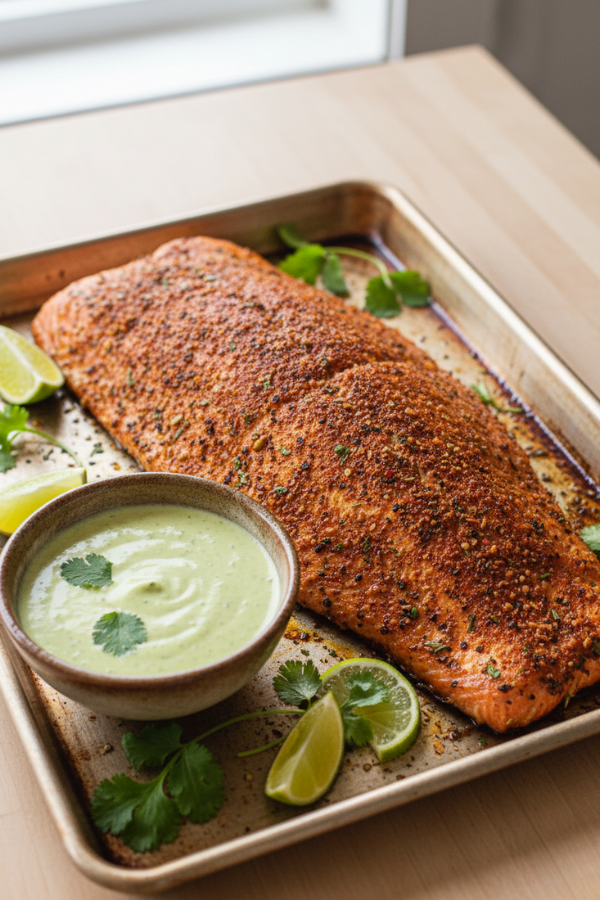
| Prep Time | 10 minutes |
| Cook Time | 12-18 minutes |
| Servings |
servings
|
- 1 lb salmon fillets
- 1 tbsp olive oil
- 1 tbsp –2Cajun seasoning start light
- black pepper optional salt
- Avocado Lime Sauce crema-style
- 1 ripe avocado
- Juice of 1–2 limes
- 1/4 cup Greek yogurt or sour cream / dairy-free yogurt
- 1 small garlic clove
- Salt to taste
- Water to thin as needed
Ingredients
|
|
- Step 1: Heat The Oven + Set Up The Pan Preheat your oven to 400°F. Line a sheet pan with parchment paper or foil. This is not a fancy step. This is a “I don’t want to scrub a pan tonight” step. Totally valid.

- Step 2: Season The Salmon Pat the salmon dry with paper towels. It helps the seasoning stick, and it helps the surface roast instead of steam. Place salmon on the pan. Drizzle with olive oil. Sprinkle Cajun seasoning evenly over the top. Add black pepper. Now pause for one second: does your Cajun blend already taste salty? If yes, skip extra salt. If it’s mild, add a small pinch.
- Step 3: Bake Until Flaky (Without Drying It Out) Bake at 400°F. Timing depends on thickness, but here’s a helpful guide: Thinner fillets: start checking at 12 minutes Average fillets: usually 12–15 minutes Thicker fillets (~1 inch+): 16–18 minutes Salmon is done when it flakes easily and looks opaque. If you use a thermometer, the official safe temperature is 145°F at the thickest part. (Some people prefer pulling it slightly earlier for a softer center, but 145°F is the safety benchmark.) Honestly, salmon can be dramatic. Two extra minutes can change everything. Check early. You can always add time.
- Step 4: Make The Avocado Lime Sauce While It Bakes While the salmon is in the oven, make your sauce. Add sauce ingredients to a blender or food processor and blend until smooth. If it’s too thick, add water a tablespoon at a time. Taste and adjust: Too flat? Add lime and salt. Too sharp? Add a tiny drizzle of honey/maple (optional). Too thick? Add water. Too garlicky? Add more yogurt/avocado to soften it. Small batch tip: If your blender struggles with small quantities, an immersion blender in a tall cup can make the sauce smoother with less fuss.
- Step 5: Serve When the salmon comes out, let it rest for 2 minutes. This helps the juices settle. Spoon sauce over salmon. Add extra lime if you want that bright finishing pop. That’s dinner.
