
Why You’ll Love This Recipe
Alfredo pasta has a reputation—rich, creamy, comforting. Sometimes a little heavy, too. But vegan Alfredo can be just as satisfying when the sauce is built the right way. Instead of butter and heavy cream, this version gets its silky texture from plant milk and pasta starch, plus a few flavor boosters that recreate that savory “cheesy” depth.
The result is a sauce that’s smooth, glossy, and clings beautifully to every strand of pasta—without complicated techniques or hard-to-find ingredients. Even better, the recipe is designed for real life: quick enough for a weeknight, simple enough for everyday cooking, and easy to clean up afterward.
Here’s why it works so well:
- One-pan cooking: The pasta cooks directly in the sauce base, which means fewer dishes and less fuss.
- Quick but flavorful: Garlic, herbs, and nutritional yeast add savory depth that feels surprisingly close to classic Alfredo.
- Flexible ingredients: Almond milk, oat milk, or soy milk all work well, so you can use what’s already in the fridge.
- Meal-prep friendly: Leftovers reheat easily with a splash of plant milk, making it perfect for next-day lunches.
Honestly, when a pasta recipe delivers creamy comfort without leaving a mountain of dishes behind, that’s already a win.
Ingredients
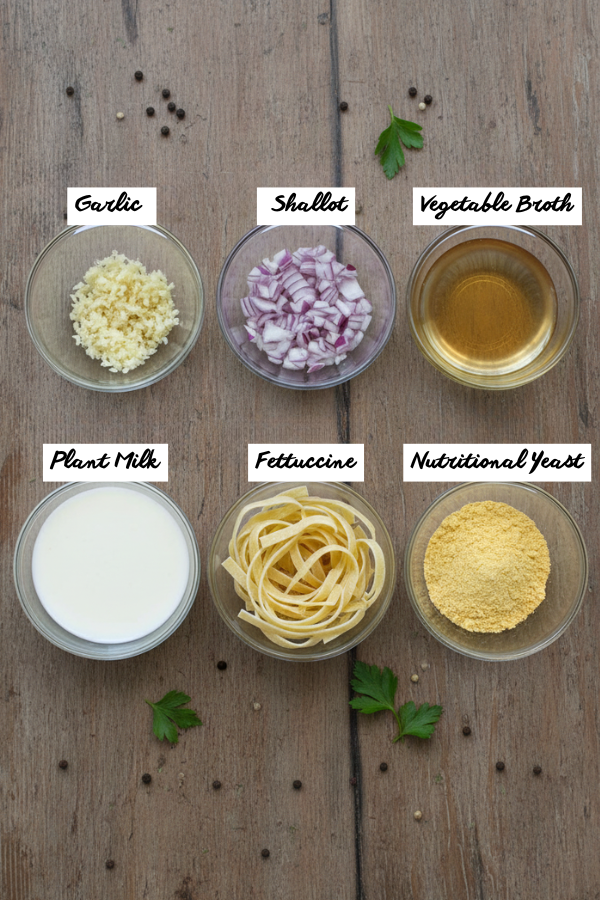
Core Ingredients
This recipe makes about 3–4 servings.
- 8 oz fettuccine (or linguine)
- 4 cloves garlic, minced
- 1 small shallot or ½ small onion, finely chopped
- 2 cups low-sodium vegetable broth
- 1½ cups plain, unsweetened plant milk (soy, almond, or oat)
- ½ tablespoon olive oil (optional)
- 1 teaspoon salt, plus more to taste
- Black pepper
- ½ teaspoon dried oregano (optional)
- Pinch of red pepper flakes (optional)
- Fresh parsley or basil for garnish
Flavor Boosters (Optional but Recommended)
These ingredients help recreate the savory “cheesy” character of Alfredo sauce.
- 2–4 tablespoons nutritional yeast
- ½ teaspoon white or yellow miso paste
- Lemon zest or a small squeeze of lemon juice
Optional Creaminess Booster
If you want a richer sauce, you can blend a quick cashew cream.
Blend together:
- ¼ cup raw cashews
- ½ cup hot water
Blend until completely smooth and stir it into the sauce near the end of cooking.
Optional Add-Ins
To turn this pasta into a full meal, consider adding:
Vegetables
- Baby spinach
- Mushrooms
- Frozen peas
Protein
- Chickpeas
- Baked tofu cubes
- Plant-based chicken strips
Toppings
- Vegan parmesan
- Toasted breadcrumbs
- Extra black pepper
Step-by-Step Instructions
Step 1 — Sauté the Aromatics
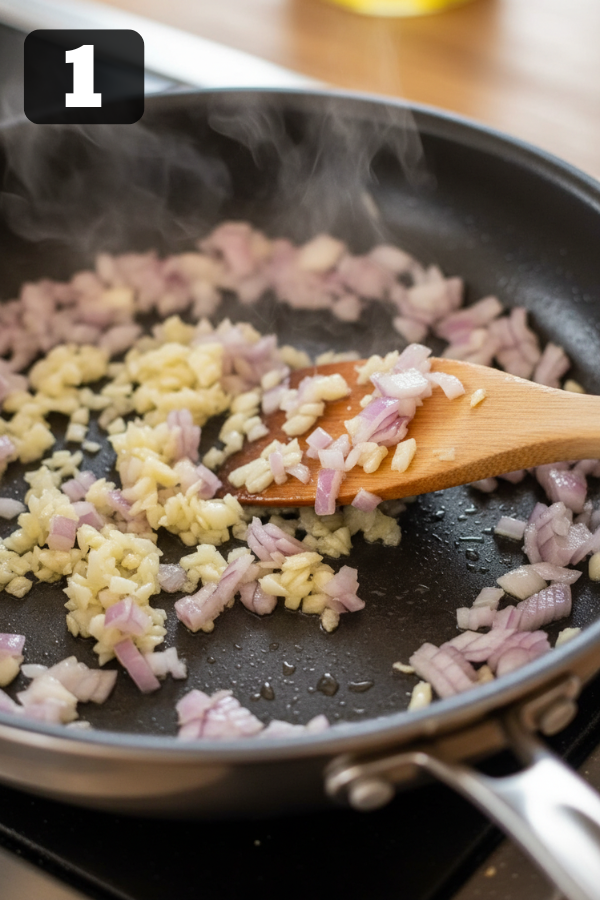
Heat a large skillet over medium heat.
Add the olive oil, garlic, and chopped shallot with a small pinch of salt.
Cook for about 2 minutes, stirring frequently, until fragrant and softened. The garlic should not brown—just gently soften.
This short step creates the base flavor for the entire sauce.
Step 2 — Add the Liquids
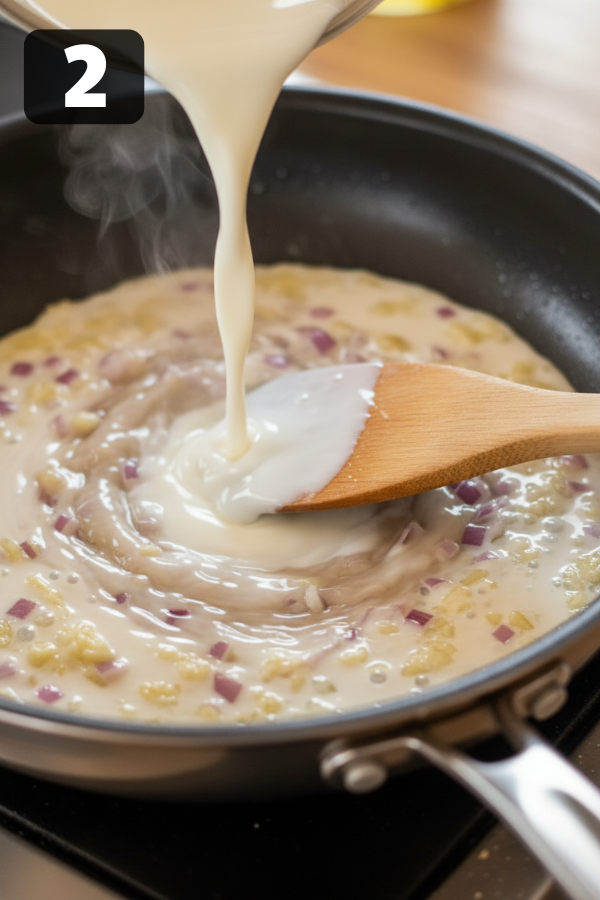
Pour in the vegetable broth and plant milk.
Stir well and bring the mixture to a gentle simmer.
Make sure the milk you’re using is plain and unsweetened. Sweetened or vanilla milk can change the flavor in a strange way.
Step 3 — Add the Pasta
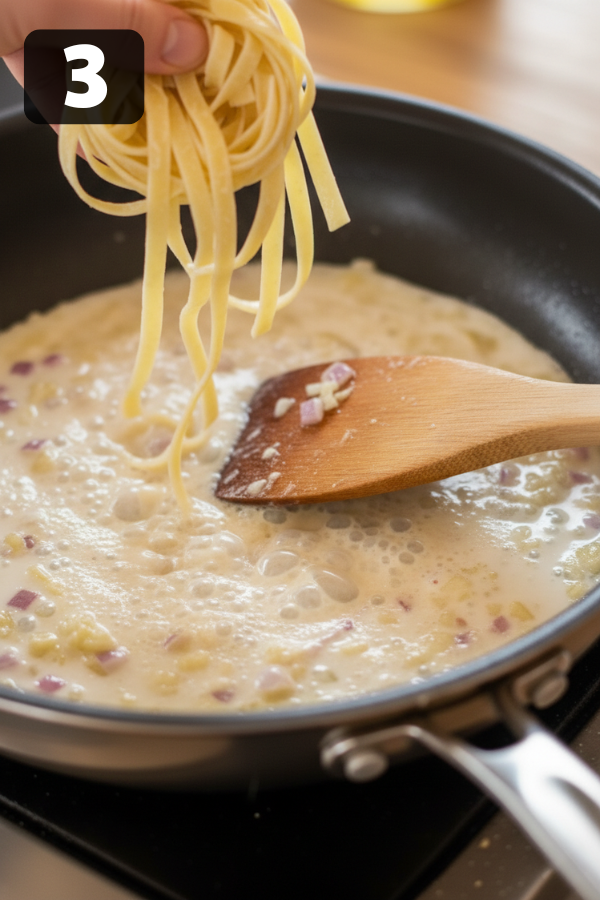
Place the dry fettuccine directly into the skillet.
If your pan is wide enough, lay the pasta flat. If not, break the noodles in half so they fit.
The pasta will cook right in the sauce mixture, releasing starch that helps thicken the sauce naturally.
Step 4 — Simmer and Stir
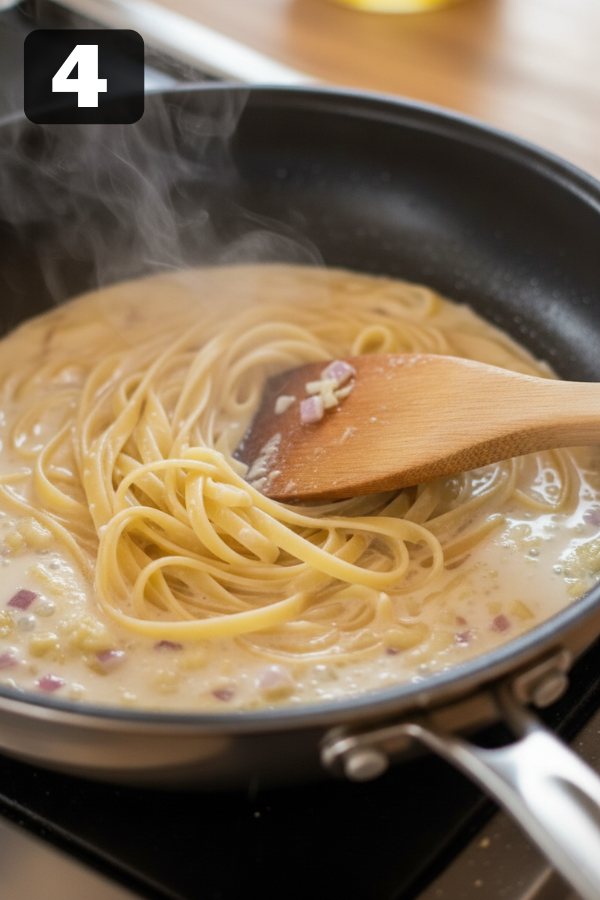
Let the pasta simmer gently until tender.
This usually takes 20–25 minutes, depending on the pasta type.
Stir every couple of minutes to prevent sticking. As the pasta cooks, the liquid will slowly reduce and turn into a creamy sauce.
If the sauce becomes too thick before the pasta is fully cooked, add a splash of broth or milk.
Step 5 — Season the Sauce
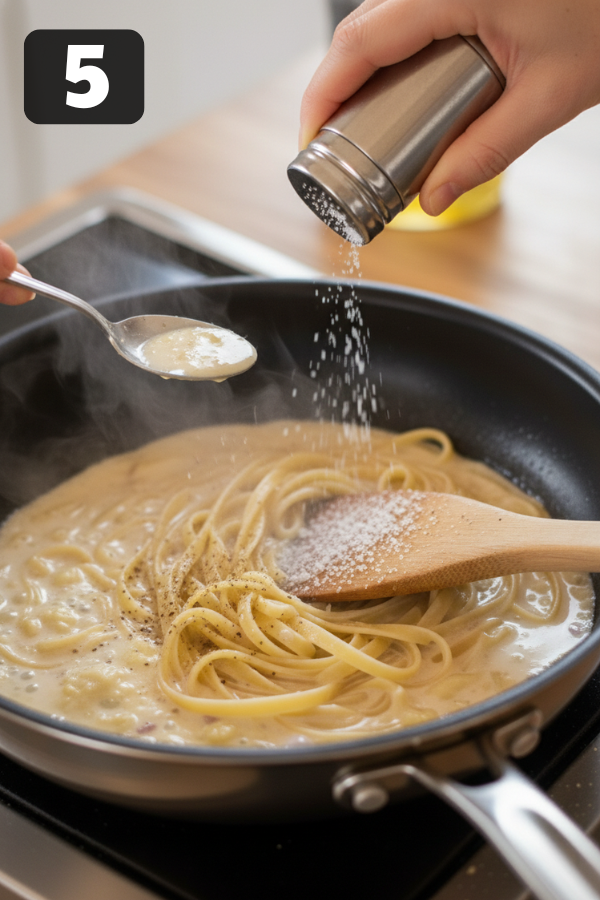
Once the pasta is tender, start adjusting the flavor.
Add:
- Black pepper
- Oregano
- Red pepper flakes if you like a bit of heat
Taste and add salt gradually. Creamy pasta sauces often need a little extra seasoning to really shine.
Step 6 — Add the Alfredo Flavor Boosters
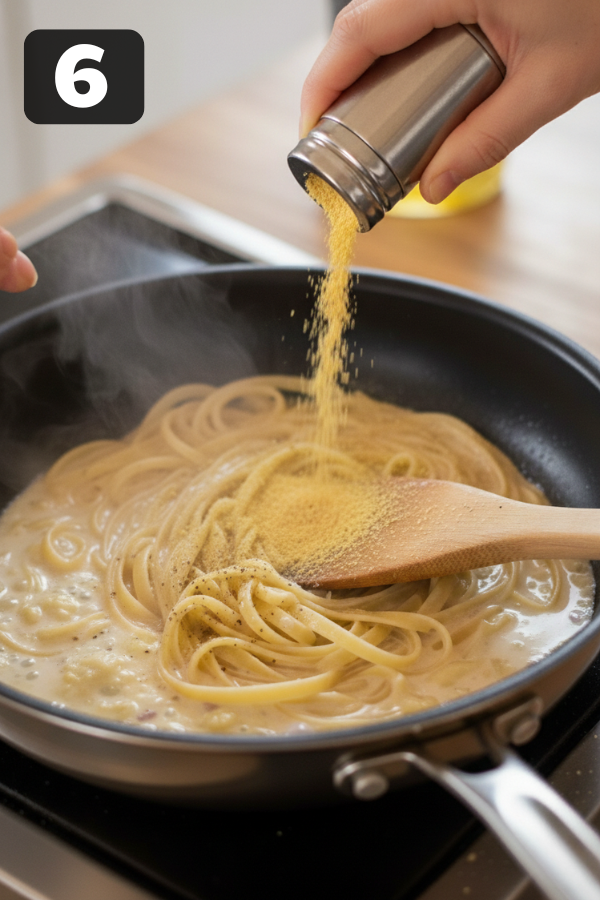
Reduce the heat to low.
Stir in the nutritional yeast and miso paste, if using.
These ingredients deepen the flavor and give the sauce that subtle “cheesy” richness that Alfredo is known for.
Add lemon zest or a small squeeze of lemon juice to balance the creaminess.
Step 7 — Add Vegetables or Protein
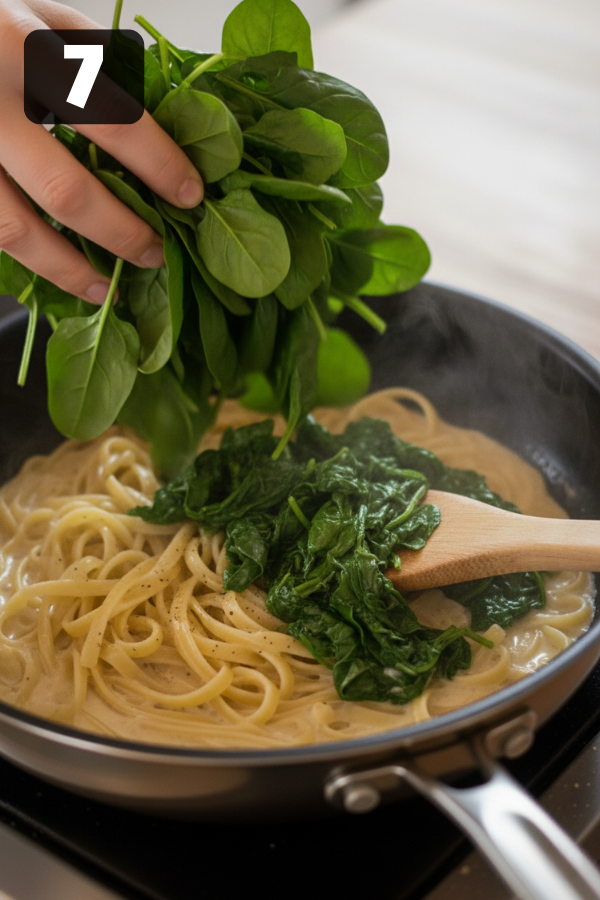
If you’re adding vegetables like spinach or peas, fold them in now.
Spinach will wilt quickly—usually within a minute.
For heartier add-ins like mushrooms or tofu, you can sauté them separately and mix them into the finished pasta.
Step 8 — Serve
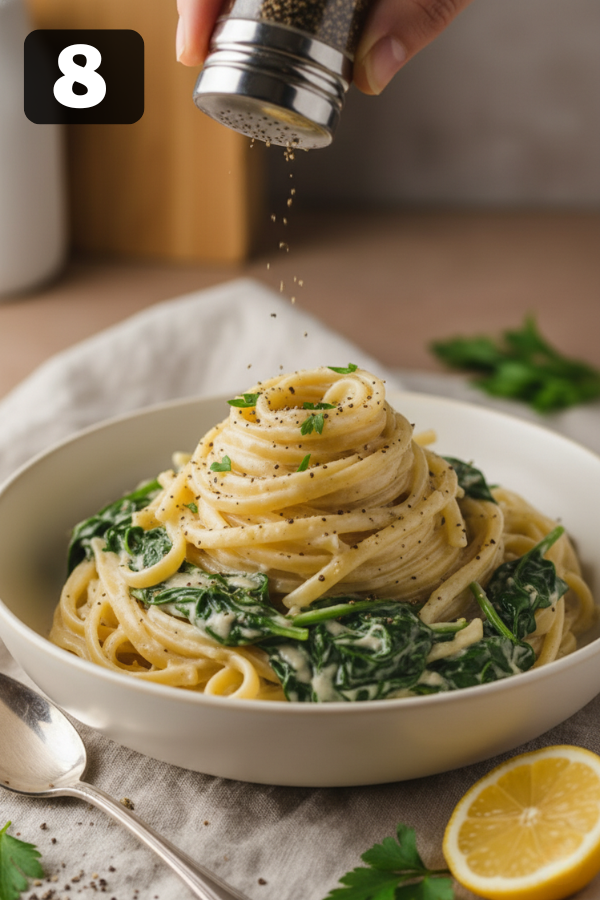
Remove the skillet from heat.
Top with fresh parsley or basil and an extra sprinkle of black pepper.
Serve immediately while the sauce is glossy and smooth.
Tips for Success
If the Sauce Looks Thin
Don’t worry.
One-pan pasta sauces often thicken toward the end of cooking because the pasta releases starch.
Simply let the mixture simmer a few minutes longer while stirring gently.
If the Sauce Gets Too Thick
This is common when pasta sits for a while.
Just add a splash of plant milk or vegetable broth and stir over low heat until the sauce loosens again.
How to Make the Sauce Taste “Cheesier”
A few small ingredients can transform the flavor.
- Nutritional yeast adds savory depth.
- Miso paste adds umami and richness.
- Vegan parmesan provides a sharper finish.
Even adding just one of these ingredients can noticeably improve the sauce.
Choosing the Right Plant Milk
Different plant milks create slightly different textures.
- Soy milk: creamier texture
- Almond milk: lighter flavor
- Oat milk: naturally slightly thicker
Always choose unsweetened versions.
Want a Lighter Version?
Some cooks like blending cauliflower with cashews to create a lighter Alfredo sauce.
The cauliflower adds body while keeping the sauce creamy but not overly rich.
It’s a nice trick if you want a vegetable-forward pasta.
Storage and Leftovers
Refrigerator
Store leftover pasta in an airtight container in the refrigerator for 3–5 days.
Reheating
The best way to reheat creamy pasta is on the stovetop.
Add a small splash of milk or broth and heat gently while stirring until the sauce loosens again.
Microwaving works too—just heat in short intervals and stir between them.
Freezing
Freezing pasta mixed with sauce can sometimes change the texture.
If you plan to freeze the recipe, it’s better to freeze the sauce separately and cook fresh pasta when serving.
What to Serve With It
This creamy pasta pairs well with simple sides that balance the richness.
Easy Side Dishes
- Lemon-dressed arugula salad
- Roasted broccoli
- Garlic bread
- Grilled asparagus
Drinks
- Sparkling water with lemon
- Iced tea
- A crisp white wine for dinner gatherings
Dessert Ideas
If you want something light afterward:
- Fresh berries
- Dark chocolate
- Lemon sorbet
Nutrition Snapshot
Creamy pasta often sounds indulgent, but plant-based Alfredo sauces can be lighter than traditional versions.
Because they rely on plant milk and natural starch from pasta rather than heavy cream and butter, the sauce typically contains less saturated fat.
Of course, the exact nutrition will vary depending on the ingredients you choose, the pasta type, and any add-ins like cashews or vegan cheese.
Still, it’s a comforting meal that fits easily into a balanced diet—especially when paired with vegetables or plant protein.
FAQs
1. Can I make vegan Alfredo ahead of time?
Yes. The pasta keeps well for several days in the refrigerator. Reheat gently with a splash of plant milk to restore creaminess.
2. Can I make this recipe nut-free?
Yes. Simply skip the optional cashew cream and rely on nutritional yeast and good seasoning for flavor.
3. What pasta shape works best?
Fettuccine and linguine are classic choices, but penne, rigatoni, or rotini also work well because they hold sauce nicely.
4. Can I use gluten-free pasta?
Yes, but gluten-free pasta can cook faster and release more starch. Stir frequently and watch the texture closely.
5. Can I make the sauce extra creamy?
Yes. Adding a small amount of blended cashew cream or vegan cream cheese can make the sauce richer.
Final Thoughts
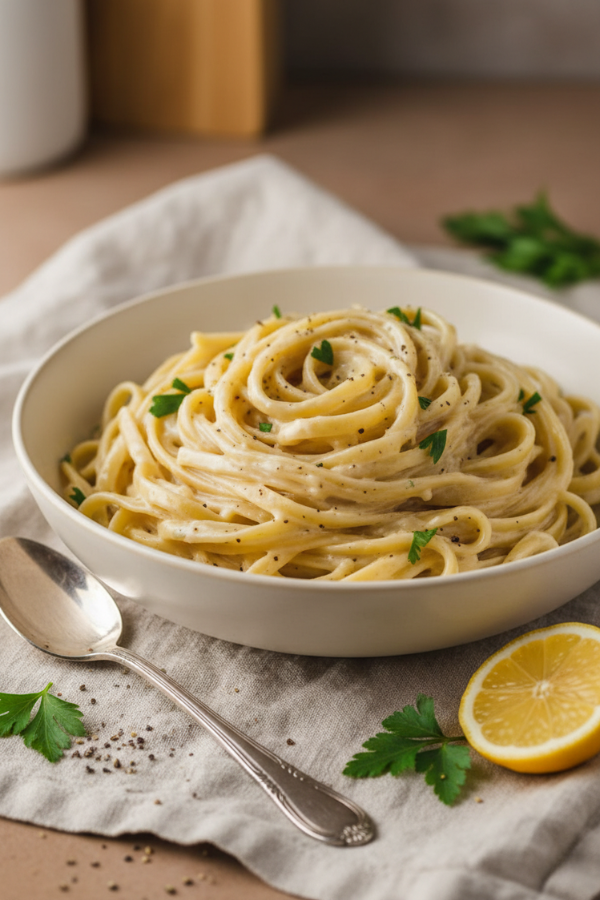
This Best Creamy Vegan Alfredo Pasta Recipe proves that comfort food doesn’t have to be complicated—or heavy. With simple ingredients, one pan, and a few smart flavor boosters, you get a silky, satisfying pasta that feels both cozy and practical for everyday cooking. Whether you’re making a quick weeknight dinner, prepping lunches for the week, or just craving something creamy and comforting, this recipe keeps things easy while still delivering big flavor. And honestly, once you see how simple vegan Alfredo can be, it might become one of those recipes you return to again and again.
Don’t Miss: BEST SPLIT PEA SOUP RECIPE
Ingredients
Method
- Sauté the Aromatics Heat a large skillet over medium heat. Add the olive oil, garlic, and chopped shallot with a small pinch of salt. Cook for about 2 minutes, stirring frequently, until fragrant and softened. The garlic should not brown—just gently soften. This short step creates the base flavor for the entire sauce.

- Add the Liquids Pour in the vegetable broth and plant milk. Stir well and bring the mixture to a gentle simmer. Make sure the milk you’re using is plain and unsweetened. Sweetened or vanilla milk can change the flavor in a strange way.
- Add the Pasta Place the dry fettuccine directly into the skillet. If your pan is wide enough, lay the pasta flat. If not, break the noodles in half so they fit. The pasta will cook right in the sauce mixture, releasing starch that helps thicken the sauce naturally.
- Simmer and Stir Let the pasta simmer gently until tender. This usually takes 20–25 minutes, depending on the pasta type. Stir every couple of minutes to prevent sticking. As the pasta cooks, the liquid will slowly reduce and turn into a creamy sauce. If the sauce becomes too thick before the pasta is fully cooked, add a splash of broth or milk.
- Season the Sauce Once the pasta is tender, start adjusting the flavor. Add: Black pepper Oregano Red pepper flakes if you like a bit of heat Taste and add salt gradually. Creamy pasta sauces often need a little extra seasoning to really shine.
- Add the Alfredo Flavor Boosters Reduce the heat to low. Stir in the nutritional yeast and miso paste, if using. These ingredients deepen the flavor and give the sauce that subtle “cheesy” richness that Alfredo is known for. Add lemon zest or a small squeeze of lemon juice to balance the creaminess.
- Add Vegetables or Protein If you’re adding vegetables like spinach or peas, fold them in now. Spinach will wilt quickly—usually within a minute. For heartier add-ins like mushrooms or tofu, you can sauté them separately and mix them into the finished pasta.
- Serve Remove the skillet from heat. Top with fresh parsley or basil and an extra sprinkle of black pepper. Serve immediately while the sauce is glossy and smooth.
