
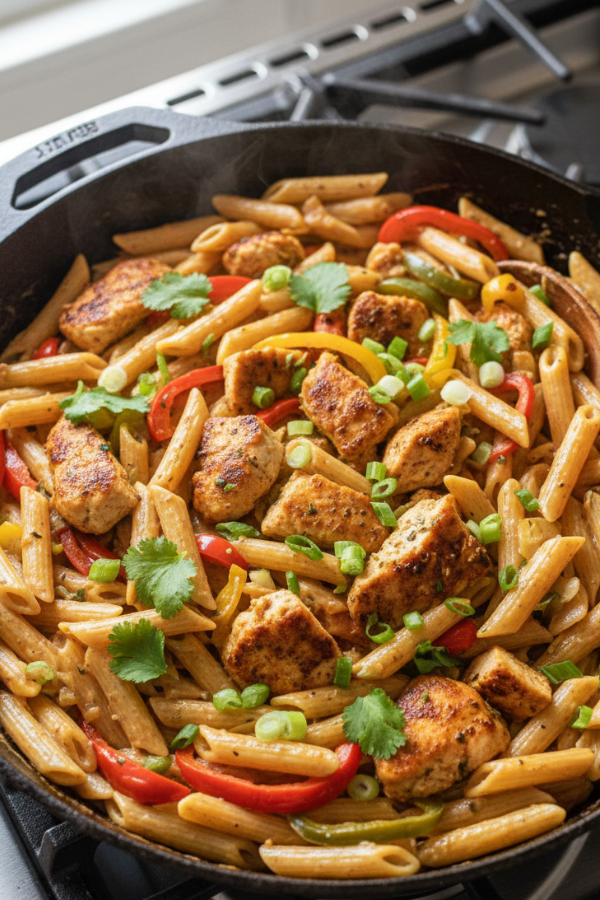
Skillet Chicken Fajita Pasta is what happens when fajita night and pasta night stop arguing and share one pan. You get juicy chicken, sweet peppers and onions, tender noodles, and a creamy, smoky sauce that tastes like you put in way more effort than you did. It’s fast (think “around 30 minutes”), it’s colorful, and it doesn’t leave your sink looking like a crime scene. If you’re a busy home cook who wants comfort food that still feels fresh—this is the dinner.
Why You’ll Love This
Some recipes look simple but still feel like a lot. This one’s the opposite. It looks like a party and cooks like a weeknight.
- It’s quick without tasting rushed. Many versions land around the 30-minute mark, especially if you slice your peppers while the skillet heats.
- It’s a one-pan comfort meal. Chicken, veggies, pasta, and sauce all hang out together, so cleanup stays sane.
- It’s easy to adjust. Want it lighter? Use less cheese and stir in a spoonful of light sour cream at the end. Want it cozier? Add a bit more cheese and let it sit for two minutes to thicken.
- It reheats like a champ. With one tiny trick (a splash of broth or milk), leftovers taste surprisingly good.
And honestly, there’s something calming about a dinner that’s mostly “stir, simmer, melt, eat.” No drama. Just dinner.
Ingredients
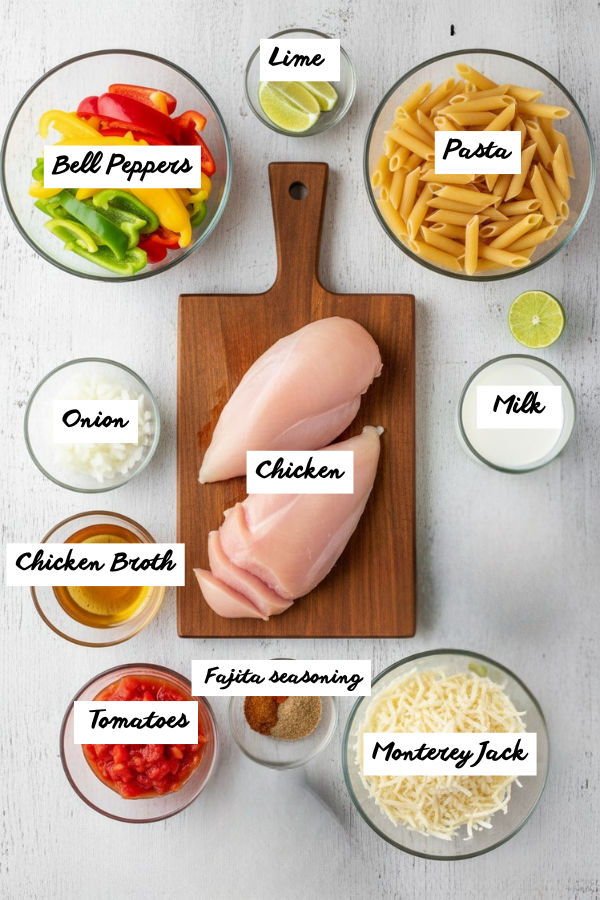
You don’t need fancy anything here. The goal is bold flavor from simple stuff.
The Core Lineup
- Chicken (about 1 to 1½ pounds)
- Boneless, skinless breasts cook fast and stay lean.
- Thighs are a little more forgiving and stay juicy if your timing is… let’s call it “flexible.”
- Bell peppers (2–3 total)
- Any colors work. Red and yellow are sweeter; green has a slightly sharper bite.
- Onion (1 medium)
- White or yellow is classic.
- Pasta (usually 12–16 ounces)
- Penne or other short tubes are perfect because they grab sauce.
- Chicken broth (for cooking pasta and building flavor)
- Milk (for creaminess)
- Whole milk makes the richest sauce, but 2% can still work.
- Tomatoes with green chiles or salsa (for fajita flavor)
- This is where the “Tex-Mex” vibe really shows up.
- Cheese
- Monterey Jack melts smoothly.
- Pepper Jack adds gentle heat.
- Finishes
- Lime wedges, chopped cilantro, sliced green onions, avocado (pick one or two—no need to do it all).
Quick Fajita Seasoning (DIY)
If you don’t have a fajita packet, this pantry mix gets you close:
- Chili powder
- Cumin
- Garlic powder
- Paprika (smoked if you have it)
- Dried oregano
- Salt + pepper
One little note that matters more than people think: chili powder varies a lot. Some brands are mild and warm; others bring a noticeable kick. So if you’re cooking for kids or spice-sensitive adults, start lighter. You can always add heat later.
Easy Swaps (Because Real Life Happens)
- Gluten-free: use gluten-free pasta (watch cook time; it can go soft faster).
- Dairy-light: use less cheese and finish with a spoonful of light sour cream off heat.
- Extra veggies: toss in mushrooms or zucchini. Just don’t overcrowd the pan—too many veggies can make the dish watery.
Step-by-Step Instructions
There are two good paths here. The “true one-pan” method is the cleanest and feels a little magical. The “hybrid” method (pasta cooked separately) is great if your skillet isn’t deep enough or you want more control.
Method 1 — True One-Pan (Pasta Cooks In The Sauce)
Best tool: a deep 12-inch skillet or a wide pot. If your pan is shallow, it can boil over once pasta joins the party.
Step 1 — Prep (5–10 minutes)
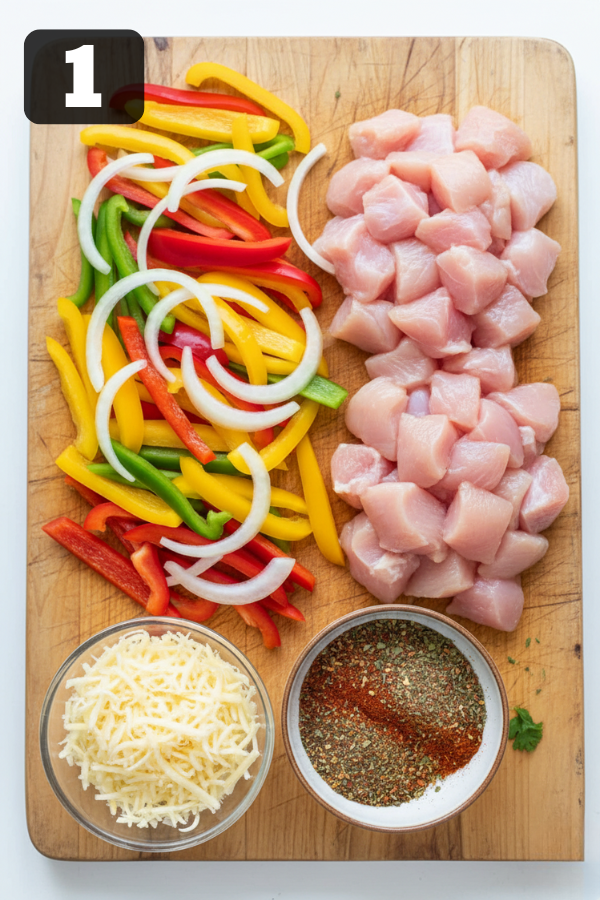
- Slice peppers and onion into thin strips.
- Cut chicken into bite-size pieces or thin strips.
- In a small bowl, mix your fajita seasoning (or open the packet).
- Shred your cheese now so you’re not doing it later with one hand while stirring with the other.
Step 2 — Brown The Chicken (3–6 minutes)
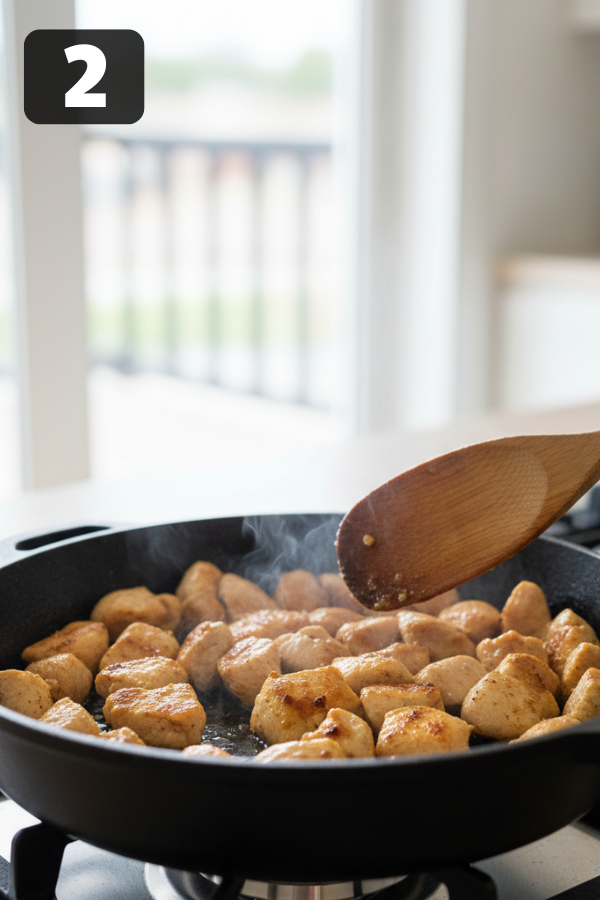
- Heat 1–2 tablespoons of oil in your skillet over medium-high.
- Add chicken in a single layer (work in batches if needed).
- Sprinkle with salt, pepper, and some fajita seasoning.
- Brown until the outside looks cooked and you get a little color.
- Move chicken to a plate. It will finish cooking later.
Why remove it? Because chicken can go from juicy to dry in a blink when you keep it in a hot pan while you do other steps.
Step 3 — Cook The Peppers And Onions (5–8 minutes)
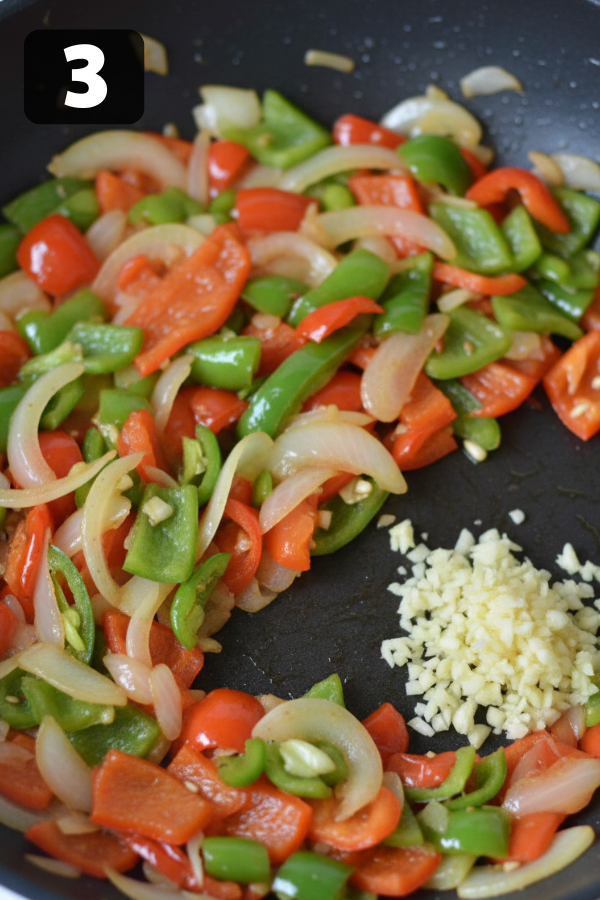
- Add a touch more oil if the pan looks dry.
- Add onions and peppers.
- Cook until they soften but still have a little bite.
- Add minced garlic in the last 30 seconds (garlic burns fast and turns bitter).
Your kitchen should smell like fajitas right now. That’s the signal you’re on track.
Step 4 — Add Liquids + Pasta And Simmer (12–18 minutes)
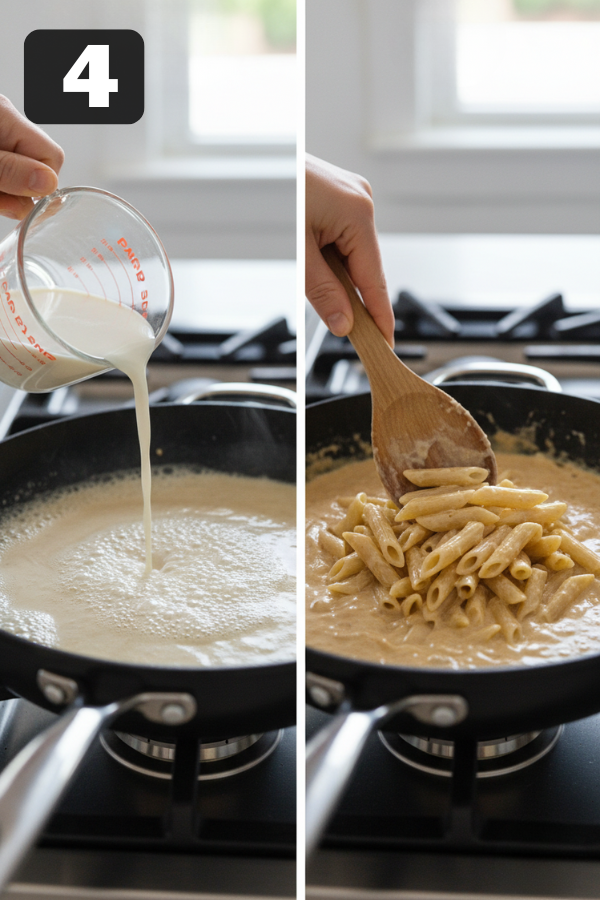
- Pour in chicken broth and milk.
- Add tomatoes with green chiles (or your salsa choice).
- Stir, scraping up browned bits from the bottom (that’s flavor).
- Add dry pasta.
- Bring to a gentle boil, then reduce to a steady simmer.
Now the key moves:
- Stir every 4–5 minutes so pasta doesn’t stick.
- Keep noodles mostly submerged.
- If sauce thickens too fast and pasta isn’t tender yet, add a splash of broth.
Different pasta brands absorb liquid differently. That’s normal. You’re not doing anything wrong.
Step 5 — Finish Creamy + Serve (2–3 minutes)
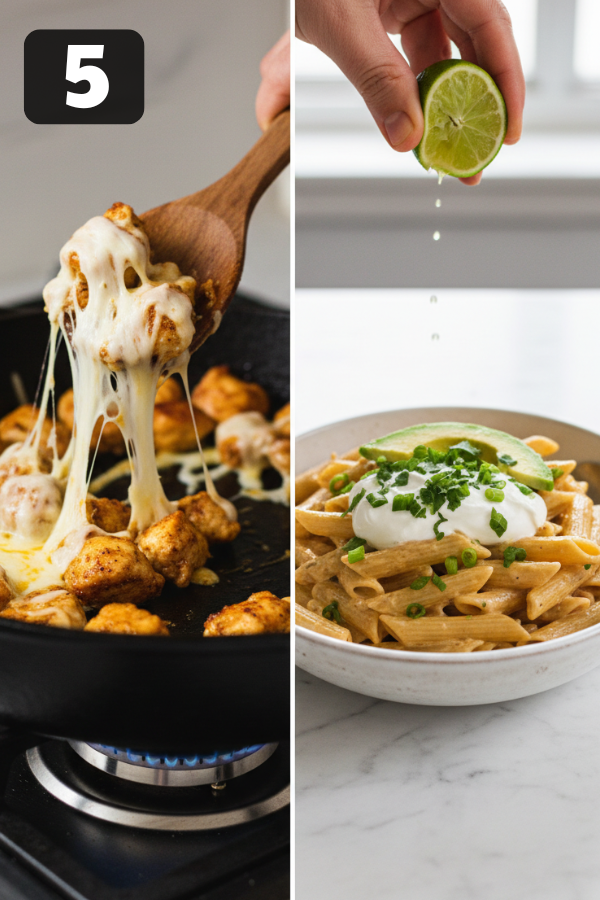
- Return chicken to the skillet.
- Simmer 2–3 minutes until chicken is cooked through.
- Turn heat to low.
- Stir in cheese until melted and silky.
- Finish with lime right before serving.
- Top with cilantro, green onions, or avocado (optional).
Method 2 — Hybrid (pasta cooked separately)
This version is great when you want a guaranteed texture or your skillet feels cramped.
Step 1 — Cook Pasta (8–10 minutes)
- Boil pasta in salted water.
- Drain and set aside.
Step 2 — Make The Fajita Skillet Base (12–15 minutes)
- Brown chicken with seasoning; remove.
- Sauté peppers and onions.
- Add tomatoes (or salsa) plus your creamy element (cream cheese or sour cream off heat).
- Return chicken and toss with pasta.
- Add cheese and stir until it melts.
Tips For Success
Here’s the thing: this recipe is forgiving, but a few habits make it feel foolproof.
- Use a deep skillet for one-pan cooking. Pasta expands, sauce bubbles, and shallow pans overflow.
- Keep the milk at a simmer. A hard boil can mess with texture and make the sauce look a little “broken.”
- Stir on a schedule. Every few minutes is enough. Constant stirring can overwork the pasta; zero stirring can cause sticking.
- Taste at the end. Add salt first, then lime. If it still feels flat, add a pinch more seasoning.
- Cheese goes in on low heat. High heat can make cheese clump instead of melt smoothly.
Quick digression (because it’s useful): if creamy dinners keep tasting “heavy,” it’s usually missing a bright note. Lime, a splash of vinegar, or even a spoonful of salsa at the end can make the whole pan taste lighter.
Storage & Leftover Notes
This dish is meal-prep friendly, but creamy pasta can dry out the next day. That doesn’t mean it’s doomed.
How Long It Lasts
- In the fridge: 3–4 days is a solid safety window for cooked chicken dishes.
- Store in airtight containers.
How To Reheat So It Stays Creamy
- Add 1–3 tablespoons broth or milk before reheating.
- Microwave in 45–60 second bursts, stirring halfway.
- Or warm gently in a skillet with a splash of broth.
That little splash brings the sauce back to life. Without it, pasta tends to soak up sauce and feel thick.
What To Serve With It
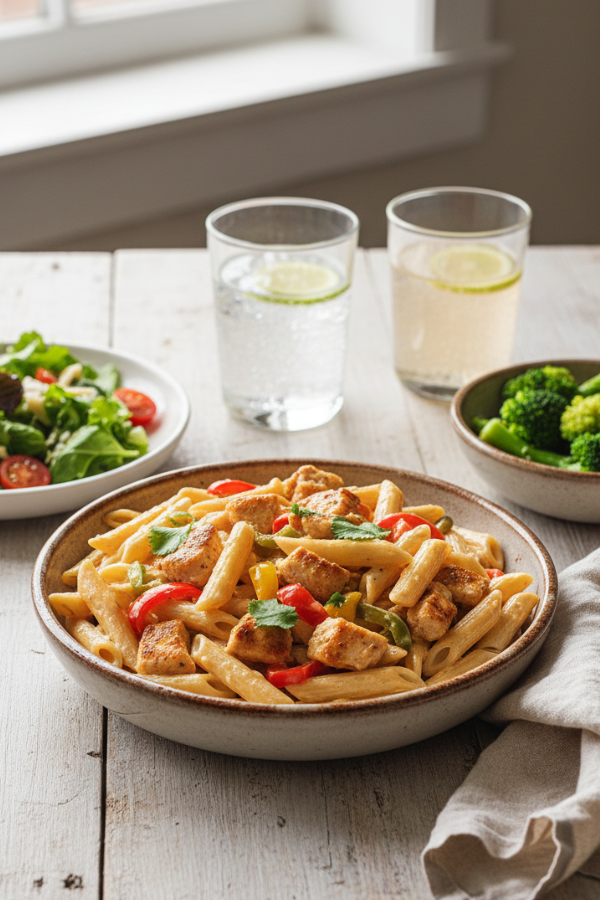
This pasta can absolutely be dinner on its own. But if you want the table to feel “full” with almost no effort:
- A simple salad (bagged salad + lime dressing)
- Roasted or steamed broccoli
- Tortilla chips + salsa
- Avocado on the side
Drink pairing doesn’t need to be fancy. Iced tea, sparkling water with lime, or lemonade works great.
Nutrition Info
Nutrition will vary based on pasta, dairy, and cheese amounts. Still, it helps to have a general idea.
- A lighter, portioned version is often around 390 calories per serving (about 1½ cups) with roughly 29g protein.
- A more comfort-forward version can land closer to the 450–500 calorie range per serving.
If you’re trying to keep it lighter:
- Use a bit less cheese.
- Add extra peppers and onions.
- Finish with a small spoonful of sour cream instead of lots of cheese.
FAQs
- Can I make Skillet Chicken Fajita Pasta ahead of time?
Yes. Store in airtight containers and reheat with a splash of broth or milk to bring back the creaminess. - Can I use chicken thighs instead of breasts?
Absolutely. Thighs stay juicy and are forgiving if the skillet runs a minute long. - Is it spicy?
It depends on your chili powder and whether you use mild or hot tomatoes/salsa. For mild: use mild green chiles and skip cayenne. For heat: use Pepper Jack, hot salsa, or a pinch of cayenne. - What pasta works best?
Short shapes like penne, rotini, or small shells work well. They hold sauce and cook evenly in one-pan recipes. - Can I make it gluten-free?
Yes—use gluten-free pasta. Watch cook time closely since some GF pasta softens faster. - What if I don’t have fajita seasoning?
Use chili powder, cumin, garlic powder, paprika, oregano, salt, and pepper. It will taste like fajitas.
Final Thoughts
If your weeknights are busy (and whose aren’t?), this Skillet Chicken Fajita Pasta is the kind of recipe that quietly saves you—one pan, big flavor, and leftovers you’ll actually want to eat. Make it once, then make it “yours” the next time: a little more lime, a different pepper, extra veggies, or a touch more cheese when you need comfort. And if dinner still feels hard some nights, remember this: a warm skillet on the table and a meal that comes together fast is already a win.
Don’t Miss: CROCKPOT CHICKEN ONION OLIVE GARLIC
Ingredients
Method
- Prep (5–10 minutes) Slice peppers and onion into thin strips. Cut chicken into bite-size pieces or thin strips. In a small bowl, mix your fajita seasoning (or open the packet). Shred your cheese now so you’re not doing it later with one hand while stirring with the other.

- Brown The Chicken (3–6 minutes) Heat 1–2 tablespoons of oil in your skillet over medium-high. Add chicken in a single layer (work in batches if needed). Sprinkle with salt, pepper, and some fajita seasoning. Brown until the outside looks cooked and you get a little color. Move chicken to a plate. It will finish cooking later. Why remove it? Because chicken can go from juicy to dry in a blink when you keep it in a hot pan while you do other steps.
- Cook The Peppers And Onions (5–8 minutes) Add a touch more oil if the pan looks dry. Add onions and peppers. Cook until they soften but still have a little bite. Add minced garlic in the last 30 seconds (garlic burns fast and turns bitter). Your kitchen should smell like fajitas right now. That’s the signal you’re on track.
- Add Liquids + Pasta And Simmer (12–18 minutes) Pour in chicken broth and milk. Add tomatoes with green chiles (or your salsa choice). Stir, scraping up browned bits from the bottom (that’s flavor). Add dry pasta. Bring to a gentle boil, then reduce to a steady simmer. Now the key moves: Stir every 4–5 minutes so pasta doesn’t stick. Keep noodles mostly submerged. If sauce thickens too fast and pasta isn’t tender yet, add a splash of broth. Different pasta brands absorb liquid differently. That’s normal. You’re not doing anything wrong.
- Finish Creamy + Serve (2–3 minutes) Return chicken to the skillet. Simmer 2–3 minutes until chicken is cooked through. Turn heat to low. Stir in cheese until melted and silky. Finish with lime right before serving. Top with cilantro, green onions, or avocado (optional).
