
If you’re tired of choosing between “healthy” and “comforting,” this high protein cottage cheese pasta sauce is your new middle ground. It’s creamy like Alfredo, comforting like a big bowl of mac and cheese, but secretly packed with protein thanks to blended cottage cheese. You get a silky, restaurant-style sauce in about 20 minutes, with simple ingredients and very little mess—exactly what busy home cooks need on weeknights.
Why This Sauce Belongs in Your Weeknight Rotation
You know that moment when you’re starving, it’s 6:30 p.m., and everyone’s asking what’s for dinner? This sauce is built for that moment.
Instead of heavy cream and loads of butter, you blend cottage cheese with pasta water, tomatoes (or marinara), and a little parmesan. The result tastes indulgent, but it behaves more like a balanced meal than a “cheat night.”
Here’s what makes it such a keeper:
- High protein, real comfort:
A single cup of cottage cheese brings around 23–24 grams of protein. Pair that with whole wheat or chickpea pasta and a sprinkle of parmesan, and each serving can easily land in the 20–28g protein range. That’s “keeps-you-full-till-bedtime” territory, not “snack again at 9 p.m.” - Fast enough for real life:
Most of the “cooking” happens while the pasta boils. The sauce blends in 1–2 minutes. You’re eating in about 20 minutes, tops. - Lighter but still cozy:
The texture is silky and rich, like a cream sauce, but without relying on heavy cream as the main base. It feels indulgent without sitting heavy. - Flexible for moods and cravings:
Want something bright and tomato-y? Go with a smoky tomato version. Feeling more like date-night pasta? Make a cottage-cheese version of “Marry Me” pasta with sundried tomatoes and herbs. Same method, different personality.
And the best part? You can keep the ingredients on repeat in your pantry and fridge: dry pasta, cottage cheese, canned tomatoes or marinara, garlic, and parmesan. Nothing fancy, nothing intimidating.
Ingredients
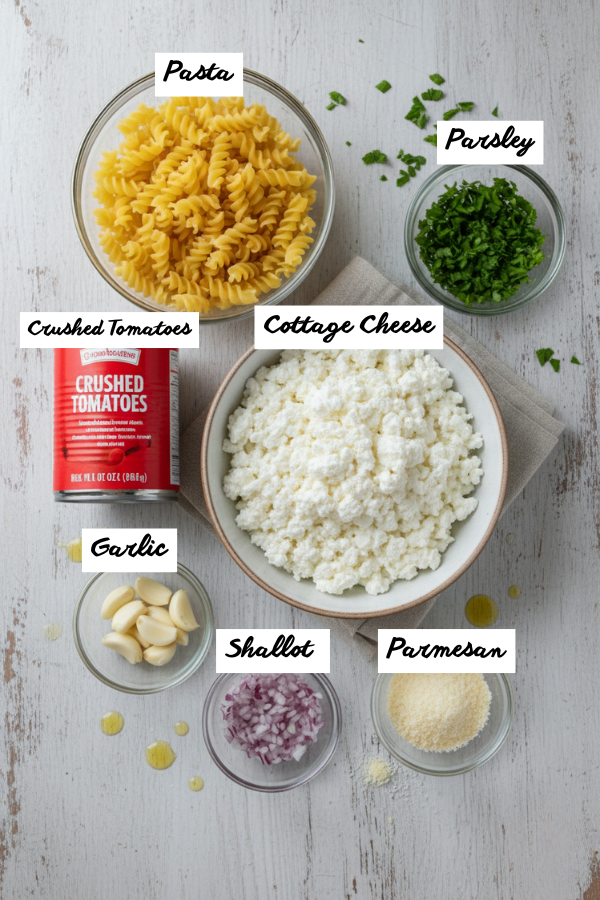
Let me break the recipe into simple parts so it’s easy to remember and easy to shop for.
The Creamy Protein Base
This is the part that does most of the heavy lifting:
- Cottage cheese – 1 cup
- Whole-milk for extra creaminess
- Low-fat if you want fewer calories (the texture still works once it’s blended)
- Reserved pasta water – ½ to 1 cup
- Starchy water helps the sauce cling to the pasta and stay smooth
- Grated parmesan – ¼ to ½ cup
- Adds saltiness, nuttiness, and that “Italian restaurant” aroma
- Salt and black pepper
- Use a light hand at first—cottage cheese and parmesan are already salty
The Tomato & Flavor Layer
You can go two main directions: tomato-based or rosé-style.
- Tomato-style base (everyday, family-friendly):
- 1 cup canned crushed or fire-roasted tomatoes or
- 1 cup jarred marinara sauce
- 1–2 cloves garlic, minced
- 1 small shallot or ¼ small onion, finely chopped
- 1–2 teaspoons olive oil for sautéing
- Rosé / “Marry Me” style (special but still easy):
- 1–2 tablespoons chopped sundried tomatoes in oil
- A small splash of the sundried tomato oil for extra flavor
- ½ teaspoon dried thyme or Italian seasoning
- A pinch of red pepper flakes for gentle heat
Aromatics, Seasoning, and Little Extras
You don’t need many, but these make the sauce taste “finished”:
- ½–1 teaspoon dried Italian seasoning or mixed herbs
- ¼ teaspoon red pepper flakes (optional, for a hint of heat)
- 1–2 teaspoons lemon juice (to brighten the sauce at the end)
- Fresh basil or parsley for topping
Pasta and Optional Protein Add-Ins
The sauce works with almost any pasta, but some shapes hold it better.
- Pasta:
- 8–10 oz short pasta (penne, fusilli, rigatoni, shells)
- Whole wheat, chickpea, or lentil pasta if you want even more protein and fiber
- Extra protein (all optional):
- Grilled chicken breast, sliced
- Cooked shrimp
- White beans or chickpeas
- Turkey sausage or lean ground turkey
Veggies to Boost Nutrition
If you’re cooking for kids or just want more color on the plate, the sauce is a great place to “hide” veggies or showcase them.
- To blend into the sauce:
- A handful of baby spinach
- Roasted red peppers
- Cooked carrots or roasted butternut squash
- To toss in at the end:
- Steamed broccoli florets
- Peas
- Sautéed mushrooms or zucchini
Step-by-Step Instructions
You don’t need to be a confident cook to nail this. The steps are simple and forgiving.
Step 1 – Cook the Pasta
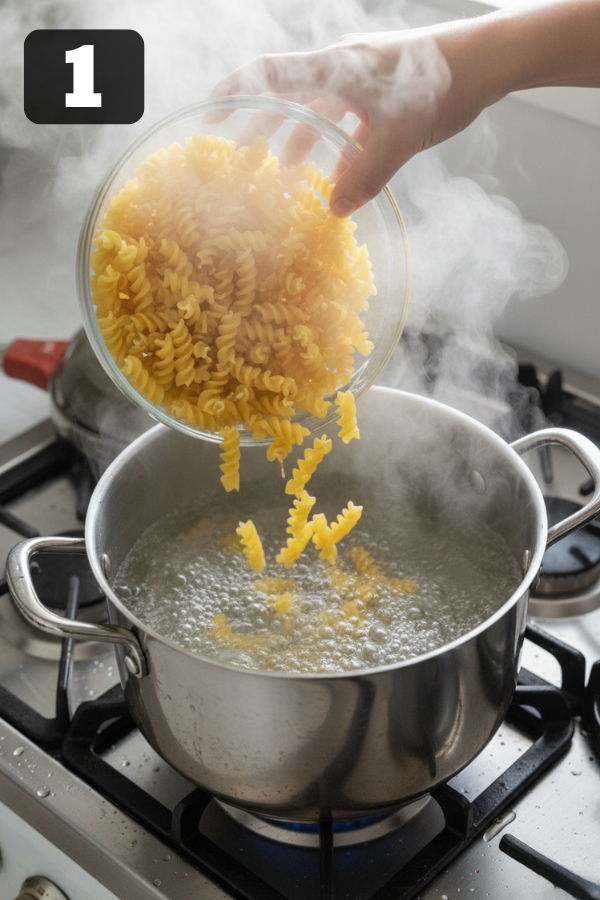
Bring a large pot of water to a boil and salt it well. The water should taste pleasantly salty; this is your first layer of seasoning.
Cook the pasta until just al dente. Before you drain it, scoop out about 1 cup of the starchy pasta water and keep it aside. That little mug of cloudy water is going to turn your blended sauce silky.
Drain the pasta and leave it in the pot or in a large bowl. Let it sit for a few minutes so it’s not screaming hot—you’ll see why in a bit.
Step 2 – Build the Flavor Base in the Pan
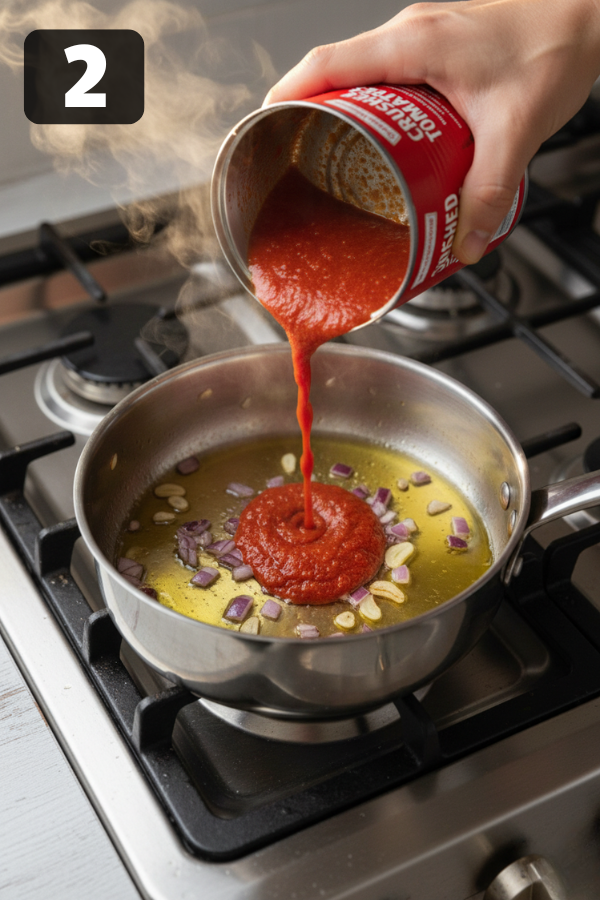
While the pasta cooks, heat a small pan over medium heat. Add olive oil, then the chopped shallot or onion. Cook until soft and translucent, about 3–4 minutes.
Add the garlic and cook for about 30 seconds, just until fragrant. Don’t let it brown.
Now add your tomato base:
- For a simple tomato version: pour in crushed tomatoes or marinara, along with a pinch of salt, pepper, and dried herbs.
- For a sundried tomato “Marry Me” version: add sundried tomatoes, thyme, and a pinch of red pepper flakes.
Let the mixture simmer for 5–8 minutes. It doesn’t need to be perfect; it just needs to cook long enough to mellow the tomatoes and wake up the herbs.
Step 3 – Blend the Cottage Cheese Sauce
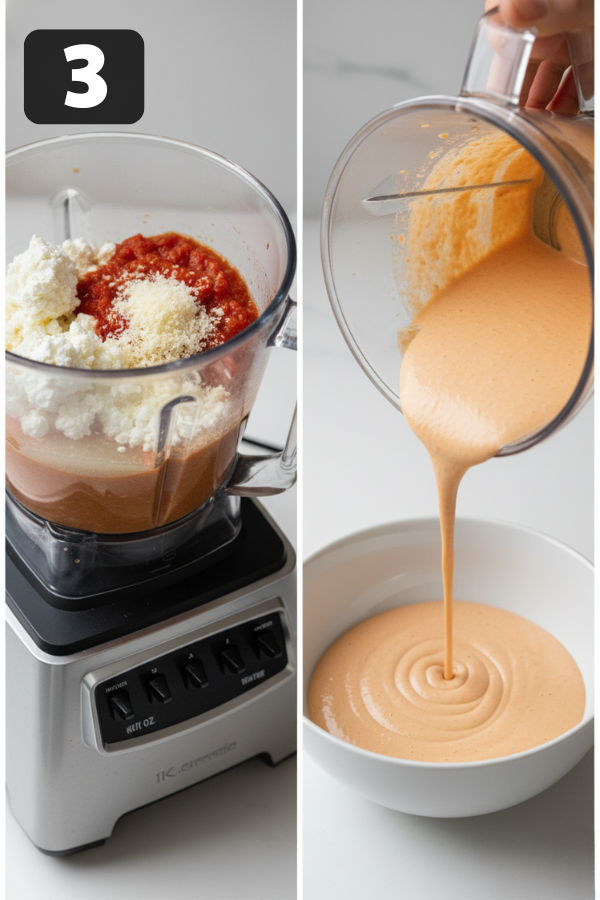
Here’s where the magic happens.
Add the following to a blender:
- Cottage cheese
- The tomato mixture from the pan
- Grated parmesan
- About ½ cup of the reserved pasta water
Blend on high until completely smooth. This usually takes 30–90 seconds, depending on your blender.
If the sauce looks too thick, add a bit more pasta water and blend again. If it’s too thin, you can add a little more parmesan or a spoonful of cottage cheese and blend once more.
The goal is a glossy, pourable sauce that clings to a spoon.
Step 4 – Toss with Pasta and Finish the Dish
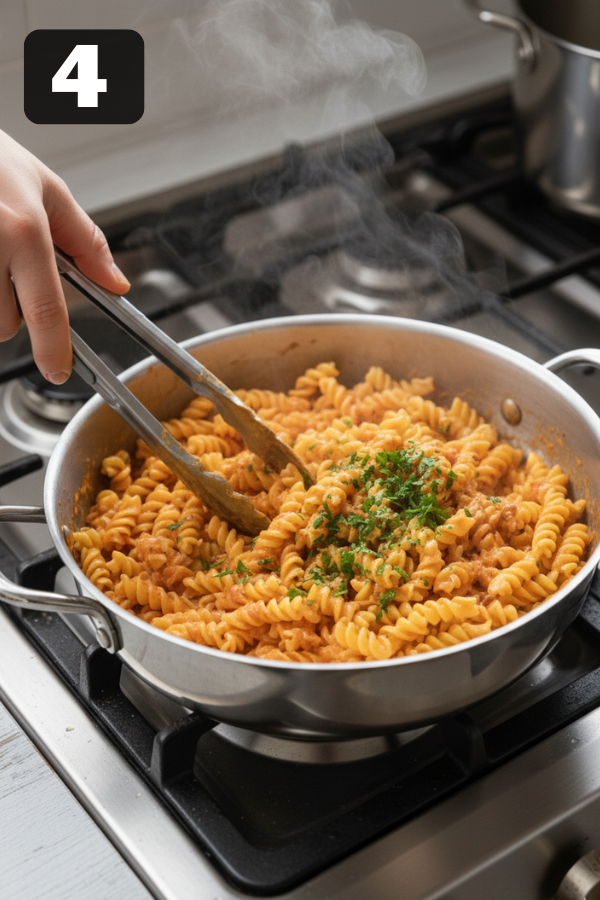
Pour the blended sauce over the slightly cooled pasta. If the pasta is piping hot, the sauce can sometimes look a bit grainy as the proteins tighten, so that brief cooling step matters.
Toss the pasta until every piece is coated. If it feels too thick, add a splash more pasta water and keep tossing.
Taste and adjust:
- Add a pinch of salt if needed
- Add black pepper
- Squeeze in a bit of lemon juice for brightness
- Sprinkle in extra red pepper flakes if you like heat
If you added extra protein (chicken, beans, shrimp), fold it in now. Warm everything together over low heat for a minute or two, but don’t boil the sauce.
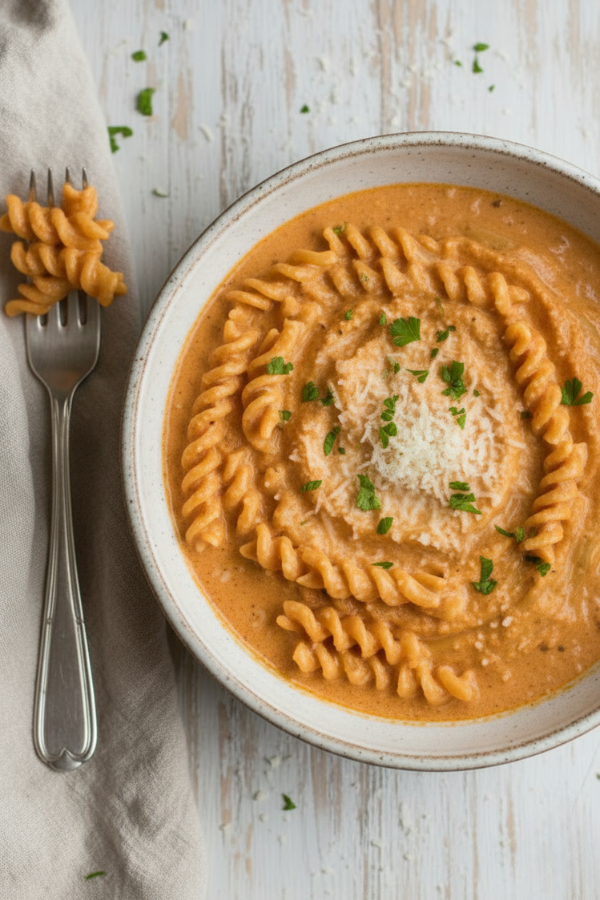
Top each bowl with fresh basil or parsley and a little extra parmesan. Suddenly it looks like something you’d order at a restaurant, but it came from your blender and one pot.
Tips for Success
A sauce this simple has a few small “rules” that make it taste even better.
- Blend it long enough:
If your sauce looks slightly grainy, it probably just needs another 30–40 seconds in the blender. Cottage cheese smooths out really well when given a bit of time. - Use pasta water, not plain water:
Those starches from the pasta help the sauce grab onto each noodle. Plain water thins, pasta water hugs. - Don’t go overboard with salt early on:
Cottage cheese and parmesan are both naturally salty. It’s much easier to add a pinch of salt at the end than to fix an overly salty sauce. - Let the pasta cool just a little:
This sounds small, but it helps keep the sauce from splitting. Stirring a blended dairy sauce into slightly cooled pasta gives you a smoother texture. - Cook once, eat twice:
If you’re already cooking, it takes almost no extra effort to boil a bit more pasta and blend a bigger batch of sauce. You’ve just set up lunch for tomorrow.
Prepare, Storage, and Reheating
Busy week? This section’s for you.
- Fridge:
- Store leftover pasta with sauce in an airtight container for 3–4 days.
- For best texture, store pasta and sauce separately if you can—but if you don’t, it’s still fine.
- Freezer:
- The sauce alone freezes better than the pasta-plus-sauce combo.
- Freeze the blended sauce in a jar or freezer-safe container for up to 1–2 months.
- Thaw in the fridge, then re-blend with a splash of water or milk if it looks slightly separated.
- Reheating:
- Stovetop: add a splash of water, broth, or milk to the pan, then gently warm over low heat while stirring.
- Microwave: heat in 30–60 second bursts, stirring between rounds. Add a spoonful of liquid if it feels dry.
Think of it like this: a little moisture and a gentle reheat bring this sauce back to life.
What Goes Well with This Pasta?
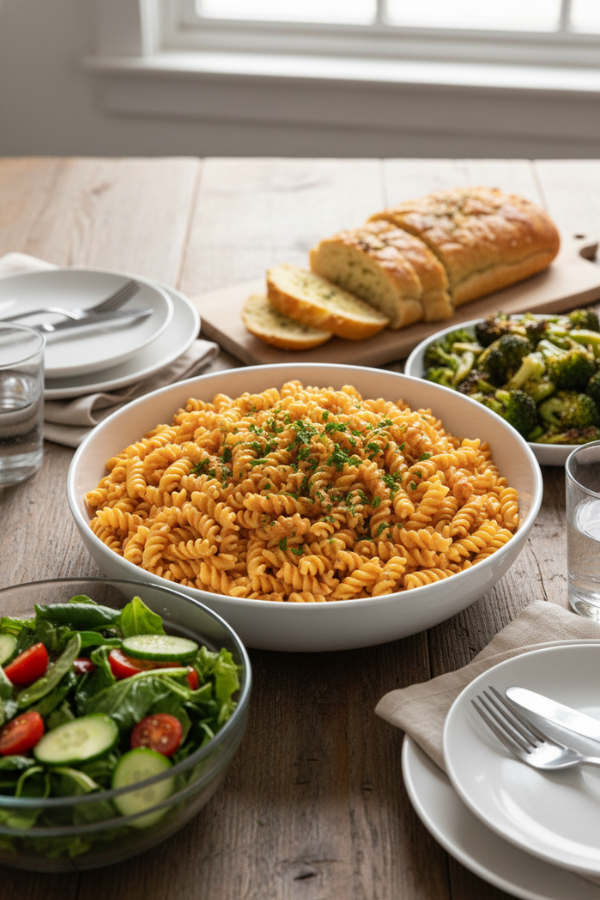
The sauce is pretty rich and satisfying on its own, especially if you add protein and veggies. Still, a couple of simple sides turn it into a complete meal.
- Fresh sides:
- A basic green salad with olive oil and lemon
- Cucumber and tomato salad with red onion and a light vinaigrette
- Cooked sides:
- Roasted broccoli or cauliflower
- Garlic green beans from a bag of frozen veggies (no shame in shortcuts)
- Something on the side for “bread people”:
- Garlic bread
- Toasted sourdough slices
And for dessert? Even just a bowl of berries with a spoonful of yogurt feels like a nice finish after a cozy pasta bowl.
FAQs
- Is this sauce actually high in protein?
Yes. With cottage cheese, parmesan, and a higher-protein pasta, each serving can easily land around 20–28g of protein, especially if you toss in chicken, shrimp, or beans. - Does it taste like cottage cheese?
Not really. Once blended with tomatoes, herbs, and parmesan, the flavor reads more like a creamy tomato or rosé sauce. The cottage cheese flavor fades into the background. - Can I make it ahead for meal prep?
You can. Make a batch of sauce and store it in the fridge, then cook fresh pasta as needed, or prepare full portions and reheat with a splash of liquid. It holds up well for about 3–4 days. - Can I make this gluten-free?
Yes. Just use gluten-free pasta and check your marinara label to make sure it’s gluten-free. - What if I don’t have a high-speed blender?
You can use a regular blender or a food processor. You might need to blend a bit longer and scrape down the sides once or twice, but it will still turn creamy. - Is it kid-friendly?
Most kids see “creamy pasta and tomato sauce” and don’t ask many questions. If you keep the heat level low and blend the sauce smooth, it tends to be very kid-approved.
Nutrition Snapshot
This will vary based on your pasta, toppings, and exact portion size, but here’s a helpful ballpark for one serving of pasta with sauce (no extra meat):
- Calories: ~330–380
- Protein: ~22–28g
- Fat: ~10–14g
- Carbs: ~35–45g
If you use legume-based pasta and add chicken or beans, the protein number climbs even higher. For a weeknight meal that feels like pure comfort food, that’s a pretty nice trade-off.
Conclusion
High protein cottage cheese pasta sauce is one of those rare recipes that checks all the boxes—fast, comforting, and genuinely nourishing. With a tub of cottage cheese, a bag of pasta, and a can of tomatoes, you can pull together a creamy, protein-packed dinner in about 20 minutes, with just one pot and a blender to clean.
Whether you keep it simple for a Tuesday night or dress it up with sundried tomatoes and fresh herbs for something a bit more special, this is the kind of recipe that quietly becomes a regular in your rotation. And honestly? That’s the best kind of “healthy” meal—the one you’re happy to make again next week.
Don’t Miss: MILLION DOLLAR SPAGHETTI CASSEROLE
Ingredients
Method
- Step 1 – Cook the Pasta Bring a large pot of water to a boil and salt it well. The water should taste pleasantly salty; this is your first layer of seasoning. Cook the pasta until just al dente. Before you drain it, scoop out about 1 cup of the starchy pasta water and keep it aside. That little mug of cloudy water is going to turn your blended sauce silky. Drain the pasta and leave it in the pot or in a large bowl. Let it sit for a few minutes so it’s not screaming hot—you’ll see why in a bit.

- Step 2 – Build the Flavor Base in the Pan While the pasta cooks, heat a small pan over medium heat. Add olive oil, then the chopped shallot or onion. Cook until soft and translucent, about 3–4 minutes. Add the garlic and cook for about 30 seconds, just until fragrant. Don’t let it brown. Now add your tomato base: For a simple tomato version: pour in crushed tomatoes or marinara, along with a pinch of salt, pepper, and dried herbs. For a sundried tomato “Marry Me” version: add sundried tomatoes, thyme, and a pinch of red pepper flakes. Let the mixture simmer for 5–8 minutes. It doesn’t need to be perfect; it just needs to cook long enough to mellow the tomatoes and wake up the herbs.
- Step 3 – Blend the Cottage Cheese Sauce Here’s where the magic happens. Add the following to a blender: Cottage cheese The tomato mixture from the pan Grated parmesan About ½ cup of the reserved pasta water Blend on high until completely smooth. This usually takes 30–90 seconds, depending on your blender. If the sauce looks too thick, add a bit more pasta water and blend again. If it’s too thin, you can add a little more parmesan or a spoonful of cottage cheese and blend once more. The goal is a glossy, pourable sauce that clings to a spoon.
- Step 4 – Toss with Pasta and Finish the Dish Pour the blended sauce over the slightly cooled pasta. If the pasta is piping hot, the sauce can sometimes look a bit grainy as the proteins tighten, so that brief cooling step matters. Toss the pasta until every piece is coated. If it feels too thick, add a splash more pasta water and keep tossing. Taste and adjust: Add a pinch of salt if needed Add black pepper Squeeze in a bit of lemon juice for brightness Sprinkle in extra red pepper flakes if you like heat If you added extra protein (chicken, beans, shrimp), fold it in now. Warm everything together over low heat for a minute or two, but don’t boil the sauce. Top each bowl with fresh basil or parsley and a little extra parmesan. Suddenly it looks like something you’d order at a restaurant, but it came from your blender and one pot.
