
If you want pumpkin flavor without a muffin that feels like a cupcake, these Healthy Pumpkin Muffins hit a sweet spot. They’re soft, warmly spiced, lightly sweet, and made with whole grains, oats, real pumpkin, and Greek yogurt. Better yet, you can mix the batter in one bowl and have a batch ready for breakfast or snacks with very little cleanup.
Why You’ll Love These Healthy Pumpkin Muffins
There’s a reason pumpkin muffins show up the moment the weather turns crisp. They make an ordinary morning feel a little more cozy, and this version keeps that comfort while adding a few smart ingredients.
- One-bowl friendly. Fewer dishes means less work on a busy weekday.
- Soft and moist. Pumpkin and Greek yogurt add plenty of moisture without needing a heavy frosting.
- Whole-grain goodness. White whole wheat flour and oats give the muffins a hearty base while keeping the crumb tender.
- Meal-prep ready. The muffins keep well and freeze beautifully, so you can bake once and have breakfast ready for days.
- Easy to customize. Add dark chocolate chips, pecans, walnuts, dried cranberries, or pumpkin seeds.
The flavor comes from the spices as much as the pumpkin. Cinnamon, ginger, nutmeg, and allspice give the muffins that familiar pumpkin-spice warmth. Cookie & Kate makes the same useful point: most of the classic “pumpkin spice” taste comes from the spice blend, not the pumpkin itself.
Ingredients
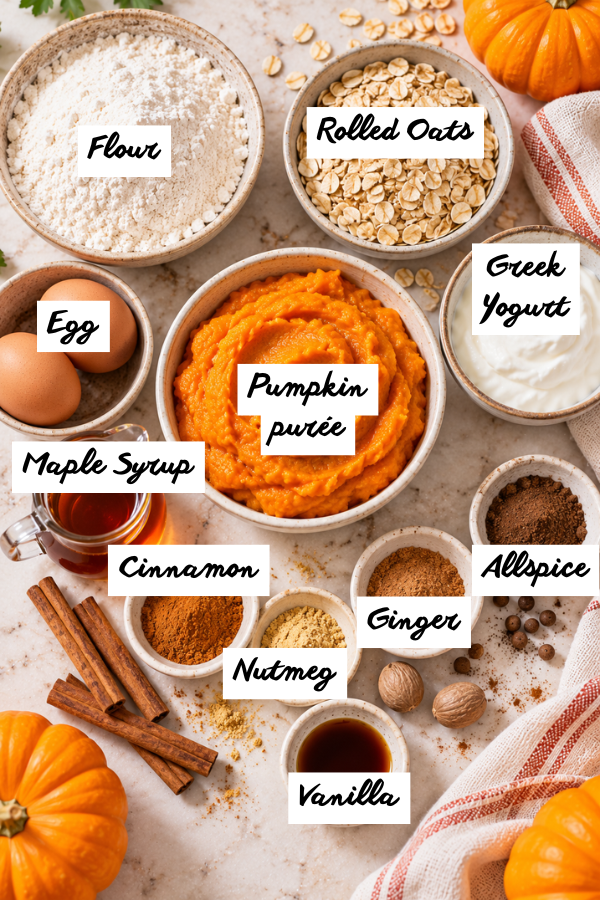
For the Muffins
- Pumpkin purée: 1 can (15 ounces) pure pumpkin purée, not pumpkin pie filling
- White whole wheat flour: 1 ¼ cups
- Rolled oats: ¾ cup plus 2 tablespoons, plus extra for topping
- Plain Greek yogurt: ⅓ cup
- Pure maple syrup or honey: ½ cup
- Neutral oil: 2 tablespoons canola oil or melted coconut oil
- Egg: 1 large
- Vanilla extract: 1 teaspoon
- Baking soda: 1 teaspoon
- Ground cinnamon: 1 ½ teaspoons
- Ground nutmeg: ¼ teaspoon
- Ground ginger: ¼ teaspoon
- Ground allspice: ¼ teaspoon
- Kosher salt: ¼ teaspoon
This ingredient combination follows a pattern used across several successful healthy pumpkin muffin recipes: pumpkin for moisture, whole grains for a hearty base, and yogurt for a tender crumb. Well Plated, for example, pairs pumpkin with Greek yogurt, white whole wheat flour, oats, and honey or maple syrup.
Easy Swaps
- Use whole wheat pastry flour for a softer whole-grain crumb.
- Use all-purpose flour if that is what you have; the muffins will be lighter and less hearty.
- Use pure maple syrup for a deeper, slightly caramel-like flavor.
- Use honey for a floral sweetness.
- Use dairy-free yogurt and plant milk when needed.
- For gluten-free muffins, use a tested gluten-free 1:1 flour blend or a recipe specifically designed around certified gluten-free oat flour. Don’t assume every gluten-free flour can replace wheat flour cup for cup.
One small but important note: maple syrup and honey may sound more wholesome than table sugar, but they still count as added sugars under FDA labeling rules. So “naturally sweetened” is accurate; “sugar-free” is not.
Step-by-Step Instructions
1. Get the Oven and Pan Ready
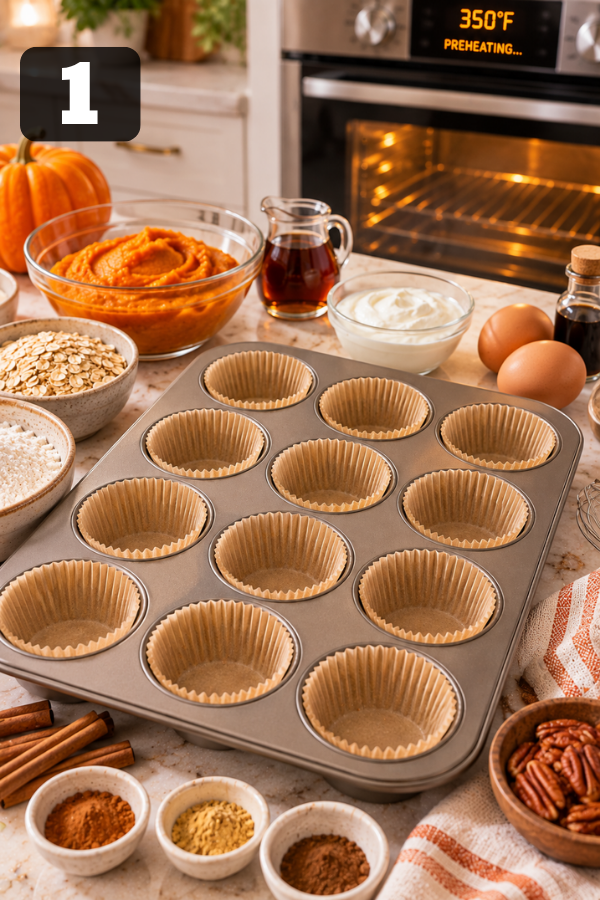
Heat your oven to 325°F. Line a standard 12-cup muffin pan with paper liners and lightly coat the liners with nonstick spray if they tend to stick.
Why start at 325°F? Several healthy pumpkin muffin recipes use a moderate oven temperature to bake moist, whole-grain muffins evenly.
2. Mix the Wet Ingredients
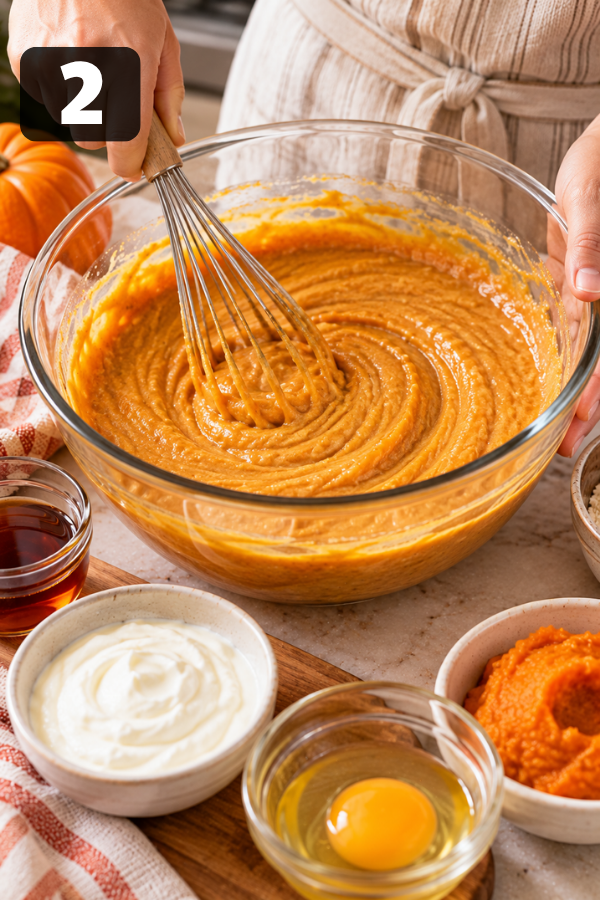
In a large bowl, whisk together the oil, maple syrup or honey, and Greek yogurt. Add the egg and vanilla, then whisk until smooth.
Stir in the pumpkin purée. The mixture should look thick, smooth, and evenly orange.
3. Add the Spices and Dry Ingredients
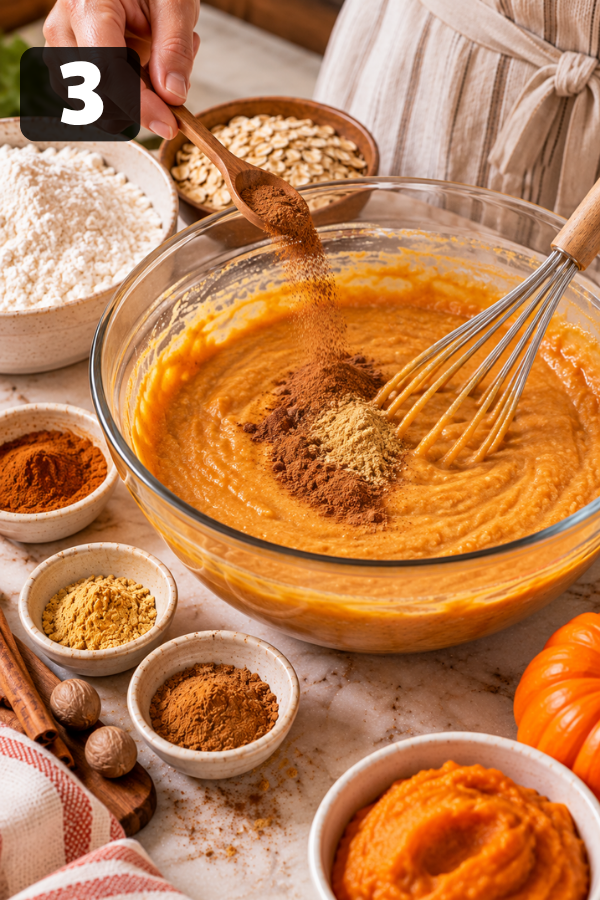
Sprinkle the baking soda, cinnamon, nutmeg, ginger, allspice, and salt over the wet mixture. Stir gently.
Add the flour and oats. Fold until you no longer see dry flour. A few small lumps are fine.
Don’t overmix. This matters more than people think. Overworking the batter can make muffins tough and dense. Cookie & Kate specifically recommends mixing by hand and stopping as soon as the flour disappears.
4. Fill the Muffin Cups
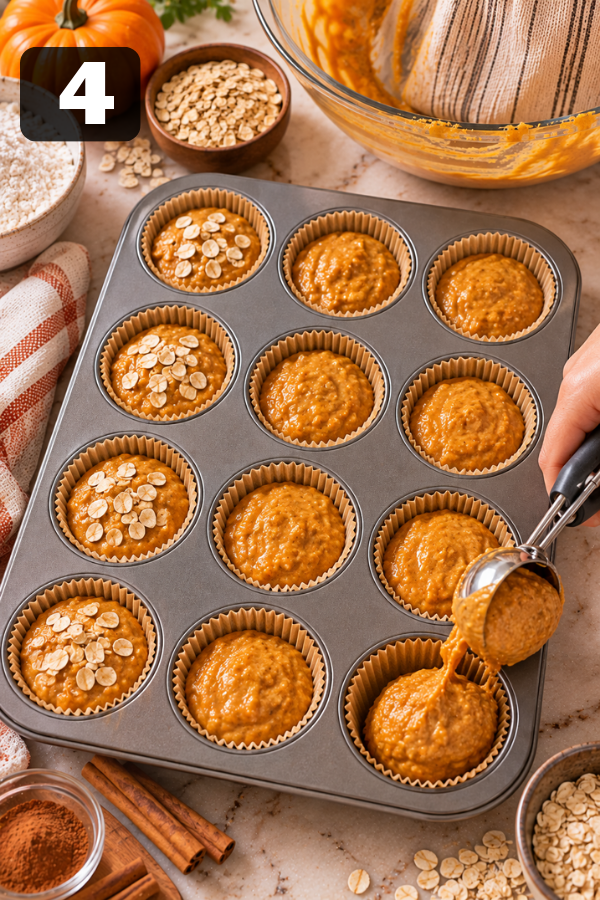
Divide the batter evenly among the 12 muffin cups. An ice cream scoop makes this quick and keeps the muffins close in size.
The cups should look generously filled. Sprinkle a few rolled oats over the tops for a simple, rustic finish.
For a sweeter variation, fold in chocolate chips or chopped pecans before portioning the batter. Both are common additions in pumpkin muffin recipes.
5. Bake Until Set
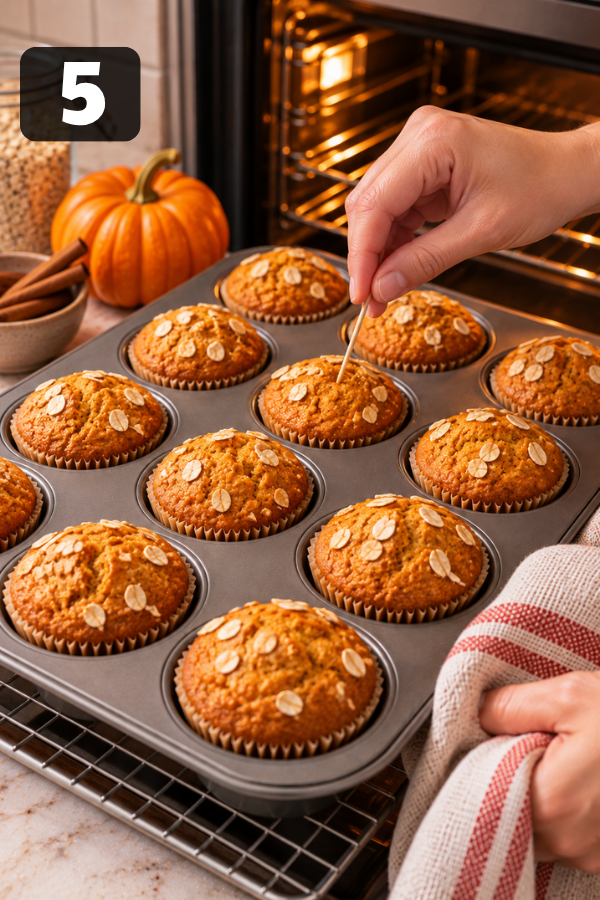
Bake for 24 to 29 minutes, or until a toothpick inserted into the center comes out clean or with a few moist crumbs.
For very moist muffins, a thermometer can remove the guesswork. Well Plated recommends looking for about 200°F in the center when using its formula.
6. Cool Before Serving
Let the muffins cool in the pan for about 5 minutes, then move them to a wire rack.
Pumpkin muffins can feel delicate while hot and firm as they cool, so don’t worry if the centers seem soft right out of the oven.
Tips for Soft, Flavorful Muffins
Measure Flour the Right Way
Too much flour is one of the easiest ways to ruin a good muffin. Spoon flour into the measuring cup, then level it with a knife. Don’t pack flour into the cup.
Cookie & Kate notes that poor flour measurement can add a large amount of extra flour, which can leave muffins dry and dense.
Use Pumpkin Purée, Not Pie Filling
Check the label before opening the can. You want 100% pure pumpkin.
Pumpkin pie filling already contains sugar and spices, so using it here would change the balance of the recipe. Sally’s Baking Addiction also specifically calls for canned pumpkin purée rather than pumpkin pie filling.
Don’t Cut the Fat Too Far
It may seem tempting to remove the oil because pumpkin and yogurt already make the batter moist. Here’s the catch: a little fat helps create a soft, tender crumb.
Sally’s Baking Addiction warns that cutting oil or sugar too aggressively can lead to less tender muffins.
Want Higher Muffin Tops?
Sally’s method starts at 425°F for 5 minutes, then drops the oven to 350°F for the rest of the bake. The quick burst of heat helps the tops rise fast.
That technique is excellent for a classic bakery look, but don’t mix it into this recipe casually. Different batters respond differently to oven temperature.
Storage & Meal Prep
These muffins are made for busy mornings.
- Room temperature: Store cooled muffins in an airtight container for about 2–4 days, depending on the recipe and moisture level.
- Refrigerator: Keep them in an airtight container for up to 4 days.
- Freezer: Freeze cooled muffins in a freezer-safe container or bag for up to 3 months.
- Quick breakfast: Wrap individual muffins before freezing so you can grab one at a time.
- To reheat: Microwave a thawed muffin briefly, or warm a frozen muffin in short intervals until soft and heated through.
Storage times vary slightly among recipe developers. Cookie & Kate recommends up to 2 days at room temperature and 3 months in the freezer, while Well Plated recommends refrigeration for up to 4 days and freezing for up to 3 months.
What to Serve With Pumpkin Muffins
A muffin can be breakfast, but it doesn’t have to carry the whole meal.
For a more filling breakfast, serve one with Greek yogurt and berries, scrambled eggs, nut butter, cottage cheese, or fresh fruit.
For a cozy fall brunch, pair the muffins with coffee, chai tea, or a pumpkin spice latte. A little apple butter on a warm muffin is also a very good idea.
Easy Variations
Healthy Pumpkin Chocolate Chip Muffins
Fold dark or semi-sweet chocolate chips into the batter. The slightly bitter chocolate works beautifully with pumpkin and warm spices.
Pumpkin Pecan Muffins
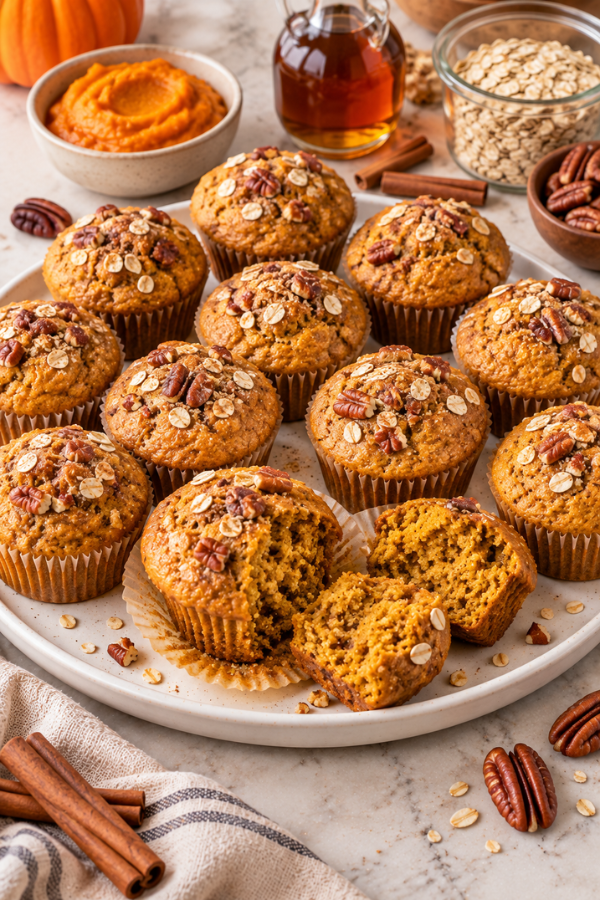
Add chopped pecans and a few extra oats on top. The nuts bring a crisp contrast to the soft crumb.
Gluten-Free Pumpkin Muffins
Use a tested gluten-free flour blend or a recipe built around certified gluten-free oat flour. Erin Lives Whole uses oat flour for a gluten-free version and recommends measuring homemade oat flour after grinding the oats.
Dairy-Free or Vegan Muffins
Use dairy-free yogurt for a dairy-free version. For vegan muffins, use maple syrup, a tested egg replacement, and dairy-free yogurt. Cookie & Kate notes that readers have successfully used flax eggs in its pumpkin muffin recipe.
Common Problems and Quick Fixes
Why Are My Muffins Dense?
The usual suspects are too much flour, overmixing, or a heavy whole-wheat flour. Spoon and level the flour, mix gently, and use white whole wheat or whole-wheat pastry flour for a softer result.
Why Are They Gummy in the Middle?
They may need more time in the oven, or the batter may contain too much moisture. Pumpkin and yogurt already add plenty of moisture, so adding extra applesauce can push the texture too far. Well Plated specifically advises against adding applesauce to its pumpkin-and-yogurt formula because it can make the muffins mushy.
Why Don’t My Muffins Rise?
Check that your baking soda is fresh and that the oven is fully preheated. Fill the cups generously if you’re aiming for taller tops. Sally’s team also points to fresh leavening and full muffin cups as useful checks when muffins don’t rise well.
Why Do They Taste Bland?
Don’t assume you need more sugar. Pumpkin needs enough spice to stand out. Try a little more cinnamon or pumpkin pie spice next time, and check that your spices are fresh. Cookie & Kate increased its spice amount after testing to bring out a stronger pumpkin-spice flavor.
FAQs
1. Are Healthy Pumpkin Muffins actually healthy?
They can be a more nutrient-conscious choice than many bakery-style muffins when made with whole grains, oats, pumpkin, and modest amounts of added sweetener. But they’re still baked goods. Portion size and the rest of your meal matter.
2. Can I use fresh pumpkin instead of canned?
Yes, but canned pumpkin is easier and more consistent. Sally’s Baking Addiction notes that fresh pumpkin purée can also work if that’s what you have.
3. Can I make these pumpkin muffins ahead of time?
Yes. Bake them a day or two ahead and store them airtight, or freeze them individually for longer storage.
4. Can I use regular whole wheat flour?
Yes. Expect a slightly heavier texture and stronger wheat flavor. White whole wheat or whole-wheat pastry flour gives a softer result.
5. Can I use applesauce instead of oil?
Be careful. Pumpkin already adds a lot of moisture, and Greek yogurt adds more. Replacing all the oil with applesauce can make this style of muffin too soft or gummy. If you want to test the swap, change one ingredient at a time rather than changing several parts of the recipe at once.
6. Can I make mini pumpkin muffins?
Yes. Mini muffins need much less baking time. Sally’s pumpkin muffin formula uses about 11–13 minutes at 350°F for roughly 30 mini muffins.
7. Can I freeze pumpkin muffins?
Yes. Cool them fully, wrap or pack them well, and freeze for up to about 3 months for the best quality.
Nutrition Info
Approximate nutrition per muffin, based on a batch of 12:
- Calories: 150
- Carbohydrates: 25g
- Protein: 4g
- Fat: 3g
- Fiber: 3g
- Sugar: 10g
Nutrition values are estimates and may vary depending on the specific brands and ingredients used.
Final Thoughts
These Healthy Pumpkin Muffins are an easy way to bring cozy fall flavor to busy mornings. They’re moist, lightly sweet, simple to make, and easy to freeze—so bake a batch now and enjoy them all week.
Don’t Miss: Pumpkin Cream Cheese Muffins
Don’t Miss: Healthy Banana Oatmeal Cookies
Also Try: Zucchini Banana Bread
Ingredients
Method
- Prep the Oven & PanPreheat the oven to 325°F. Line a 12-cup muffin pan with paper liners and lightly spray if needed.

- Mix the Wet IngredientsWhisk together oil, maple syrup or honey, Greek yogurt, egg, and vanilla. Stir in pumpkin purée until smooth.
- Add the Dry IngredientsStir in baking soda, spices, and salt. Add flour and oats, then gently fold until just combined. Don't overmix.
- Fill the Muffin CupsDivide batter evenly among 12 cups. Sprinkle with rolled oats, or fold in chocolate chips or chopped pecans if desired.
- BakeBake at 325°F for 24–29 minutes, until a toothpick comes out clean or with a few moist crumbs. The center should reach about 200°F.
- Cool & ServeCool muffins in the pan for 5 minutes, then transfer to a wire rack. Let them cool before serving or storing.
