
Garlic & Ginger Bok Choy is the kind of side dish that saves dinner when you have a protein ready, rice almost done, and zero desire to make anything complicated. It’s fast, fresh, and full of flavor without asking much from you.
This easy bok choy recipe uses baby bok choy, fresh garlic, ginger, soy sauce, and a little sesame oil. As it cooks, the stems stay crisp-tender, the leaves turn soft and glossy, and the whole pan smells like your favorite takeout spot — only lighter, greener, and made in about 10 minutes.
It’s perfect for busy weeknights, rice bowls, quick lunches, or those “we should probably eat a vegetable” moments. Honestly, this is one of those recipes that makes healthy eating feel less like a chore and more like a small kitchen win.
Why You’ll Love This Recipe
Here’s why this little green side dish earns a regular spot on the dinner table:
It cooks fast without feeling rushed. Since the bok choy only needs a quick sear and a short steam, you get tender stems and silky leaves without babysitting the pan.
It makes vegetables taste exciting. Thanks to garlic, ginger, soy sauce, and sesame oil, the bok choy gets a savory, takeout-style flavor without a heavy sauce.
It fits almost any meal. You can serve it beside salmon, chicken, shrimp, tofu, dumplings, rice, or noodles.
It’s easy to adjust, too. For example, make it gluten-free with tamari, vegan with vegetarian oyster sauce, or spicy with chili crisp.
Ingredients
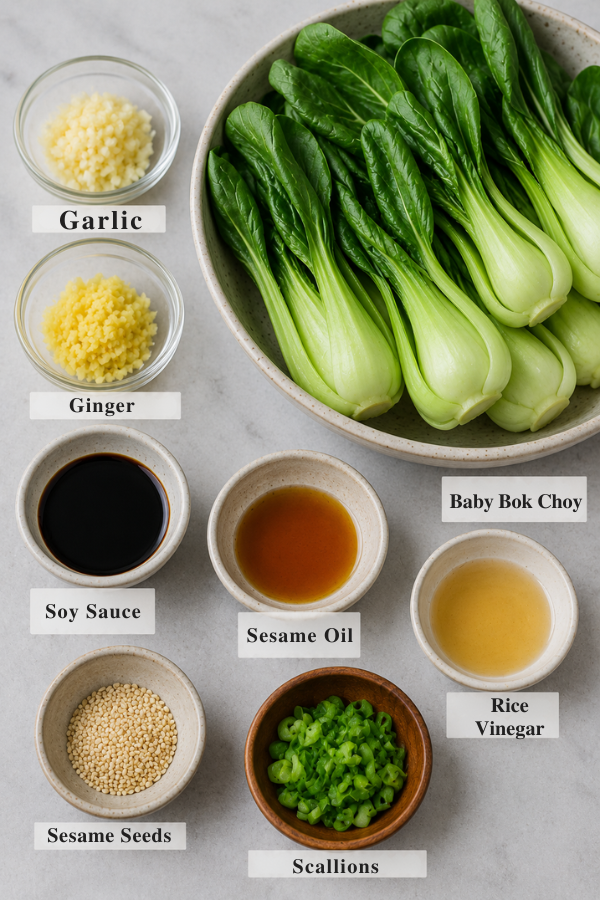
You don’t need a long grocery list here. The flavor comes from fresh aromatics and a simple soy-sesame sauce.
Main Ingredients
4 baby bok choy, halved lengthwise
1 1/2 tablespoons neutral oil, such as avocado, canola, or vegetable oil
3 garlic cloves, minced
1 tablespoon fresh ginger, minced or grated
2 tablespoons low-sodium soy sauce
2 tablespoons water or low-sodium broth
1 teaspoon toasted sesame oil
1 teaspoon rice vinegar or lemon juice
1 teaspoon sesame seeds, for topping
2 scallions, thinly sliced
Pinch of red pepper flakes, optional
Easy Substitutions
No baby bok choy? Use regular bok choy. Just chop the stems and leaves separately so the stems can cook first.
No soy sauce? Use tamari for a gluten-free version or coconut aminos for a slightly sweeter taste.
No fresh ginger? Ginger paste works well. Ground ginger can work in a pinch, but fresh ginger gives a brighter, warmer flavor.
Want a thicker sauce? Mix 1 teaspoon cornstarch into the soy sauce before adding the water. As a result, the sauce turns glossy and clings nicely to the bok choy.
Step-by-Step Instructions
Step 1: Wash and Cut the Bok Choy
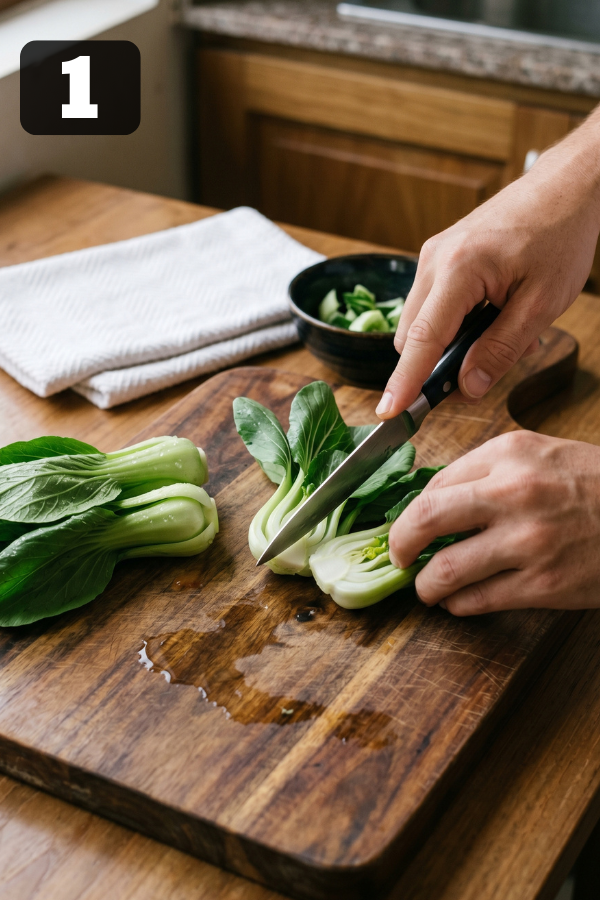
Trim just the tough end of each bok choy. Don’t cut away too much, or the halves may fall apart in the pan.
Next, slice each baby bok choy in half lengthwise. Rinse under cool water, gently opening the stems so any hidden dirt can wash away. Bok choy loves to hide grit near the base, and nobody wants sandy greens at dinner.
After that, shake off the water and pat the bok choy dry with a clean towel. It doesn’t need to be bone-dry, but too much water will stop it from searing.
Step 2: Mix the Sauce
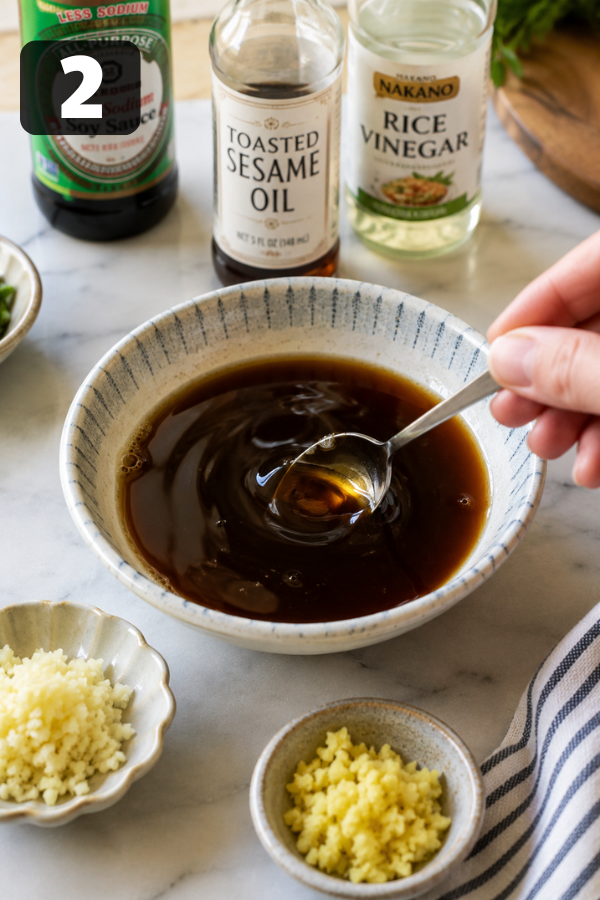
In a small bowl, stir together soy sauce, water or broth, sesame oil, and rice vinegar or lemon juice.
If you like a glossy sauce, add 1 teaspoon cornstarch and whisk until smooth. However, a little cornstarch goes a long way, so don’t overdo it.
Then, set the sauce near the stove. This recipe moves fast once the pan is hot.
Step 3: Cook the Garlic and Ginger
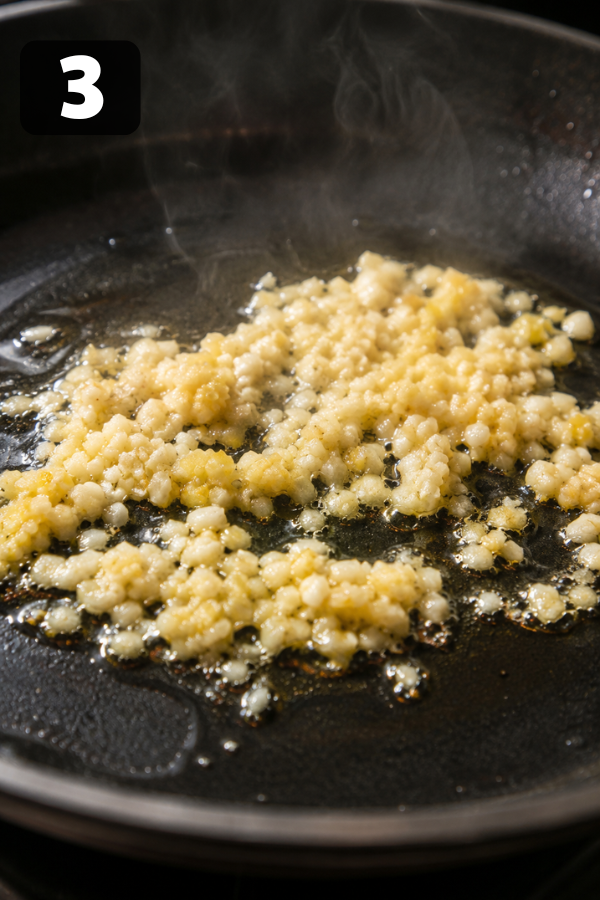
Heat the oil in a large skillet or wok over medium-high heat. Add the garlic and ginger.
Stir for about 30 seconds, just until fragrant. You want that warm, savory smell to bloom. However, you do not want the garlic to turn brown and bitter.
If your stove runs hot, lower the heat a bit before adding the garlic. Garlic is a bit dramatic. It goes from golden to burnt before you can find your tongs.
Step 4: Sear the Bok Choy
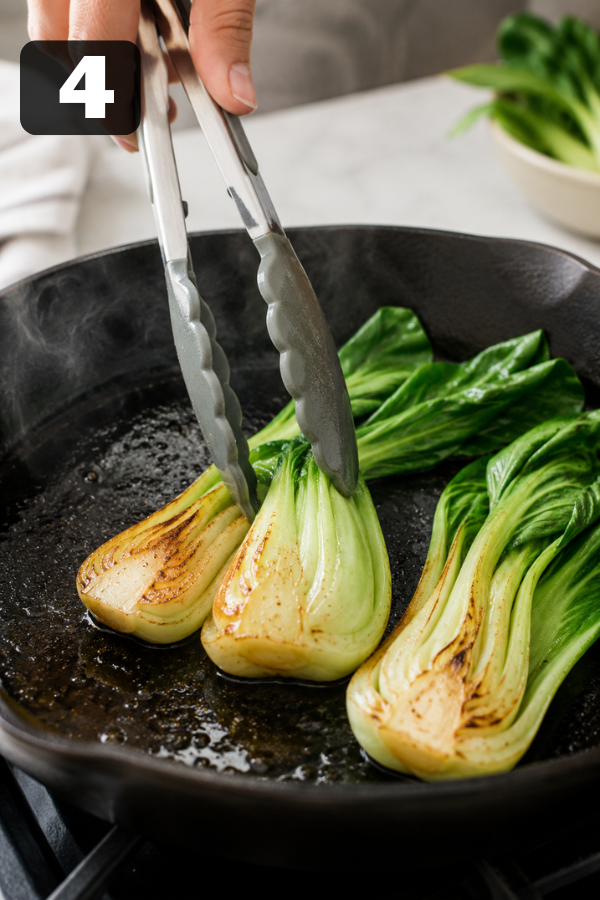
Place the bok choy cut side down in the pan. Let it cook for about 2 minutes without moving it too much.
This gives the stems a little color and brings out their natural sweetness. If your pan is small, cook in batches. Otherwise, crowding the pan traps steam, and the bok choy turns watery instead of lightly seared.
Step 5: Steam It Briefly
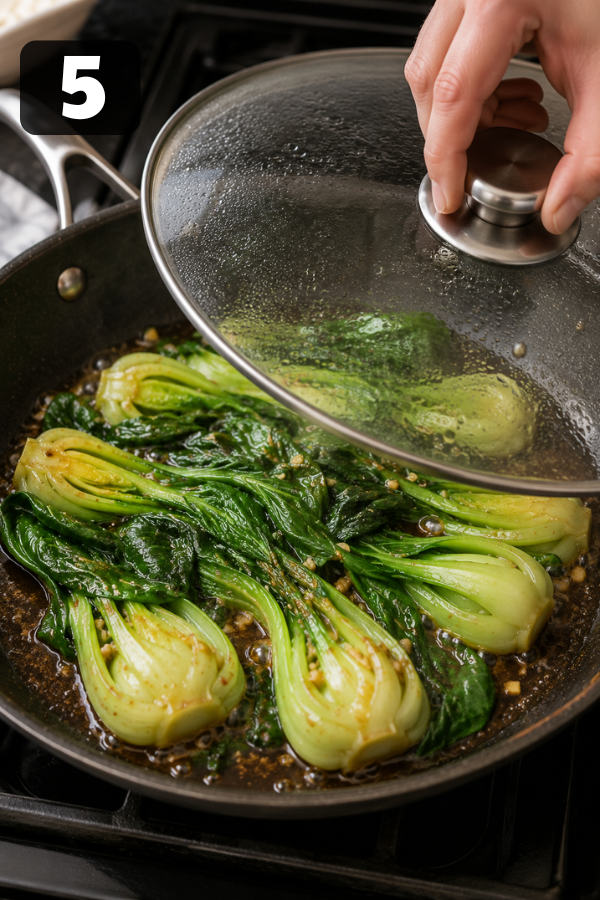
Flip the bok choy. Add the sauce to the pan, then cover with a lid.
Let it steam for 2 minutes, or until the stems are crisp-tender and the leaves are bright green. The goal is not soft and floppy. Instead, you want tender bok choy with a little crunch.
If your bok choy heads are very small, check after 1 minute. If they’re larger, they may need 3 minutes.
Step 6: Finish and Serve
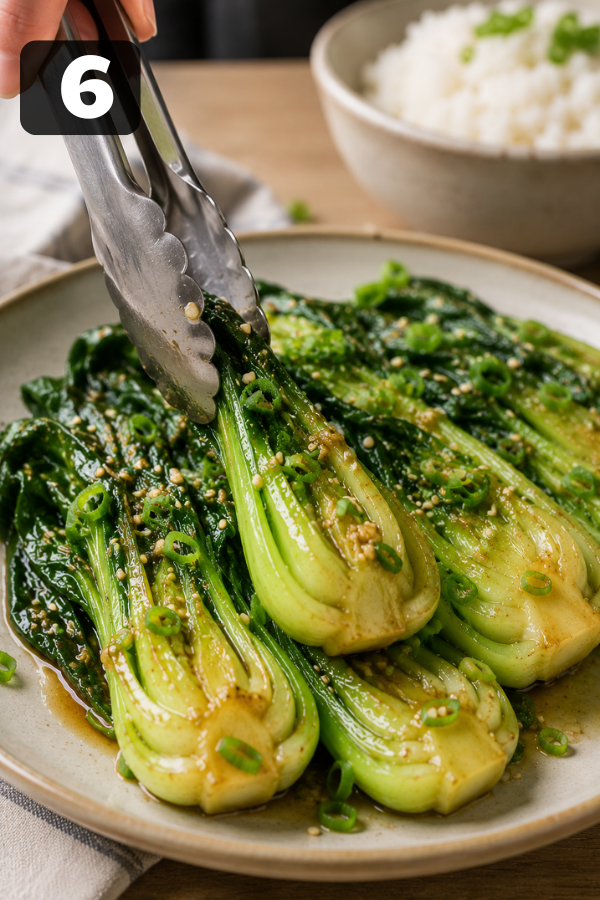
Remove the lid and gently toss the bok choy in the sauce. If the sauce needs to thicken, let it cook for another 30 seconds.
Finally, taste and adjust. Add a splash of water if it’s too salty or too thick. Add a squeeze of lemon if it tastes flat. For extra heat, add chili flakes if dinner needs a little spark.
Sprinkle with sesame seeds and scallions, then serve right away.
Tips for Success
The biggest secret is not fancy technique. It’s timing.
Bok choy cooks quickly. Very quickly. The leaves wilt fast, and the stems can go from crisp-tender to limp if they sit too long in a covered pan.
A few helpful tips:
Dry the bok choy before searing.
Use a wide pan so the pieces have room.
Keep the garlic moving so it doesn’t burn.
Cook stems longer than leaves if using large bok choy.
Serve right away for the best texture.
For beginners, start with baby bok choy. It’s more forgiving and easier to prep.
For confident cooks, use a hot wok and move quickly. That way, you’ll get more seared flavor and a slightly smoky edge.
For a restaurant-style finish, add the cornstarch sauce and let it turn glossy for about 30 seconds. It should coat the bok choy, not drown it.
Storage & Leftover Notes
Garlic & Ginger Bok Choy is best fresh from the pan. That said, leftovers are still useful.
Store leftovers in an airtight container in the fridge for up to 2 days for the best texture. They may last a little longer, but the stems will soften and the leaves will release water.
To reheat, use a skillet over medium-low heat. Add a small splash of water or broth and warm just until heated through.
The microwave works too, but use short bursts. Otherwise, bok choy can get soft fast.
Freezing is not recommended. Because the vegetable holds too much water, it tends to thaw limp and watery.
For meal prep, the better move is to wash and cut the bok choy ahead, mix the sauce, and cook it fresh when you’re ready to eat. After all, it only takes a few minutes.
What to Serve With Garlic & Ginger Bok Choy
This side dish plays nicely with almost anything that leans savory, saucy, or rice-friendly.
Serve it with:
Teriyaki chicken
Honey garlic shrimp
Crispy tofu
Salmon rice bowls
Fried rice
Lo mein
Dumplings
Beef and broccoli
Sesame noodles
Soft-boiled eggs over rice
For a simple dinner, pair it with jasmine rice and pan-seared salmon. The result feels complete, fresh, and satisfying without turning dinner into a big production.
For lunch, add it to a bowl with brown rice, tofu, edamame, and chili crisp. That way, the meal still feels light and fresh, but it has enough protein and texture to keep you full.
As for drinks, iced green tea, sparkling lime water, or ginger lemonade all work well. If you’re serving wine, try a dry Riesling, Sauvignon Blanc, or Pinot Gris.
Common Issues and Their Solutions
Why Is My Bok Choy Watery?
It probably had too much water on it after washing, or the pan was crowded.
To fix this, pat the bok choy dry before cooking. Then, use a wide skillet so the pieces have room to sear. If needed, cook in batches. Also, don’t add too much water when steaming; a small splash is enough.
Why Did My Garlic Burn?
The pan was probably too hot, or the garlic cooked too long before the bok choy went in.
For best results, cook the garlic and ginger for about 30 seconds only. Once they smell fragrant, move on. This is not the time to answer a text.
Why Are the Stems Hard but the Leaves Mushy?
This usually happens with large bok choy.
In that case, separate the stems and leaves. Cook the stems first for a few minutes, then add the leaves near the end. As a result, the stems become tender while the leaves stay soft and green.
Why Is the Sauce Too Salty?
Soy sauce varies a lot by brand.
To avoid this, use low-sodium soy sauce if you can. If the sauce still tastes too strong, add a splash of water, broth, or lemon juice. Serving it over plain rice also helps balance the salt.
Why Did the Sauce Get Too Thick?
Cornstarch thickens fast.
Simply add water 1 tablespoon at a time and toss until the sauce loosens. Then, remove the pan from the heat once the sauce looks glossy.
Nutrition Info
This Garlic & Ginger Bok Choy is a light vegetable side dish. Exact numbers will vary by oil amount, soy sauce brand, and serving size, but one serving is usually around:
Calories: 70–90
Carbs: 3–5 g
Protein: 1–3 g
Fat: 5–7 g
Fiber: about 1–2 g
Bok choy also brings vitamin A, vitamin C, calcium, potassium, and iron to the table. Not bad for something that cooks faster than most frozen pizzas.
FAQs
1. Can I make Garlic & Ginger Bok Choy ahead of time?
You can prep it ahead, but it’s best cooked fresh. Wash and cut the bok choy, mince the garlic and ginger, and mix the sauce in advance. Then, cook everything right before serving.
2. Can I use regular bok choy instead of baby bok choy?
Yes. Chop the stems and leaves separately. Cook the stems first, then add the leaves during the last 1–2 minutes.
3. Is Garlic & Ginger Bok Choy spicy?
Not unless you add chili. Ginger gives warmth, but it doesn’t make the dish hot. For spice, add red pepper flakes, chili oil, or chili crisp.
4. What can I use instead of soy sauce?
Use tamari for gluten-free cooking. Use coconut aminos for a soy-free version. Alternatively, you can use low-sodium broth with a small pinch of salt for a lighter taste.
5. Can I add protein?
Yes. Add cooked chicken, shrimp, tofu, salmon, beef, pork, or a fried egg. Then, serve it over rice or noodles to make it a full meal.
6. Do I need a wok?
No. A wok is great, but a large skillet works well. The main thing is space. Bok choy cooks better when it isn’t packed tightly in the pan.
Final Thoughts
Garlic & Ginger Bok Choy is proof that a simple vegetable side can still feel fresh, flavorful, and dinner-worthy. With crisp-tender stems, soft glossy leaves, and a quick soy-sesame sauce, it’s an easy recipe to keep in your weeknight rotation.
Serve it with rice, noodles, chicken, shrimp, tofu, or salmon — and dinner instantly feels a little more complete.
Don’t Miss: Chinese Chicken and Broccoli Stir Fry (Easy & Delicious)
Don’t Miss: Better Than Takeout Spicy Dan Dan Noodles (Easy & Delicious)
Also Try: Teriyaki Chicken Casserole (Easy & Delicious)
Ingredients
Method
- Prepare the bok choy: Trim the tough ends, slice each baby bok choy in half lengthwise, rinse well between the stems, then pat dry.

- Mix the sauce: In a small bowl, stir together soy sauce, water or broth, sesame oil, and rice vinegar or lemon juice. Add cornstarch if you want a thicker sauce.
- Cook the aromatics: Heat oil in a large skillet or wok over medium-high heat. Add garlic and ginger, then stir for about 30 seconds until fragrant.
- Sear the bok choy: Place bok choy cut side down in the pan. Cook for about 2 minutes, without moving too much, until lightly seared.
- Steam briefly: Flip the bok choy, pour in the sauce, cover, and steam for 1–3 minutes until the stems are crisp-tender and the leaves are bright green.
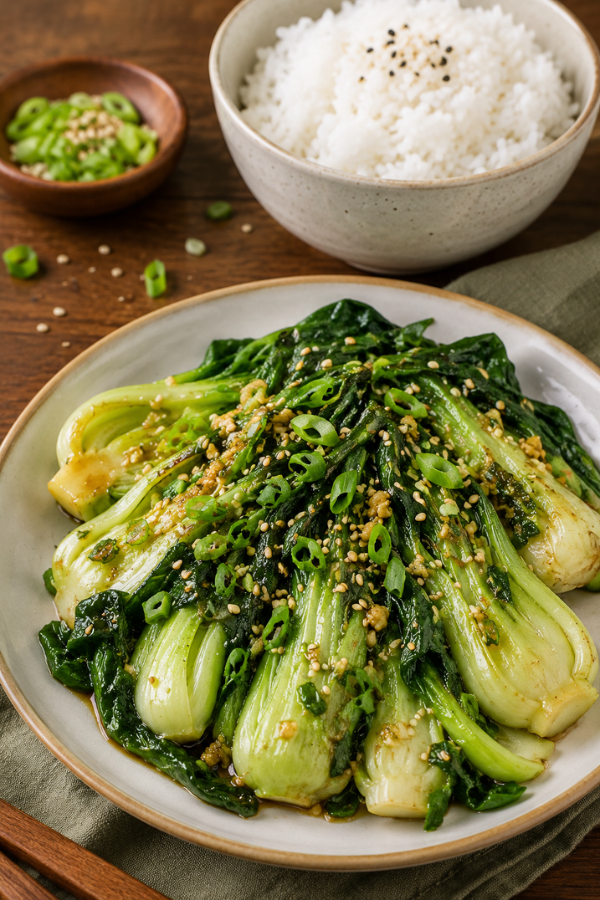
- Finish and serve: Uncover, toss gently in the sauce, and cook 30 seconds more if needed. Top with sesame seeds and scallions, then serve hot.
