
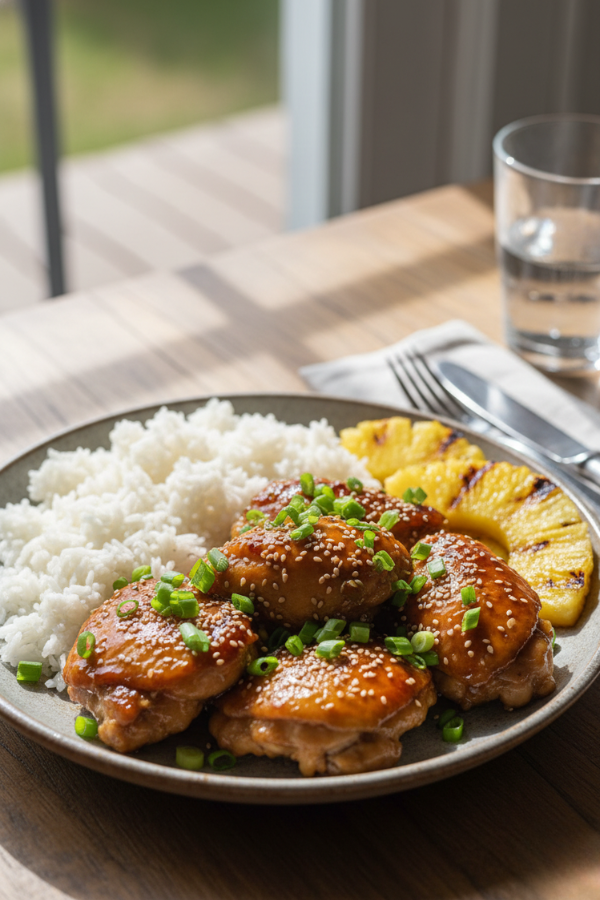
If you’re looking for a dinner that feels a little special without turning your kitchen upside down, this Huli Huli Chicken Recipe is exactly what you need. Tender chicken is soaked in a sweet and savory Hawaiian-inspired marinade made with pineapple juice, soy sauce, garlic, and ginger. Then, it is cooked until beautifully caramelized on the outside and juicy on the inside.
The result is chicken packed with tropical flavor, a glossy glaze, and just enough sweetness to make every bite memorable. Better still, this recipe works whether you’re firing up the grill on a summer evening or making a quick weeknight dinner indoors. With simple ingredients, minimal cleanup, and leftovers that reheat well, it is the kind of recipe you will want to keep in your regular dinner rotation.
Why You’ll Love This Recipe
There are plenty of chicken recipes out there. Some are healthy but bland, while others taste amazing but leave you with a sink full of dishes afterward.
This one finds the sweet spot.
You’ll love this Huli Huli Chicken Recipe because it uses simple pantry ingredients, lets the marinade do most of the work, and can be cooked on the grill, in the oven, or on the stovetop. In addition, it is meal-prep friendly, family-friendly, and flavorful enough for casual gatherings.
Another bonus is that you can make it year-round. Summer grilling season is perfect for this dish, but you do not have to wait for warm weather to enjoy it. Even when cooked indoors, the chicken still develops a sweet, savory, slightly sticky glaze that tastes like something much more complicated than it actually is.
What Is Huli Huli Chicken?
Huli Huli Chicken is a famous Hawaiian chicken dish traditionally cooked over open grills. The word “huli” means “turn” in Hawaiian. Originally, vendors placed chicken between large grill racks and repeatedly turned, or “huli,” the chicken as it cooked over charcoal.
Over time, the dish became especially known for its signature marinade. Unlike traditional barbecue sauces that lean heavily smoky or spicy, Huli Huli sauce focuses on a tropical balance of sweetness, saltiness, acidity, and warmth.
Pineapple juice brings sweetness and brightness. Soy sauce adds savory depth. Garlic gives the marinade richness, while ginger adds a fresh, warm kick. Finally, brown sugar helps the chicken caramelize into that glossy, slightly sticky finish.
Think of it as a cousin of teriyaki chicken, but with a distinctly Hawaiian personality.
The Secret Behind the Flavor
At first glance, the ingredient list may seem almost too simple. However, each ingredient plays an important role in building the final flavor.
Pineapple Juice
Pineapple juice provides sweetness and subtle acidity. As the chicken cooks, the natural sugars begin to caramelize, creating those irresistible browned edges. Additionally, the fruity flavor gives the chicken its tropical character without making it taste overly sweet.
Soy Sauce
Soy sauce adds umami, which is the savory quality that makes food taste richer and more satisfying. Without it, the marinade would taste mostly sweet. With it, the sauce becomes deeper, more balanced, and much more flavorful.
Garlic and Ginger
Garlic and ginger are essential to the signature flavor of Huli Huli Chicken. Fresh garlic adds depth, while fresh ginger brings brightness and warmth. Together, they keep the marinade from tasting flat or one-dimensional.
Brown Sugar
Brown sugar helps create the sticky glaze that makes this dish so memorable. As it cooks, it melts into the sauce and forms a beautiful caramelized coating on the chicken. Although it is a small ingredient, it makes a big difference in both flavor and texture.
Ingredients
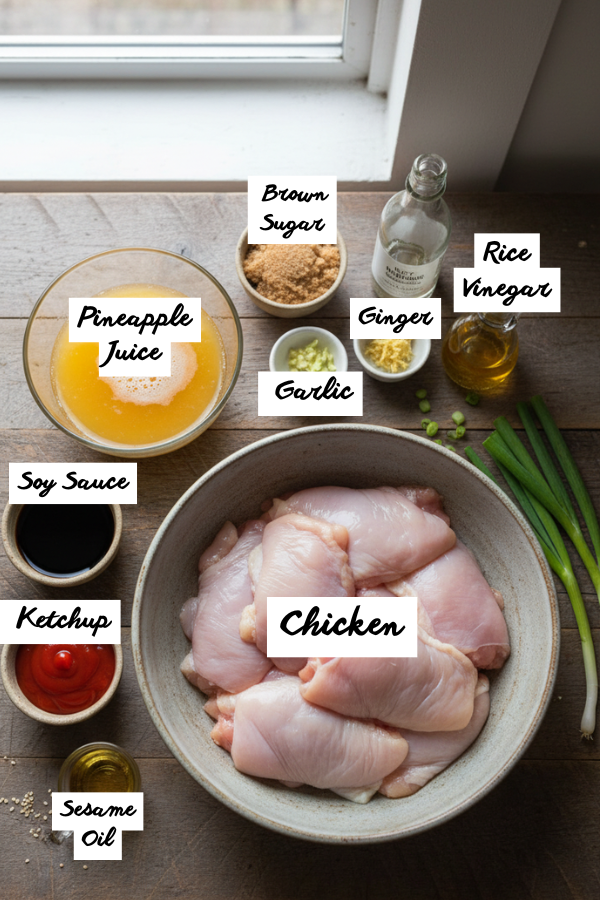
For the Chicken
- 2 pounds boneless skinless chicken thighs
- 1 tablespoon oil
For the Marinade
- 1 cup pineapple juice
- 1/2 cup low-sodium soy sauce
- 1/3 cup brown sugar
- 1/4 cup ketchup
- 4 cloves garlic, minced
- 1 tablespoon fresh ginger, grated
- 1 tablespoon rice vinegar
- 1 teaspoon sesame oil, optional
Optional Garnishes
- Sliced green onions
- Sesame seeds
- Grilled pineapple
- Lime wedges
Why Chicken Thighs Work Best
You can absolutely use chicken breasts for this recipe. However, if you want maximum flavor and tenderness, chicken thighs are the better choice.
Thighs stay juicy even if they cook a minute or two longer than planned. That makes them especially helpful on busy evenings when dinner does not always go exactly according to schedule. In addition, their slightly richer flavor pairs beautifully with the sweet and savory marinade.
Step-by-Step Instructions
Step 1: Mix the Marinade
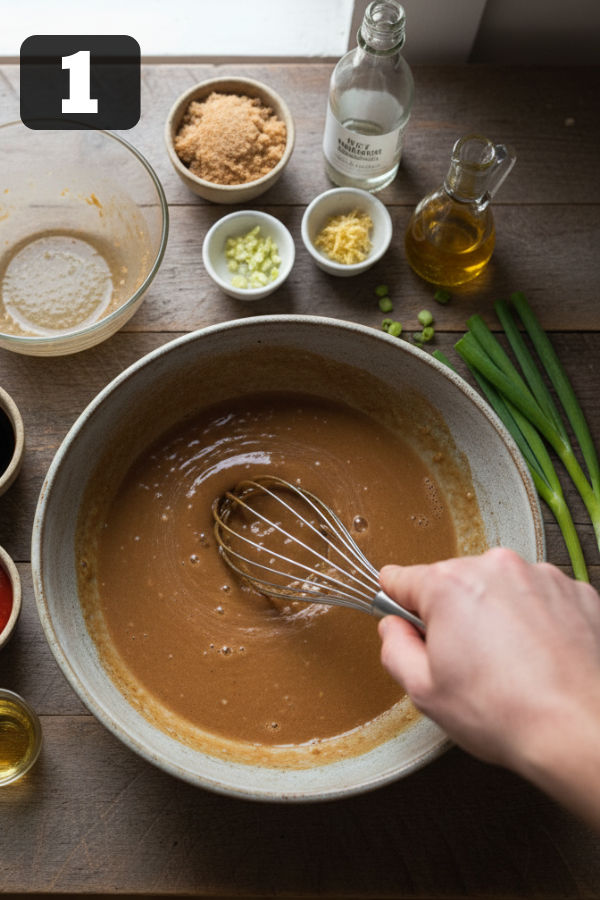
In a large bowl, whisk together the pineapple juice, soy sauce, brown sugar, ketchup, garlic, ginger, rice vinegar, and sesame oil. Stir until the sugar dissolves and the marinade looks smooth.
Before adding the chicken, set aside about one cup of marinade. This reserved portion will later become your glaze.
This step is important because marinade that has touched raw chicken should never be used as a finishing sauce unless it is fully cooked. By saving a clean portion first, you get a safe and flavorful glaze for the end of cooking.
Step 2: Marinate the Chicken
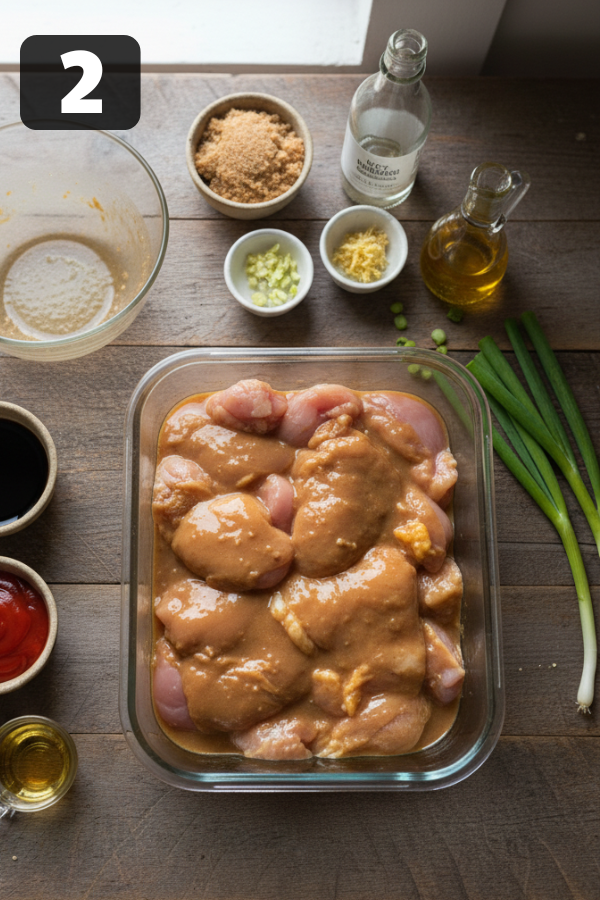
Place the chicken into the remaining marinade. Then, cover the bowl and refrigerate.
For best results, marinate the chicken for at least 1 hour. If you have more time, 4 to 8 hours is even better. For the deepest flavor, let it marinate overnight.
The longer marinating time allows the flavors to soak into the meat. As a result, this is one of those recipes that actually becomes easier when prepared ahead.
Step 3: Prepare Your Cooking Surface
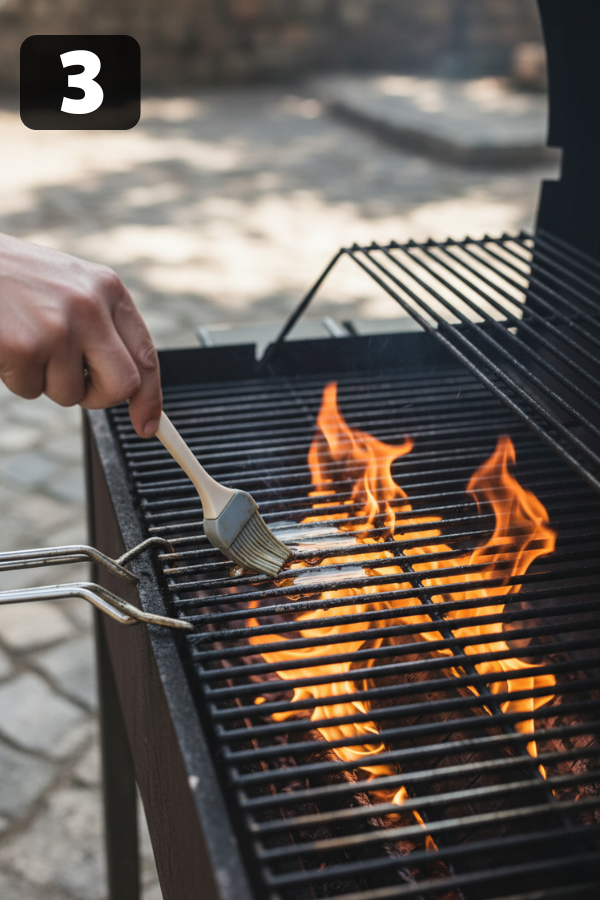
If you are grilling, heat the grill to medium-high and lightly oil the grates. For baking, preheat the oven to 400°F. If you are cooking indoors, heat a large skillet over medium-high heat.
No matter which method you choose, the goal is the same: build color without burning the sugars in the marinade. Since the sauce contains brown sugar and pineapple juice, moderate heat works better than very high heat.
Step 4: Cook the Chicken
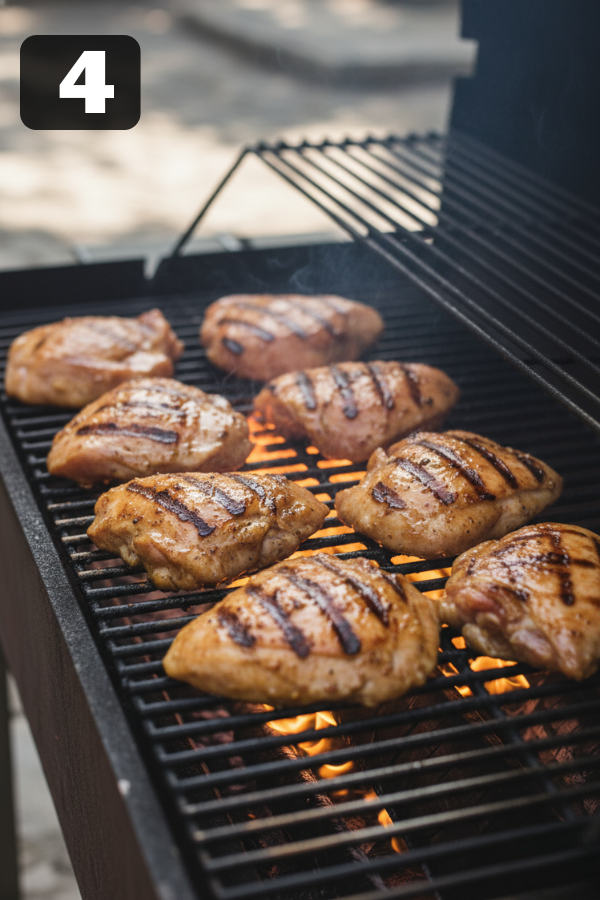
Cook the chicken until the internal temperature reaches 165°F.
Approximate cooking times:
- Grill: 5–7 minutes per side
- Oven: 25–30 minutes
- Skillet: 6–7 minutes per side
As the chicken cooks, look for a deep golden color, slightly charred edges, and juices that run clear. If you are using a thermometer, remove the chicken as soon as it reaches the safe internal temperature to avoid drying it out.
Step 5: Glaze and Finish
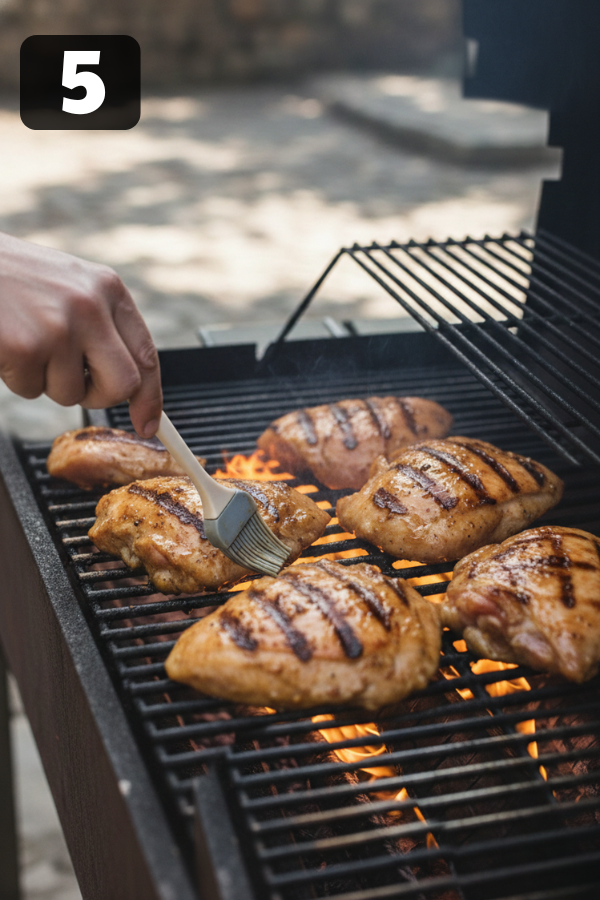
While the chicken cooks, pour the reserved marinade into a small saucepan. Simmer it for several minutes until it thickens slightly.
Next, brush the glaze onto the chicken during the final few minutes of cooking. This creates the sticky, glossy coating that makes Huli Huli Chicken so delicious.
For extra flavor, you can brush on a second light layer just before serving.
Step 6: Let It Rest
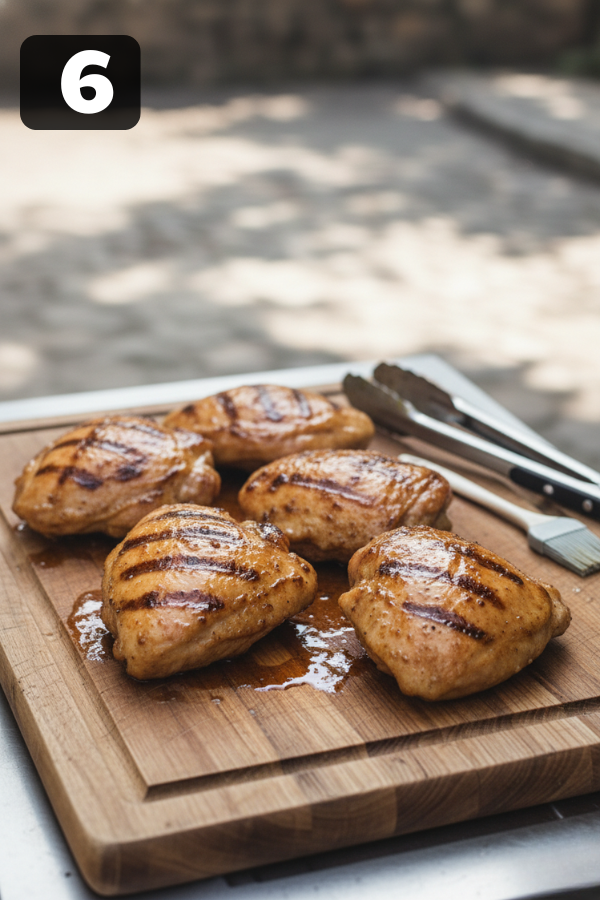
After cooking, let the chicken rest for about 5 minutes before slicing or serving. Although this step may seem small, it really matters.
Resting gives the juices time to redistribute throughout the meat. As a result, every bite tastes more tender and juicy.
Tips for Success
A few small details can take this recipe from good to exceptional.
Don’t Rush the Marinade
One hour will work, but four hours is better. If possible, marinate the chicken overnight. The flavor difference is noticeable, especially when using chicken thighs.
Use Fresh Ginger
Ground ginger can work in a pinch. However, fresh ginger creates a brighter and more authentic flavor. It only takes an extra minute to grate, and the result is worth it.
Watch the Heat
Because the marinade contains sugar, it can burn quickly. For that reason, medium to medium-high heat is usually best. Patience helps the chicken caramelize without turning bitter.
Save Marinade Before Adding Chicken
Always reserve sauce before adding raw chicken. This clean portion becomes your glaze and serving sauce. If you forget to reserve it, you can still simmer the used marinade thoroughly, but saving it ahead is easier and safer.
Common Mistakes and How to Avoid Them
The Chicken Burns Too Quickly
This usually means the grill or pan is too hot. Lower the temperature and apply the glaze closer to the end of cooking. That way, the chicken has time to cook through before the sugars caramelize too much.
The Chicken Tastes Dry
Dry chicken often happens when using chicken breasts or cooking the meat too long. To avoid this, use a thermometer and remove the chicken as soon as it reaches 165°F.
The Sauce Tastes Too Salty
Low-sodium soy sauce is the best choice for this recipe. If the sauce still tastes too salty, add a splash of extra pineapple juice to balance the flavor.
The Glaze Won’t Thicken
Keep simmering it for a few more minutes. The sugars will naturally reduce and create a thicker consistency. However, be careful not to boil it too aggressively, since the sugar can burn.
What to Serve With Huli Huli Chicken
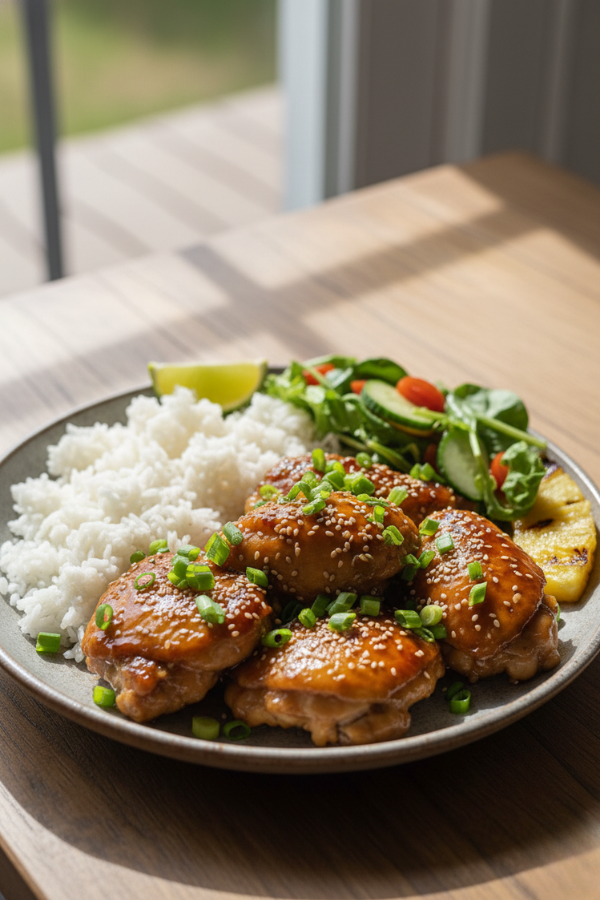
This is where the recipe gets especially fun. The sweet-savory flavor pairs well with many simple sides, so you can turn it into a quick dinner or a full Hawaiian-inspired meal.
Some great options include:
- Coconut rice
- Jasmine rice
- Hawaiian macaroni salad
- Grilled vegetables
- Roasted broccoli
- Asian-style slaw
- Fresh pineapple salsa
- Grilled pineapple
For a simple weeknight dinner, rice and steamed vegetables are hard to beat. On the other hand, if you are serving this for a summer gathering, grilled pineapple and macaroni salad make the meal feel more complete.
Either way, people will probably ask for the recipe.
Storage and Leftovers
One reason this recipe works so well for meal prep is that it reheats beautifully.
Refrigerator
Store the cooked chicken in an airtight container for up to 4 days.
Freezer
Freeze the chicken for up to 3 months. For best results, let it cool completely before freezing.
Reheating
For the best texture, reheat the chicken in a skillet over medium heat or in the oven at 350°F. An air fryer also works well if you want a slightly crisp exterior.
Microwaving is fine for convenience, although the glaze may not stay quite as glossy.
Leftover Ideas
Do not stop at dinner. Leftover Huli Huli Chicken works well in rice bowls, wraps, salads, sandwiches, and tacos. In fact, the leftovers sometimes taste even better the next day because the flavors have more time to settle.
Frequently Asked Questions
1. Can I make Huli Huli Chicken ahead of time?
Yes. You can marinate the chicken overnight, then cook it the next day. Cooked chicken also keeps well in the refrigerator for several days.
2. Can I use chicken breasts?
Absolutely. Just watch the cooking time carefully because chicken breasts dry out more quickly than thighs.
3. Is Huli Huli Chicken spicy?
No. Traditional Huli Huli Chicken is mild, sweet, savory, and family-friendly. If you want heat, you can add chili flakes or a little hot sauce to the marinade.
4. Can I cook it in the oven?
Yes. Bake the chicken at 400°F for approximately 25–30 minutes, or until it reaches an internal temperature of 165°F.
5. Can I freeze the marinade?
Yes. The marinade freezes well and can be stored for future meals. You can also freeze raw chicken in the marinade for an easy make-ahead dinner.
6. Why is it called Huli Huli Chicken?
The word “huli” means “turn” in Hawaiian. The name comes from the traditional cooking method, where the chicken was repeatedly turned over the grill.
Nutrition Info
Approximate nutrition per serving:
- Calories: 320–380
- Protein: 28–32g
- Carbohydrates: 14–18g
- Fat: 12–16g
- Saturated Fat: 3–4g
- Sugar: 10–13g
- Fiber: Less than 1g
- Sodium: 700–900mg
Nutrition will vary depending on the exact ingredients, portion size, and cooking method used.
Final Thoughts
This Huli Huli Chicken Recipe proves that a handful of simple ingredients can create something truly memorable. Pineapple juice, soy sauce, garlic, ginger, and brown sugar come together to make juicy chicken with a sweet, savory, tropical glaze.
Even better, the recipe is flexible enough for the grill, oven, or stovetop. Whether you are cooking for a busy weeknight, a weekend cookout, or meal prep, this Hawaiian-inspired favorite delivers big flavor with very little effort. Once you try it, there is a good chance it will become one of your go-to chicken dinners.
Don’t Miss: BBQ Chicken Foil Packs
Don’t Miss: Grilled Lemon Chicken
Also Try: Ranch Garlic Parmesan Chicken Skewers
Ingredients
Method
- Mix the marinade: Whisk together pineapple juice, soy sauce, brown sugar, ketchup, garlic, ginger, rice vinegar, and sesame oil until smooth. Reserve 1 cup for glazing.

- Marinate the chicken: Add chicken to the remaining marinade, cover, and refrigerate for at least 1 hour, preferably 4–8 hours or overnight.
- Prepare to cook: Preheat the grill, oven, or skillet. Use medium to medium-high heat to caramelize the chicken without burning the sugars.
- Cook the chicken: Grill, bake, or pan-cook until the chicken reaches 165°F and has golden, lightly charred edges.
- Glaze the chicken: Simmer the reserved marinade for 5–7 minutes until slightly thickened, then brush it over the chicken during the final minutes of cooking.
- Rest and serve: Let the chicken rest for 5 minutes before serving. Garnish with green onions, sesame seeds, grilled pineapple, or lime if desired.
