
Easter Slow-Roasted Beef Brisket is the kind of dish that quietly steals the spotlight—tender, juicy, and rich with deep, slow-developed flavor. It’s a low-effort, high-reward recipe perfect for busy home cooks who want a comforting yet impressive centerpiece without spending all day in the kitchen. With simple ingredients, minimal prep, and a mostly hands-off cooking process, this brisket delivers a warm, satisfying meal that feels special enough for Easter but easy enough to make again anytime.
So, Why Brisket For Easter?
Traditionally, Easter tables lean toward ham or lamb. But brisket? It’s the quiet contender that wins people over.
Here’s the thing—brisket rewards patience. It’s a tough cut at first, but given time and gentle heat, it transforms. What starts out firm and unassuming turns fork-tender, juicy, and deeply flavorful. Almost like it’s been cooking all day (because it has—but you didn’t have to babysit it).
And honestly, for busy home cooks, that matters.
Why You’ll Love This Recipe (And Probably Repeat It)
This isn’t just a holiday recipe—it’s a “keep it in rotation” kind of dish.
- It’s mostly hands-off. Prep takes about 15–20 minutes, then the oven does the heavy lifting
- One pan, minimal cleanup (foil is your best friend here)
- Budget-friendly compared to prime rib or lamb
- Feeds a crowd without stress—perfect for 6–8 people
- Leftovers? Even better the next day
You know what? It’s one of those meals that feels fancy but behaves like a weeknight dinner.
Ingredients
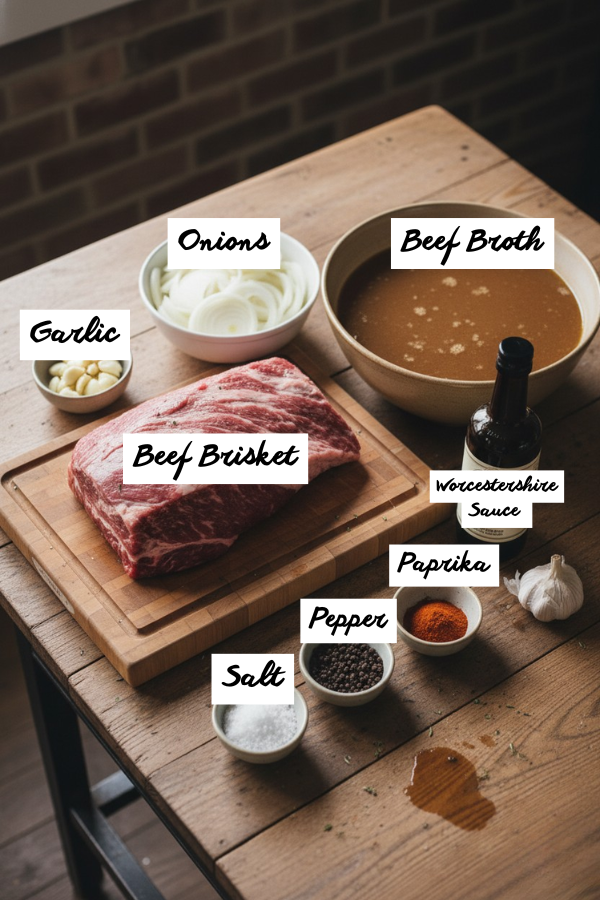
Nothing complicated here. Just solid ingredients doing their job.
Main Ingredients
- 3–4 lb beef brisket (flat cut for easier slicing)
- 1–2 large onions, sliced
- 4–6 cloves garlic, minced
- 1–2 cups beef broth
Seasoning
- 1–2 tsp salt
- 1 tsp black pepper
- 1–2 tsp paprika
- 1–2 tbsp brown sugar
- 1–2 tbsp Worcestershire sauce
Optional Flavor Boosters
- ½ cup BBQ sauce (for a sweeter finish)
- 1 tbsp Dijon mustard
- 1–2 tbsp apple cider vinegar
Quick swaps (because real life happens):
- No beef broth? Use chicken broth or even water + bouillon
- Watching sugar? Skip it—the onions will carry the sweetness
- Want more kick? Add chili flakes or a touch of cayenne
Step-by-Step Instructions
Let me walk you through it. It’s simple—but a few details make all the difference.
Step 1: Prep the Brisket
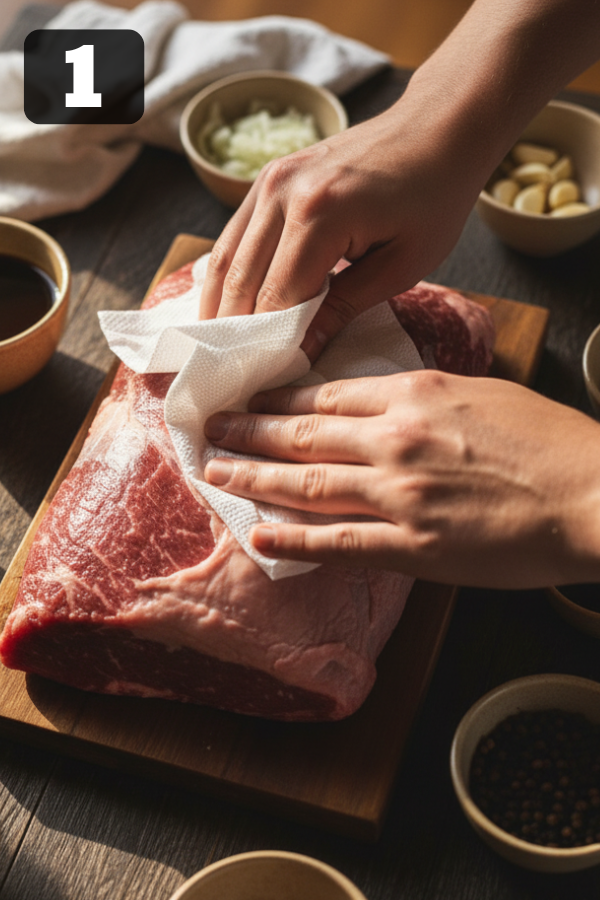
Pat it dry. This matters more than it seems—it helps the seasoning stick and improves browning.
Trim excess fat, but don’t go overboard. Leave about ¼ inch. That fat slowly melts and keeps everything juicy.
Step 2: Season Generously
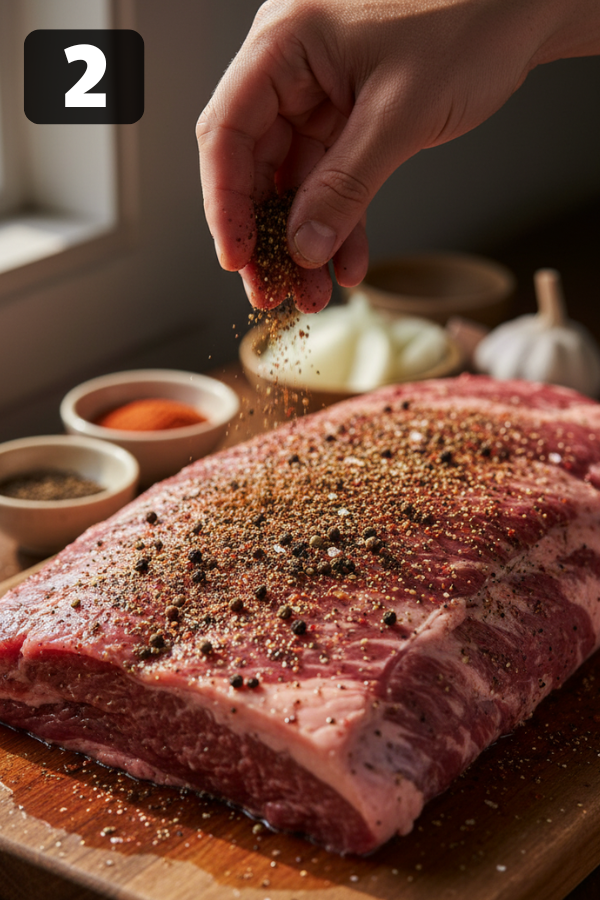
Don’t be shy here.
Rub salt, pepper, paprika, and garlic all over the meat. Add Worcestershire if you like—it gives that deep, savory note that makes people ask, “What is that flavor?”
Step 3: Sear (optional—but worth it)
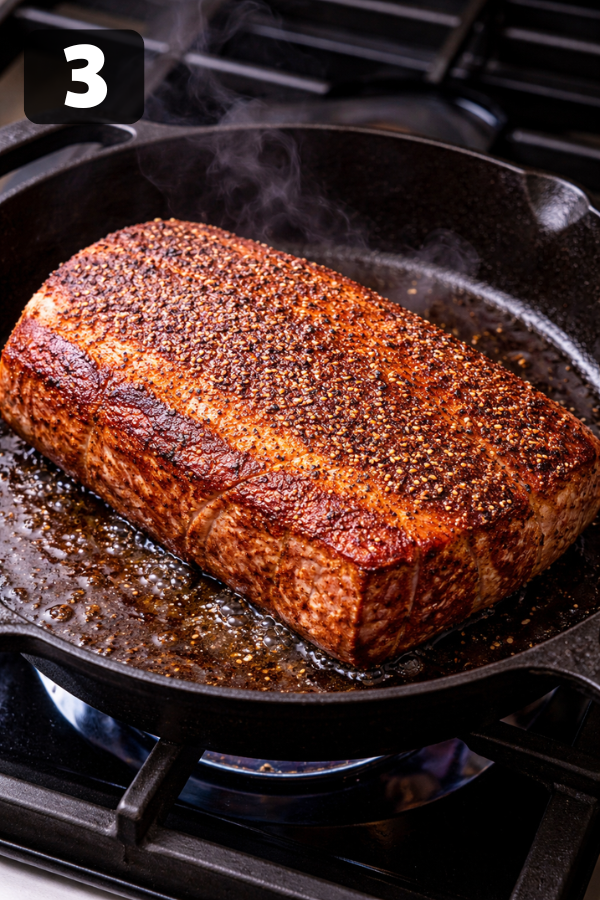
Heat a skillet. Medium-high.
Sear the brisket for 2–3 minutes per side until browned.
Is it required? No.
Does it make a difference? Yes. A big one.
That golden crust adds depth you can’t fake later.
Step 4: Build your Base
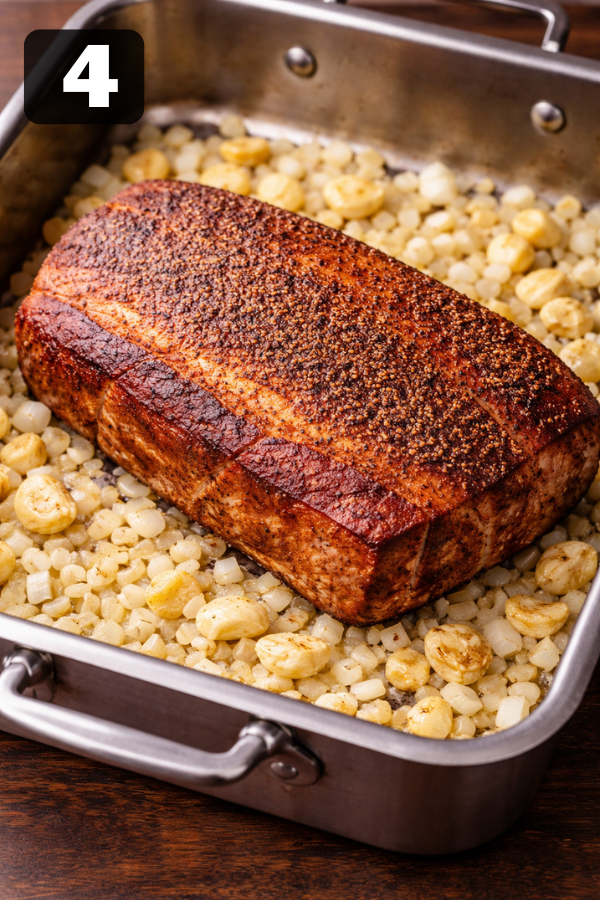
Lay sliced onions and garlic in your roasting pan.
Think of this as your flavor bed. The brisket sits on top, soaking in everything as it cooks.
Step 5: Add Liquid
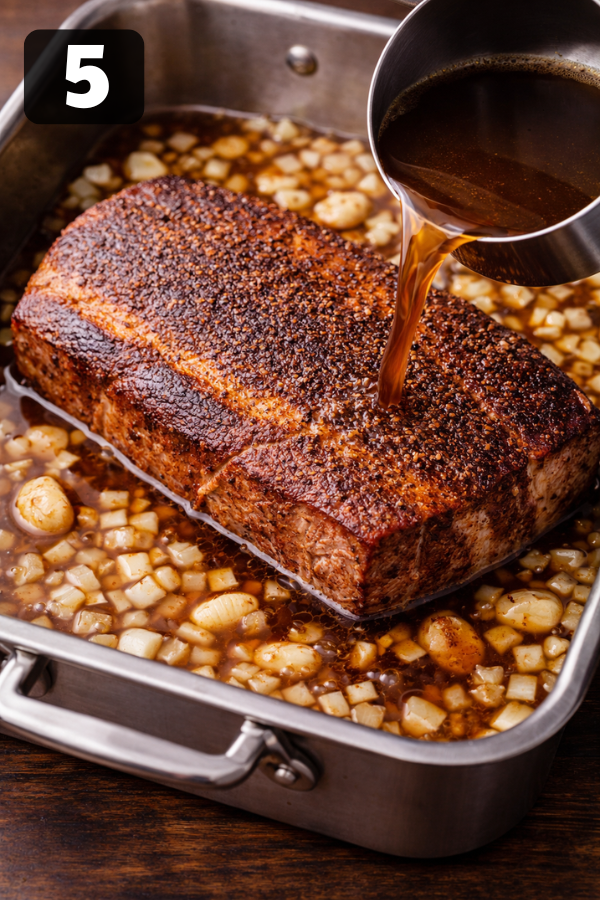
Pour broth around the meat—not over it.
This keeps the seasoning intact while still creating steam and moisture.
Add BBQ sauce or vinegar here if you’re using them.
Step 6: Cover Tightly
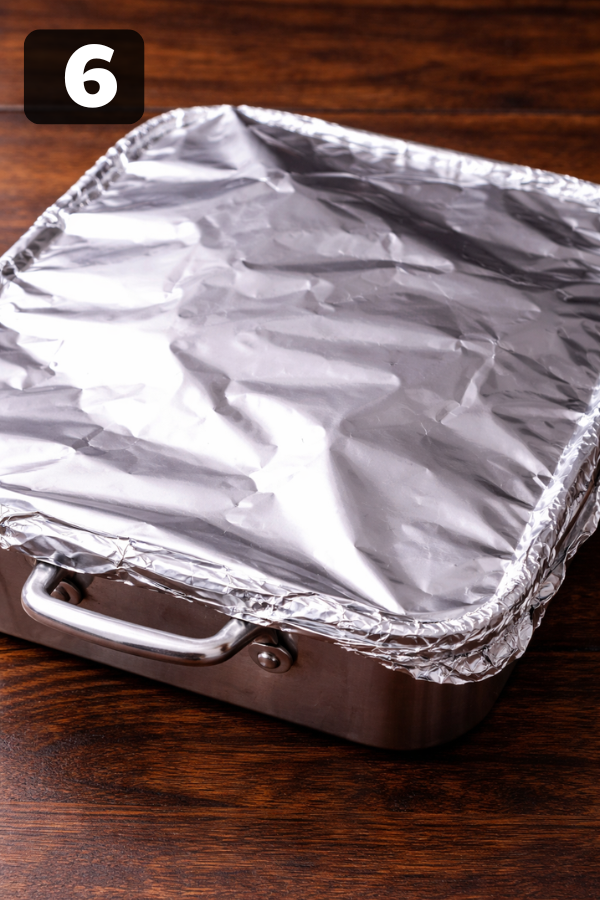
Use foil. Tight seal.
This is where the magic happens—trapped steam breaks down tough fibers and turns brisket tender.
Step 7: Slow Roast
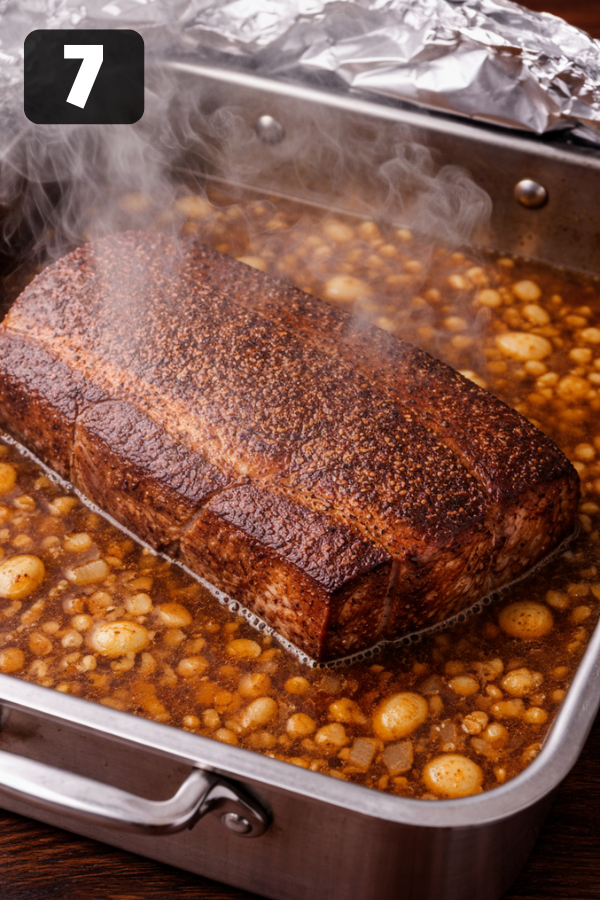
Set oven to 275°F (135°C).
Cook for 3–5 hours, depending on size.
Rule of thumb: about 1 hour per pound.
You’re aiming for that moment when a fork slides in easily. Not earlier.
Step 8: Rest and Slice
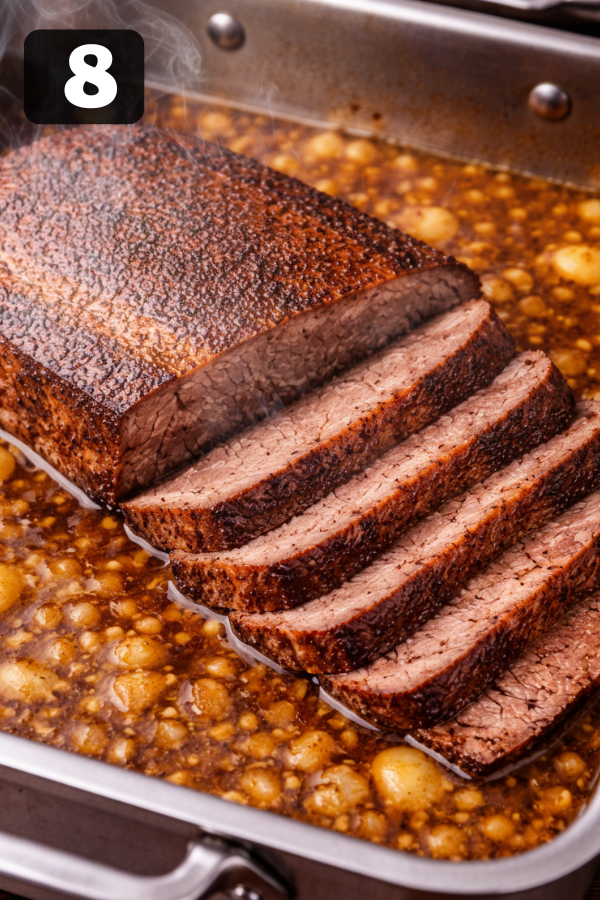
Let it rest for at least 20 minutes.
Slice against the grain. Always against the grain.
Otherwise, even a perfect brisket can feel chewy.
Tips That Actually Make a Difference
Some tips sound optional—these aren’t.
- Keep it covered. Dry brisket is almost always uncovered brisket
- Use a thermometer if you can (target: ~195–205°F internal)
- Don’t rush it—undercooked brisket is tough, not tender
- Let it rest. Seriously. This step is often skipped, and it shows
And if you’ve ever wondered why some brisket melts in your mouth while others don’t… this is why.
Storage & Leftovers
Funny enough, brisket shines the next day.
- Store in fridge: up to 4 days
- Freeze: up to 3 months (slice first for convenience)
Reheating tip:
Add a splash of broth before warming. It brings back moisture.
Leftover ideas:
- Brisket sandwiches
- Tacos or wraps
- Breakfast hash with eggs
Honestly, you might start making this just for the leftovers.
What to Serve With It
Brisket is rich—so you’ll want contrast.
Classic sides:
- Mashed potatoes
- Roasted carrots
- Green beans
Lighter options:
- Crisp spring salad
- Coleslaw
Comfort picks:
- Mac and cheese
- Warm dinner rolls
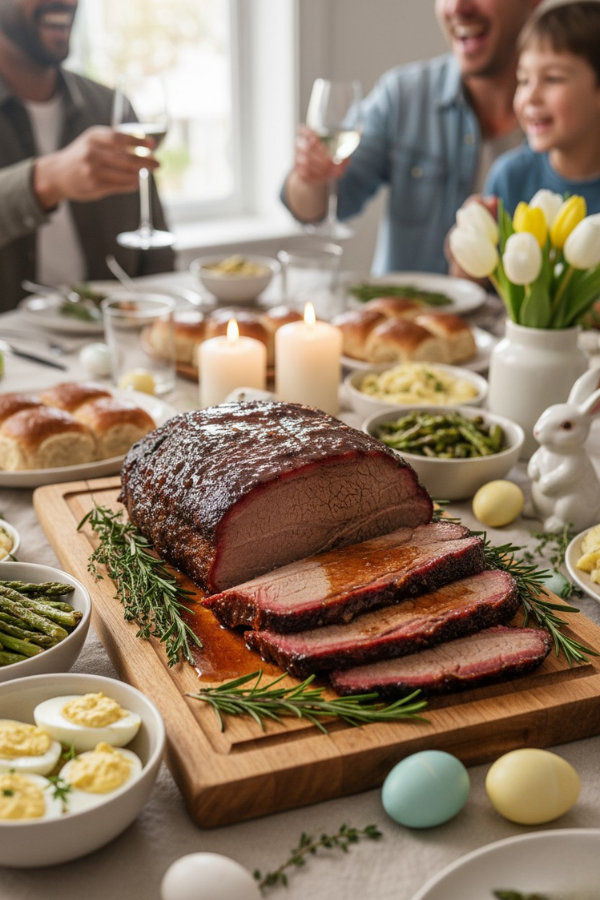
And if it’s Easter? Add something fresh and bright. It balances the whole table.
FAQs
- Can I make this ahead of time?
Yes—and you probably should. It tastes even better the next day. - Can I skip searing?
You can. But if you have 5 extra minutes, it’s worth it. - What’s the best cut?
Flat cut for slicing. Point cut for richer flavor. - Can I use a slow cooker?
Absolutely. Cook on LOW for 8–10 hours.
Nutrition Info
- Calories: 350–450 per serving
- Protein: 30–40g
- Fat: 20–30g
Lower sugar and skip BBQ sauce if you want a lighter version.
Conclusion
And that’s really the beauty of this Easter Slow-Roasted Beef Brisket—it looks like a centerpiece, but it cooks like a comfort meal. You prep it, let the oven do its thing, and a few hours later, you’ve got something tender, rich, and quietly impressive on the table. Whether you’re feeding a full house or just planning for leftovers (honestly, the best part), this is one of those recipes you’ll come back to—not just for Easter, but anytime you want something warm, simple, and deeply satisfying.
Don’t Miss: Slow Roast Lamb Recipe (Easy & Delicious)
Ingredients
Method
- Step 1: Prep the BrisketPat it dry. This matters more than it seems—it helps the seasoning stick and improves browning.Trim excess fat, but don’t go overboard. Leave about ¼ inch. That fat slowly melts and keeps everything juicy.

- Step 2: Season GenerouslyDon’t be shy here.Rub salt, pepper, paprika, and garlic all over the meat. Add Worcestershire if you like—it gives that deep, savory note that makes people ask, “What is that flavor?”
- Step 3: Sear (optional—but worth it)Heat a skillet. Medium-high.Sear the brisket for 2–3 minutes per side until browned. Is it required? No. Does it make a difference? Yes. A big one.That golden crust adds depth you can’t fake later.
- Step 4: Build your BaseLay sliced onions and garlic in your roasting pan.Think of this as your flavor bed. The brisket sits on top, soaking in everything as it cooks.
- Step 5: Add LiquidPour broth around the meat—not over it.This keeps the seasoning intact while still creating steam and moisture.Add BBQ sauce or vinegar here if you’re using them.
- Step 6: Cover TightlyUse foil. Tight seal.This is where the magic happens—trapped steam breaks down tough fibers and turns brisket tender.
- Step 7: Slow RoastSet oven to 275°F (135°C).Cook for 3–5 hours, depending on size. Rule of thumb: about 1 hour per pound.You’re aiming for that moment when a fork slides in easily. Not earlier.
- Step 8: Rest and SliceLet it rest for at least 20 minutes.Slice against the grain. Always against the grain. Otherwise, even a perfect brisket can feel chewy.
